Ten Stories from Satoyama2. Architecture
Thoughtful design.
Historic homes for modern living.
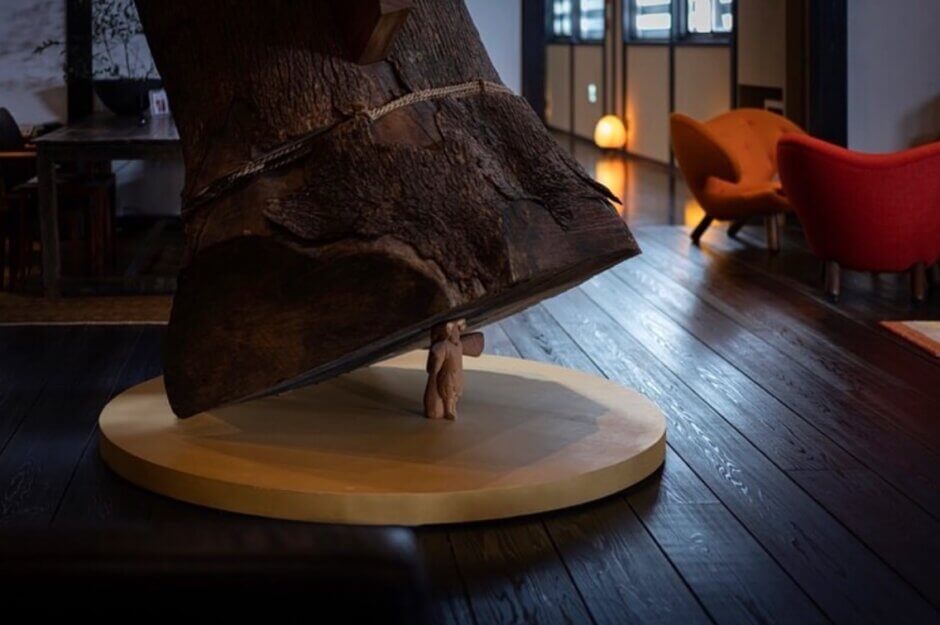
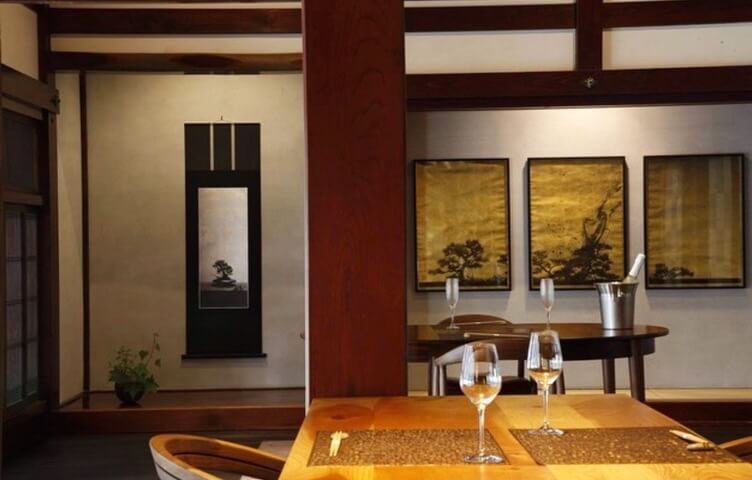
Satoyama Jujo consists of five buildings. At the front stands the reception building, a 150-year-old traditional house. Massive beams and pillars support it against the weight of heavy snow. The entire timber frame is made of zelkova of a quality no longer available today and was assembled without nails.
Houses like these, worthy of preservation in their own right, are being demolished one after another because they are considered cold, dark and old-fashioned. In their place come homes with modern siding and vinyl wallpaper: warm interiors, bright white walls and rooms suited to sofas and beds. Most of the timber from the old houses is then burned as waste.
It is easy to say, “We must save traditional houses.” It is harder to make that argument to the people who live in them. For those who spend their lives in snow country, a cold home is simply unacceptable.
Kurokawa Onsen in Kyushu is a popular hot-spring destination, loved for its rustic rural atmosphere. It has many inns in traditional houses, but did you know that most of those houses were relocated from Niigata? The same is true far beyond Kurokawa: if you see a traditional house with exceptionally thick pillars and beams somewhere in Japan that is not snow country, there is a good chance it came from Niigata.
Reusing these buildings is, of course, a good thing. The problem is that, in Niigata itself, they continue to disappear. The main reasons are the cold and the challenge of dealing with snow. Even after Kurokawa became so successful, there was no sign of traditional houses in Niigata being renovated into inns. Nor did we hear of them being given a new life as homes.
At Satoyama Jujo, we thoroughly insulated the ceilings, walls and space beneath the floors. Our inspiration came from houses in Germany, France and Scandinavia. After visiting renovation projects there, we reached a simple conclusion: insulate an old house properly, and it can become a comfortable home again.
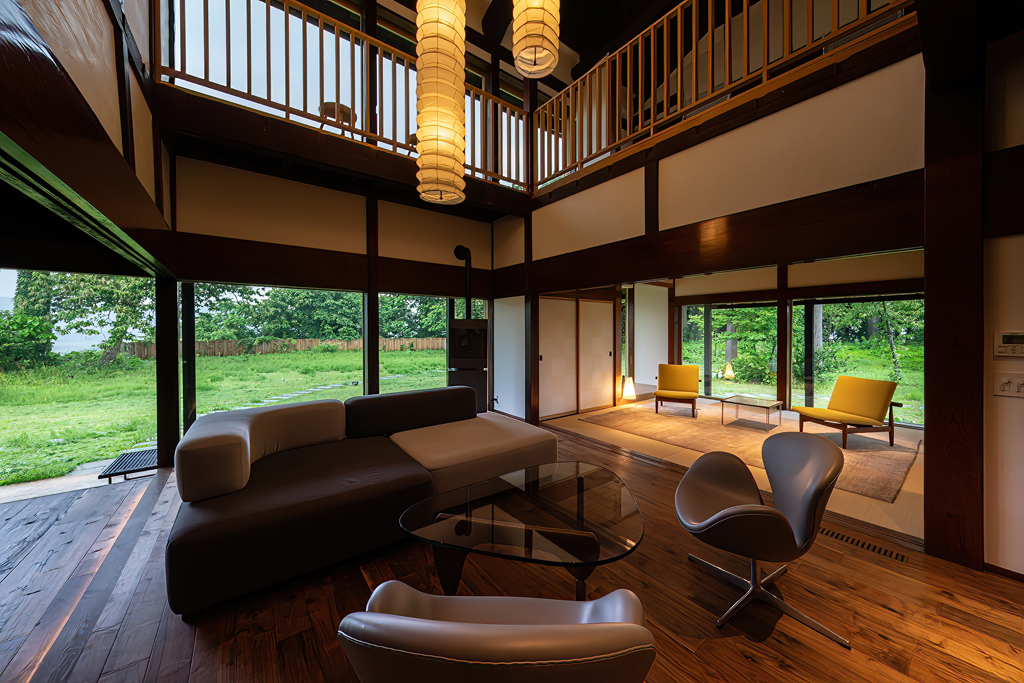
During our pre-opening in the winter of 2014, guests’ first words often revealed where they came from. As they stepped into the enormous, ten-metre-high atrium, local people and those who had grown up in snow country exclaimed, “It’s so warm!” Those unfamiliar with old houses in snowy regions simply marvelled at the space itself. At Satoyama Jujo, we do not provide slippers: guests generally go barefoot. We do not even have underfloor heating, yet the building is warm.
People who know traditional houses in snow country are fascinated that such a vast space can be heated. We are often showered with questions as soon as guests check in. The answer lies in thorough insulation and an “air-cycle” system, which we believe was the first of its kind installed in a traditional house in Japan.
Every contractor involved opposed the air-cycle system: none was willing to take responsibility if it failed to work. Yet it did warm this enormous space.
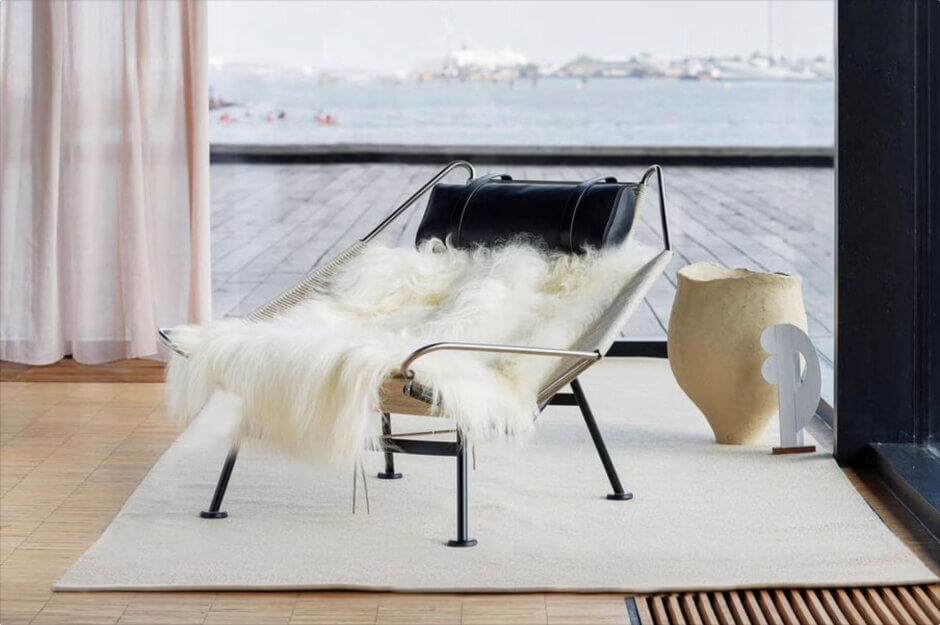
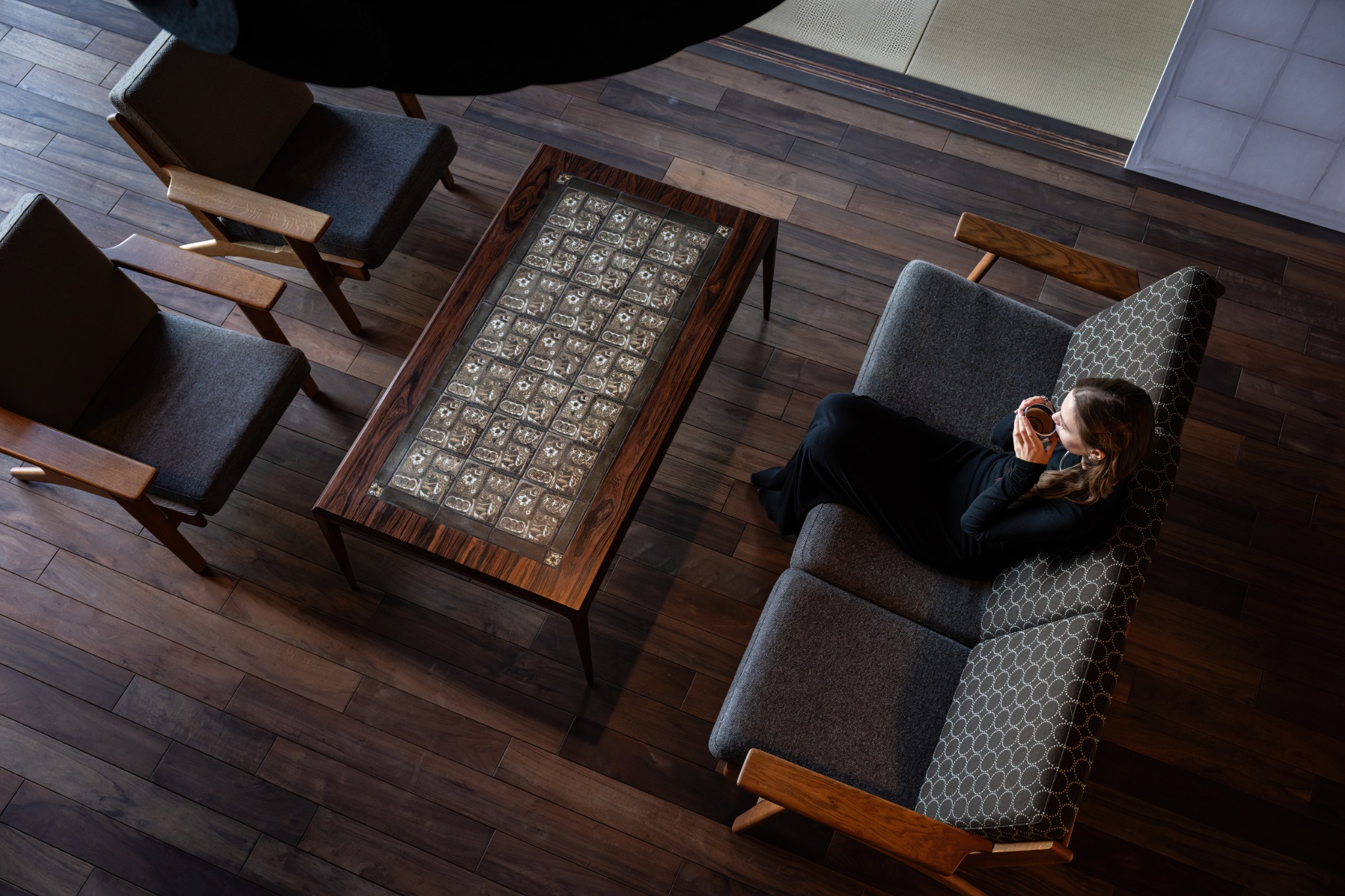
We also wanted to show how naturally sofas and beds belong in traditional houses. Master carpenters built these structures by judgement and experience, without structural calculations, yet every pillar and beam has a purpose. Shaped by climate and place, they are extraordinarily functional homes: design at its most complete. It is only natural that furniture created through a designer’s years of thought and experimentation should find both a powerful counterpart and a quiet harmony here.
We have done nothing deliberately showy with the building’s form. Instead, we renovated it to feel as though everything had always been this way. Designers and architects often want to leave a strong personal signature, but this house is the work of a master carpenter from 150 years ago. We believe the most important role of renovation is to add the comfort of modern life.
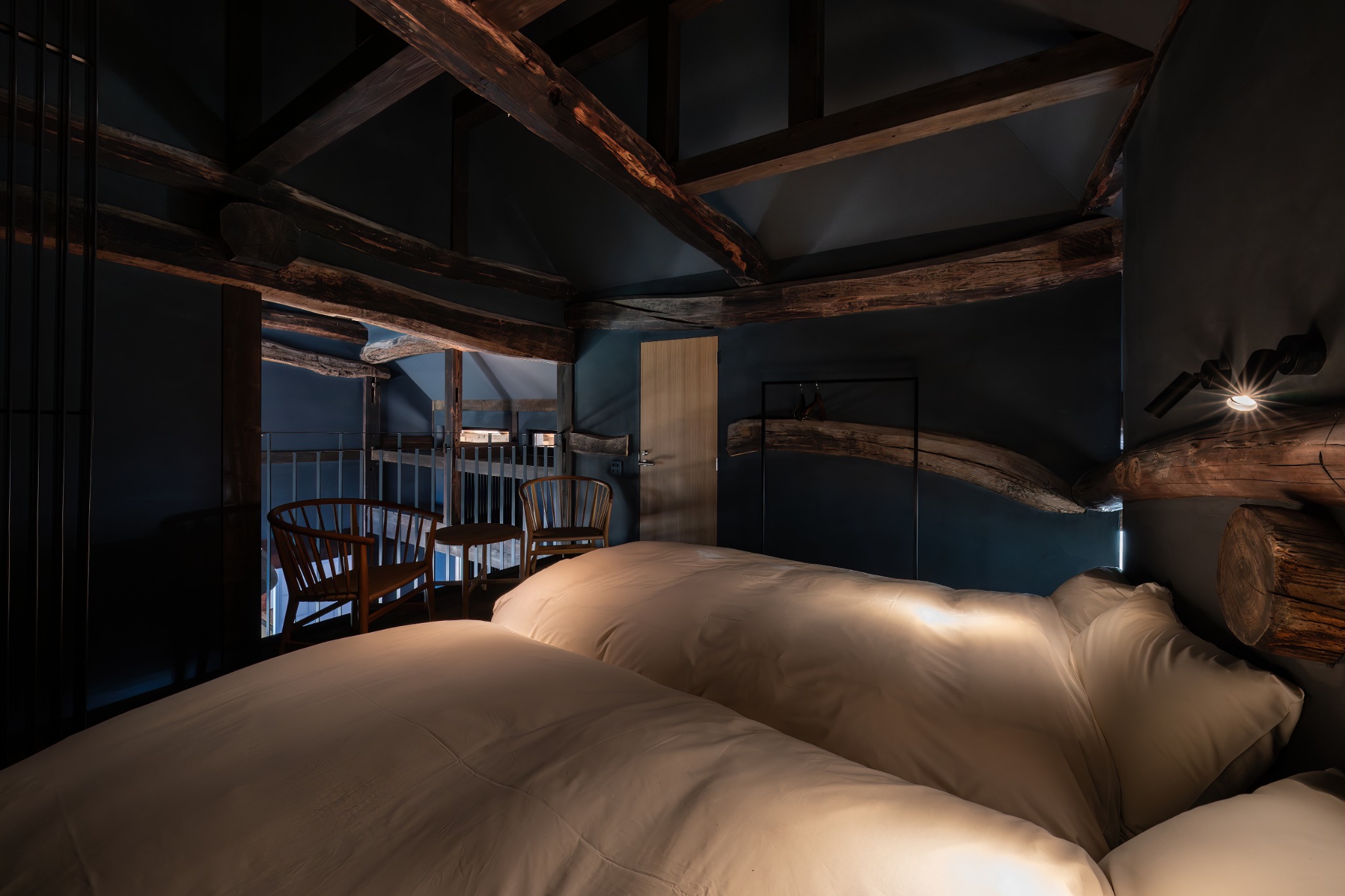
We also renovated the other four buildings before opening. The guest-room building was then 23 years old and cheaply built, in poor condition. Everyone told me it would be more economical to demolish it and start again. I chose renovation.
My reason was simple: there was nothing wrong with the timber. Cheaply built though the building was, the wood still had years of use in it. It seemed wasteful to tear it down and burn it. We stripped the building back to its structural frame and, once again, insulated it thoroughly.
Ten Stories from Satoyama