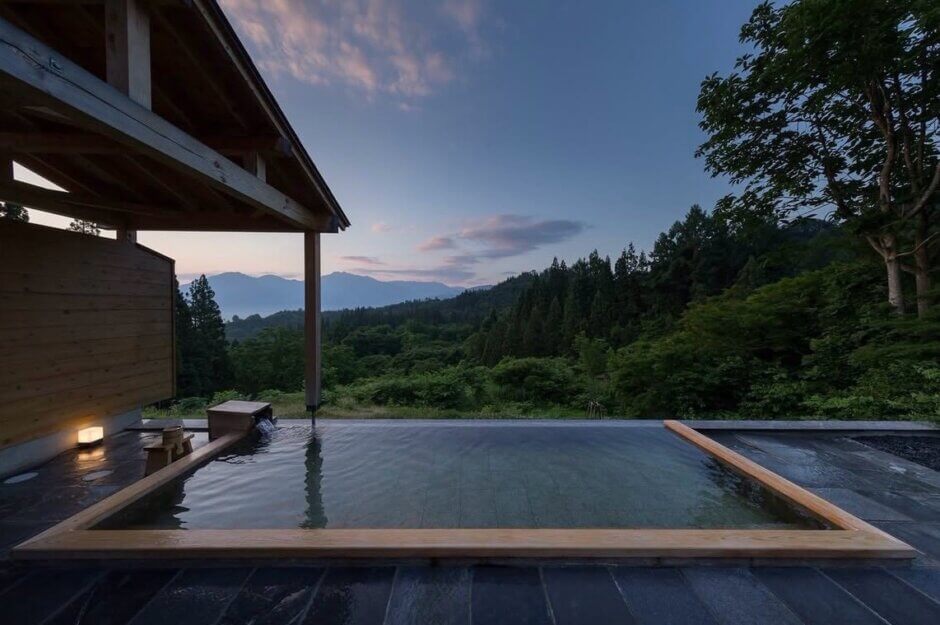
Our Ingredients

The care behind our ingredients
“Does every ingredient you use have Japan’s JAS organic certification?” We are often asked this. The answer is no. We are not trying to assemble a menu of certificates. We want you to experience the flavour and vitality of the ingredients themselves. That naturally leads us to many producers committed to organic principles, but we do not choose ingredients on the basis of certification or standards. We value the thinking and care behind the food. We may use vegetables grown with reduced pesticide use as well as those grown without pesticides, and do not set out to rank one farming method above another.
A strong commitment can sometimes make people dismissive of other approaches. A consumer may insist that food cannot be called organic without JAS certification, while a producer may reject another grower’s methods as contrary to organic principles. Yet surely both want the same thing: safe, delicious food.
We have no affiliation with a political party or religious organisation. Having spent many years producing magazines, we value impartiality and fairness above all. We believe that allows us to share the convictions behind organic food without taking sides.
Heirloom Vegetables
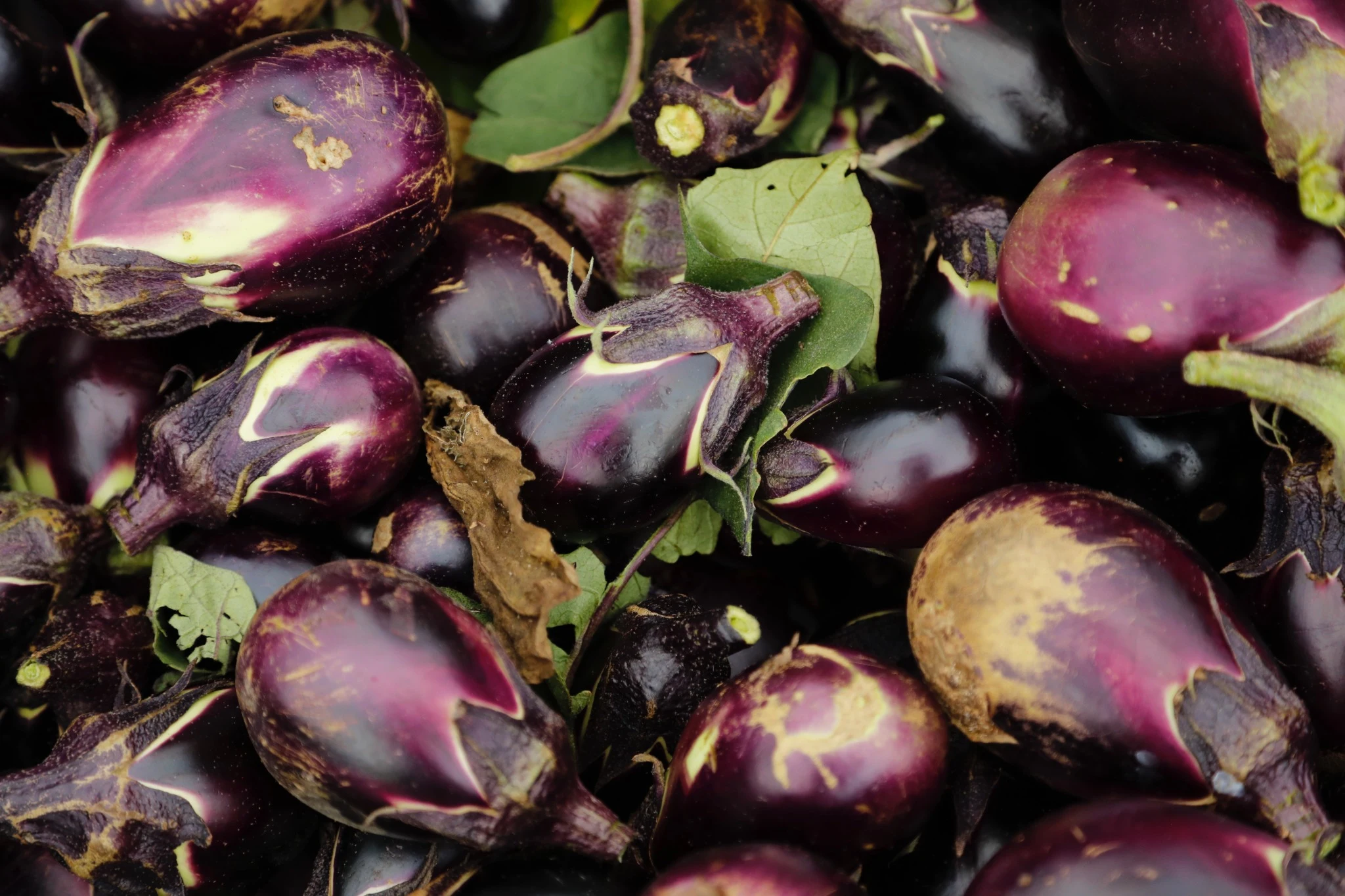
Heirloom vegetables may bring Kyoto or Kanazawa to mind, but Niigata has many of its own: Kagura Nanban peppers, Nagaoka Maru eggplants, Uonuma Kinchaku eggplants, Osaki-na greens, Kurosaki Chamame edamame, and countless others. Niigata is said to have at least 20 varieties of eggplant alone, making summer and autumn an eggplant lover’s paradise. Unlike their counterparts in Kyoto and Kanazawa, however, Niigata’s heirloom vegetables are rarely used in restaurants, so production remains very small. There is no established distribution market, and obtaining a steady supply of many varieties is difficult. At SANABURI, we hope to bring these vegetables a little more attention by using them in our cooking. Growers across the prefecture deliver them to us directly, or we go and collect them ourselves.
Wild Mountain Greens
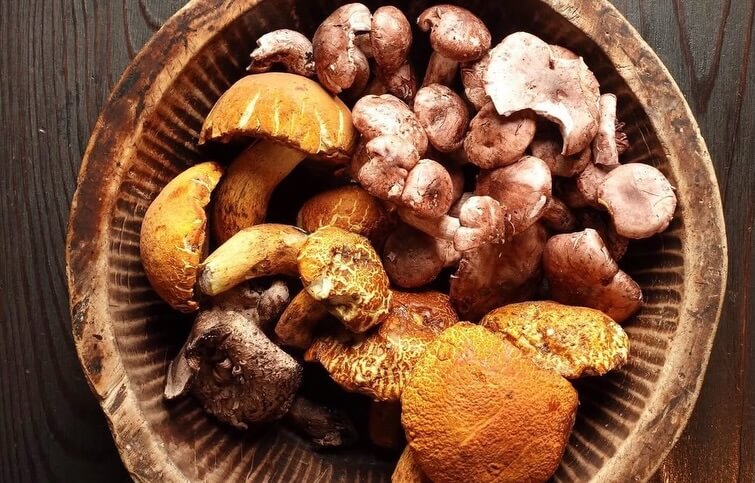
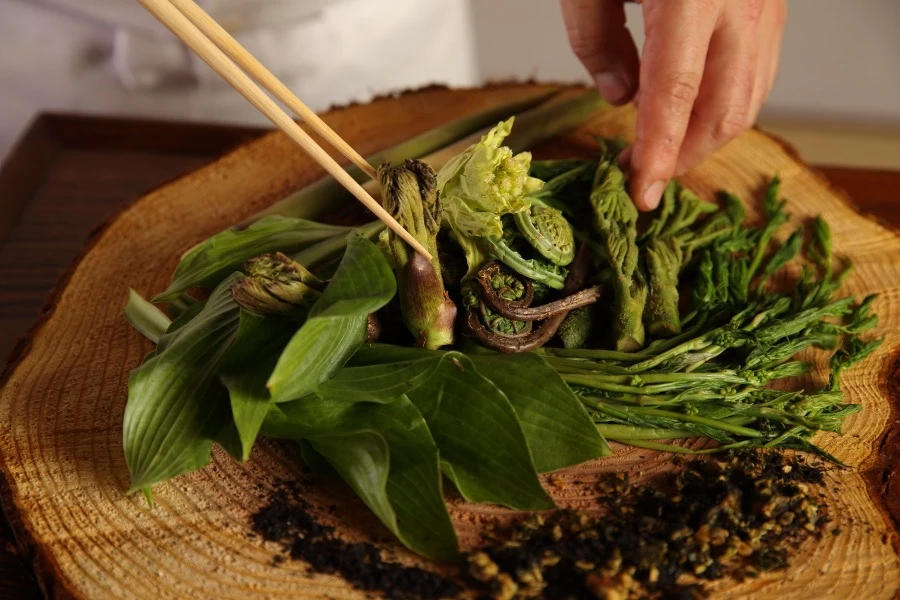
Wild mountain greens, known as sansai, are a sign of a rich landscape where woodland and village life meet. Their growing places are carefully protected, and only local residents may gather them.
The season runs from April to June, reaching its peak from early May to early June. At that time, our menu explores their extraordinary variety: sweetness, bitterness, astringency and aroma, each revealed by a different preparation. For many guests, it is a first encounter with these distinctive flavours of rural Japan.
Rice
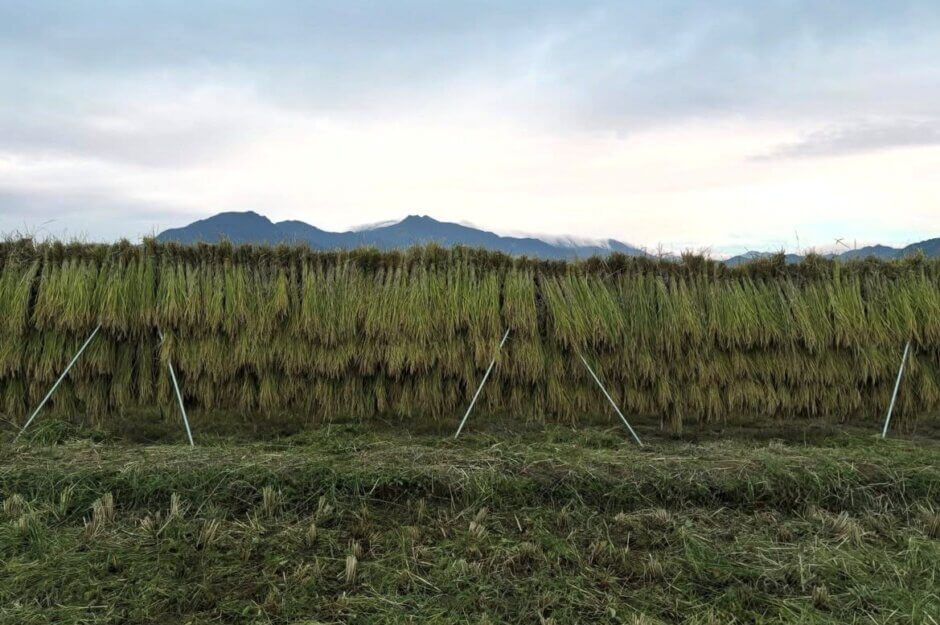
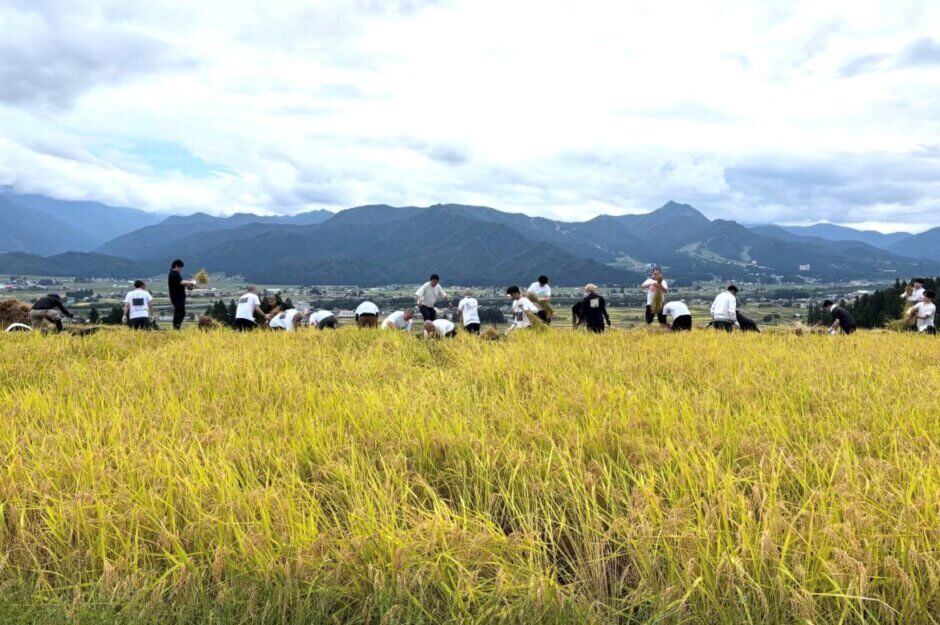
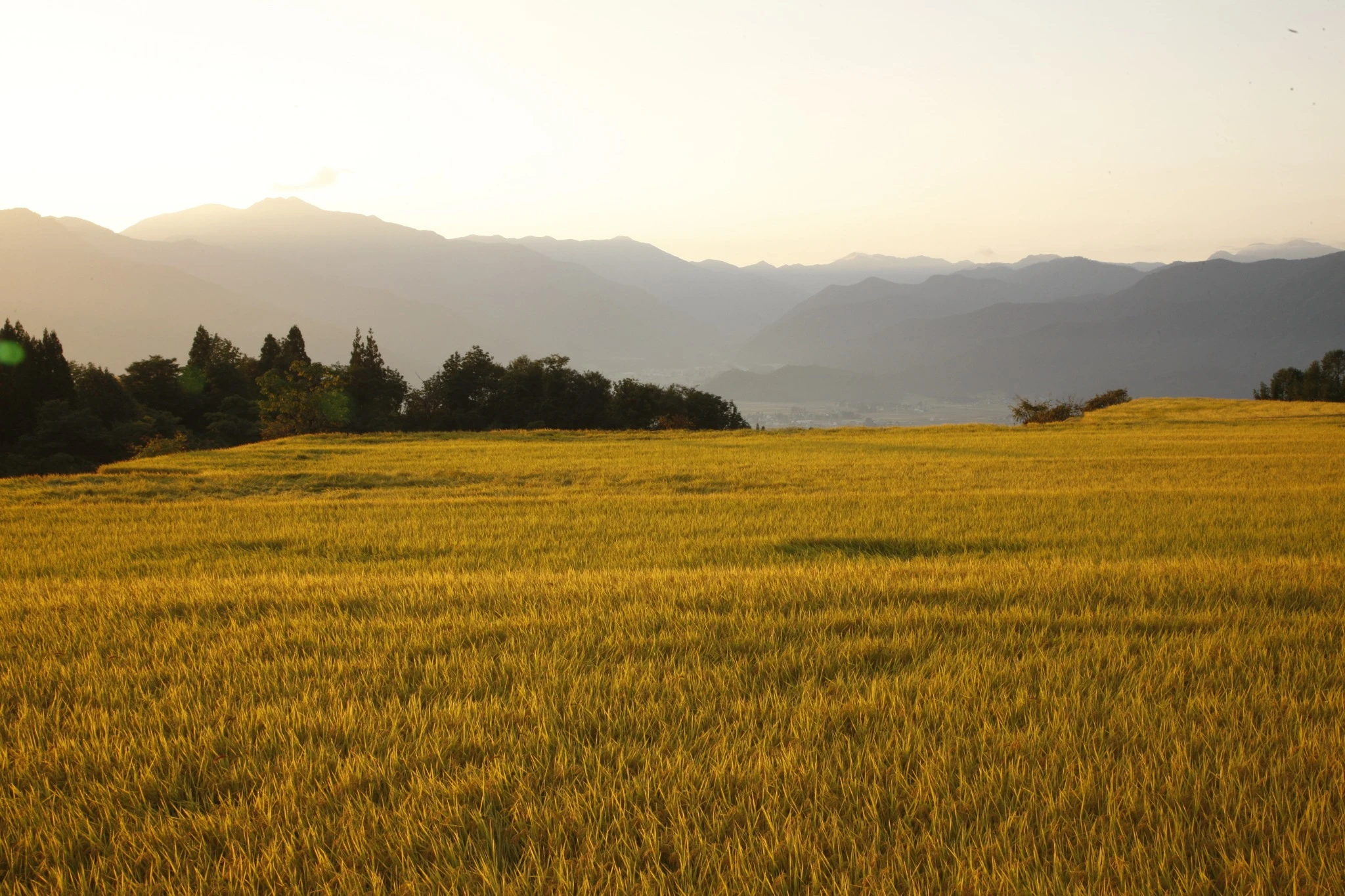
Uonuma in Niigata is renowned as Japan’s finest rice-growing region. Within Uonuma, Minamiuonuma is particularly prized; within Minamiuonuma, the Nishiyama district; and within Nishiyama, the villages of Osawa, Kimizawa and Kabanosawa are said to grow the finest rice of all. Satoyama Jujo stands at Osawayama, near the headwaters above the village of Osawa. In wine terms, you might compare the location to a grand cru vineyard in Burgundy’s Vosne-Romanée.
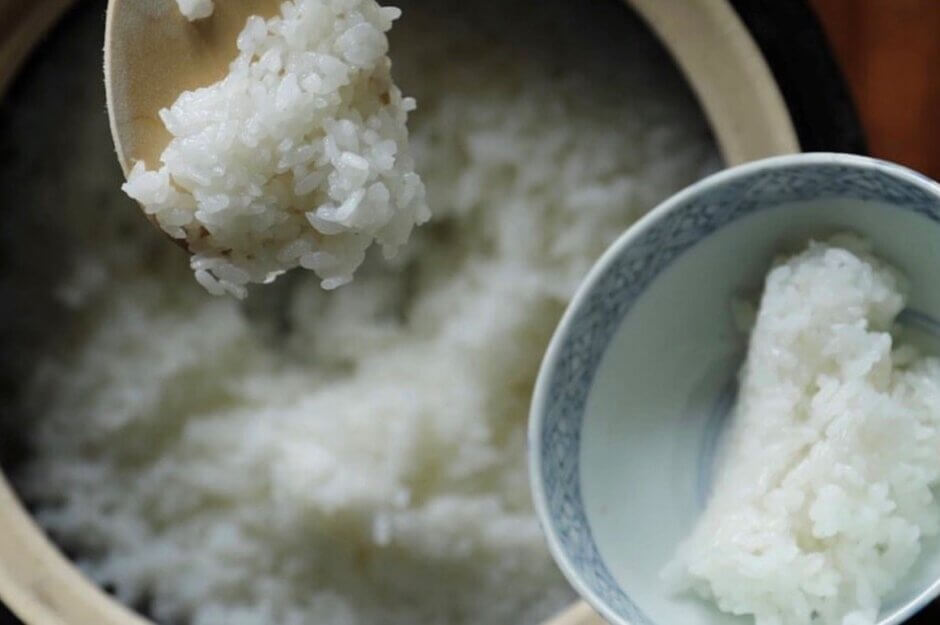
We store the rice in a yukimuro, a storehouse cooled naturally by snow, at around 3°C and a humidity of at least 90%. This prevents it from drying out and helps retain its flavour even through summer. We cook the rice in a separate earthenware pot for each table, using clear mountain spring water. Enjoy what we consider Japan’s finest Koshihikari, freshly cooked or shaped into onigiri rice balls.

Meat
In Niigata, pork has long been the meat served at celebratory meals. Beef became common only relatively recently: whether for sukiyaki, shabu-shabu or nikujaga stew, “meat” traditionally meant pork. At SANABURI, we serve local brands such as Tsumari Pork and Kiramugi Pork from Tainai, Niigata. For beef, we use Japanese Shorthorn cattle raised in Myoko. These cattle spend their summers roaming Sasagamine Pasture and return to the lowlands in winter; by purchasing whole animals, we support their producers. From mid-November, the traditional net-hunting season for wild duck begins. These mallards were once presented to the shogun’s household during the Edo period. Their flavour is so delicate that many guests tell us they would never have guessed they were eating duck. We hope you enjoy this distinctive seasonal taste.
Seafood
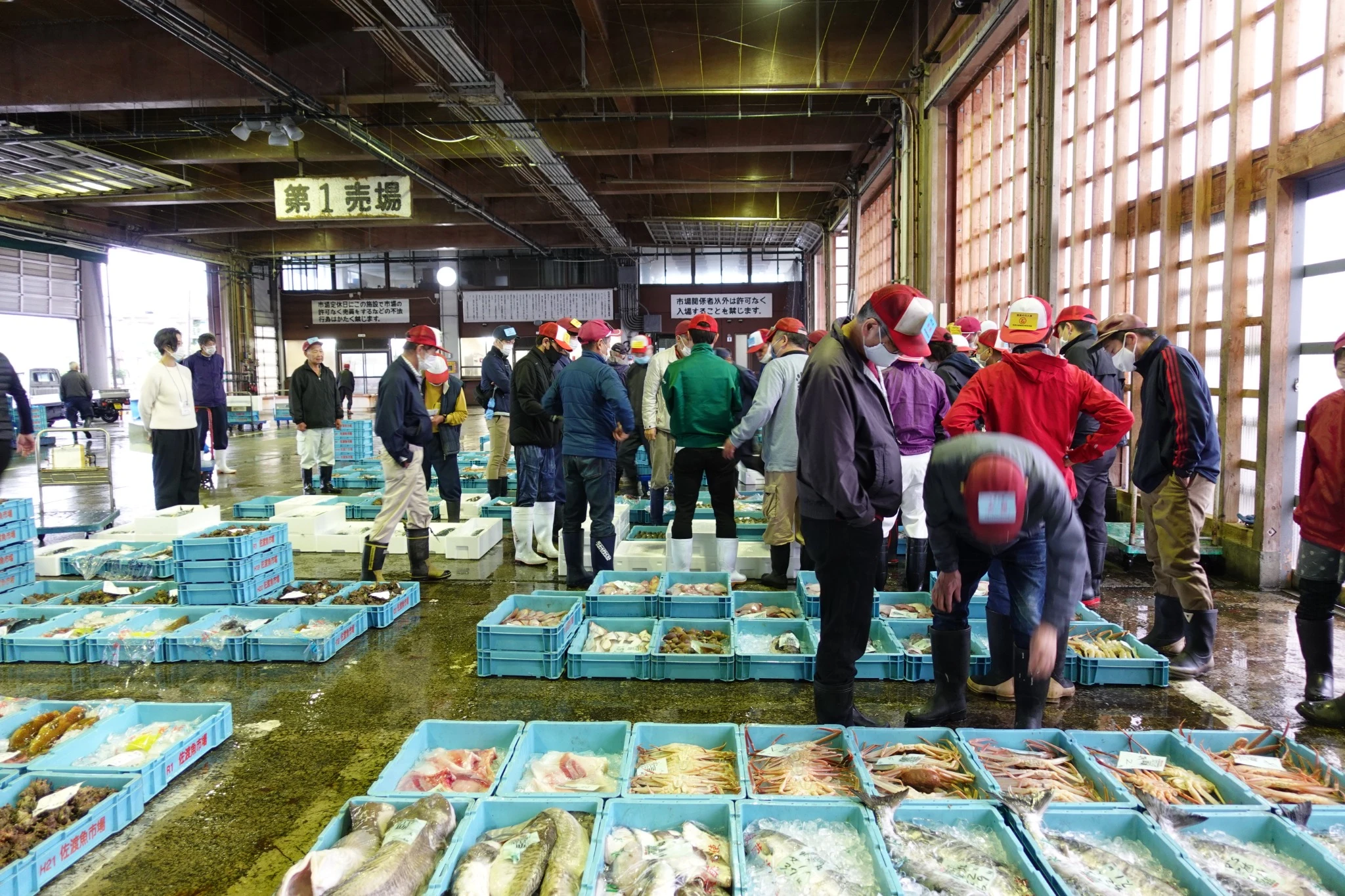
Vegetables lead our cooking, but we also serve the riches of the Sea of Japan: sweet shrimp known locally as nanban-ebi; bluefin tuna caught off Sado Island and prized by Ginza sushi restaurants; rich yellowtail; cod milt; and monkfish, some of which is shipped to Japan’s Joban coast.
Seaweeds are part of this food culture too: igo, ginbaso, nagamo, mozuku and wild nori. We hope these ingredients reveal how nutrients from the mountains help sustain the sea, and how richly connected Niigata’s ecosystems are.

Seasonings
We use additive-free, naturally fermented seasonings. Our soy sauce and miso are made traditionally in wooden barrels, a practice that has become increasingly rare. For dashi, the stock that underpins Japanese cooking, we use fully cured dried bonito from Makurazaki in Kagoshima, wild ma-kombu kelp from Hokkaido and thick-capped dried donko shiitake mushrooms from Oita. Even the sake used in our cooking is local KAKUREI.
The flavours may seem gentle at first because we use no artificial flavour enhancers, either directly in cooking or in the seasonings we buy. Take time to notice the true flavours of the vegetables, meat and fish, alongside the gentle depth of naturally fermented seasonings.

Water
Rain that fell long ago filters through the earth and emerges as clear spring water. We pipe it directly from the spring to our kitchen, so every dish is prepared with natural spring water.
This, too, is part of the secret behind our gentle flavours.

Sake & Wine
Satoyama Jujo is in Minamiuonuma, Niigata—a place that could fairly be called a capital of sake. Three breweries, Hakkaisan, KAKUREI and Takachiyo, are based in the city, while nearby towns are home to Midorikawa, Matsunoi and others. Each has its own character and produces sake of a very high standard. We offer limited releases available only locally, as well as unpasteurised, undiluted sake.
Niigata is famous for sake, but did you know that its wines are also remarkably good? We serve wines from several local wineries, including Cave d’Occi, Fermier and Domaine Chaud, whose quality often surprises even seasoned wine lovers.
Our selection extends beyond Japanese wine to a wide range of natural wines, with a particular focus on Burgundy. What will you choose at Satoyama Jujo: sake or wine?