


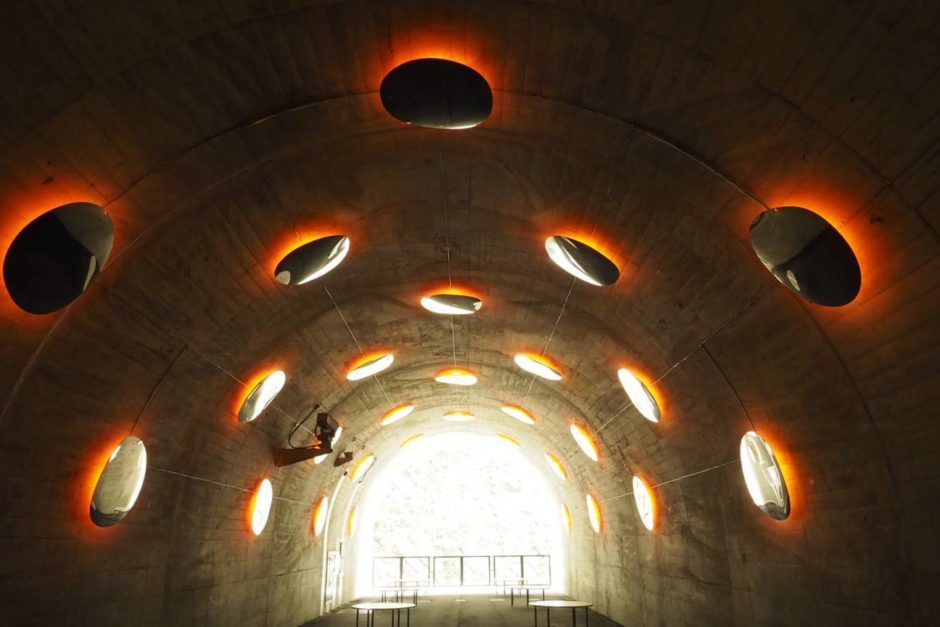
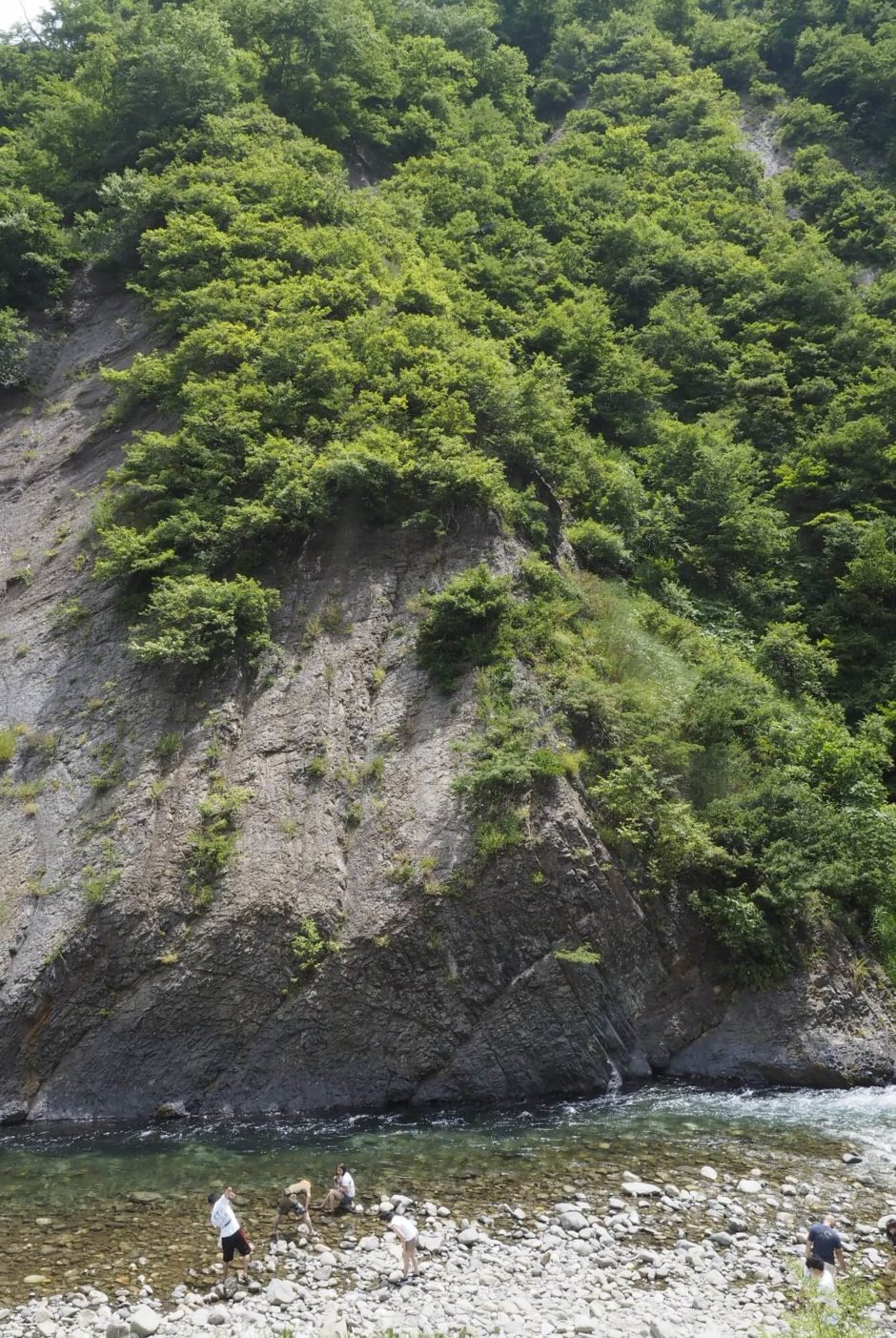
Of all the areas covered by the Echigo-Tsumari Art Triennale, Nakasato is the closest to Echigo-Yuzawa Station, the gateway for visitors coming from Tokyo. From the station, it’s about half an hour by hire car along Route 353, over Junito Pass, to Kiyotsu Gorge, where you’ll find the first artworks.
Start at Kiyotsu Gorge Tunnel, one of the Triennale’s highlights. At the end of the long, long tunnel, ‘Light Cave’ by Beijing-based MAD Architects comes into view.
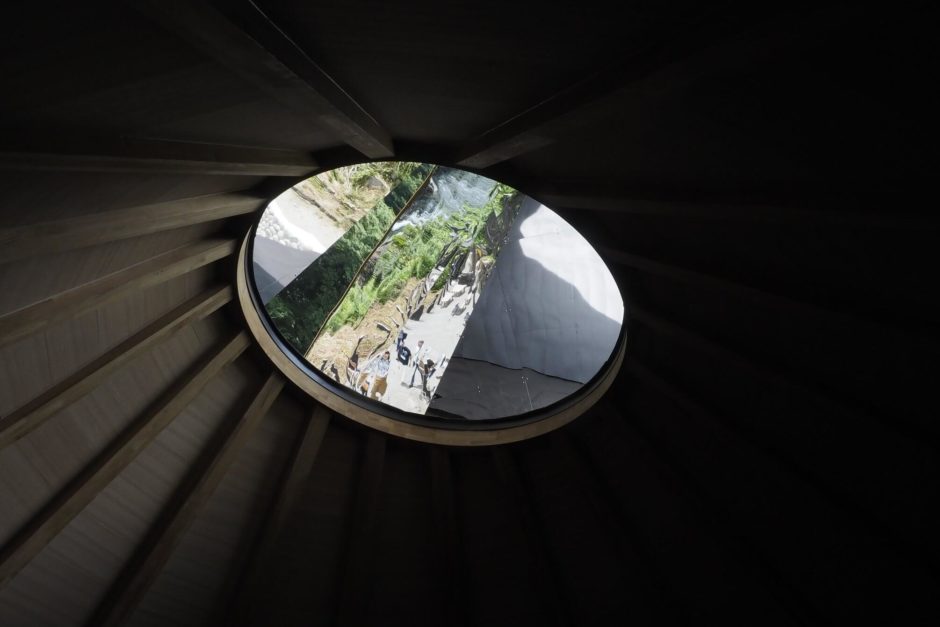
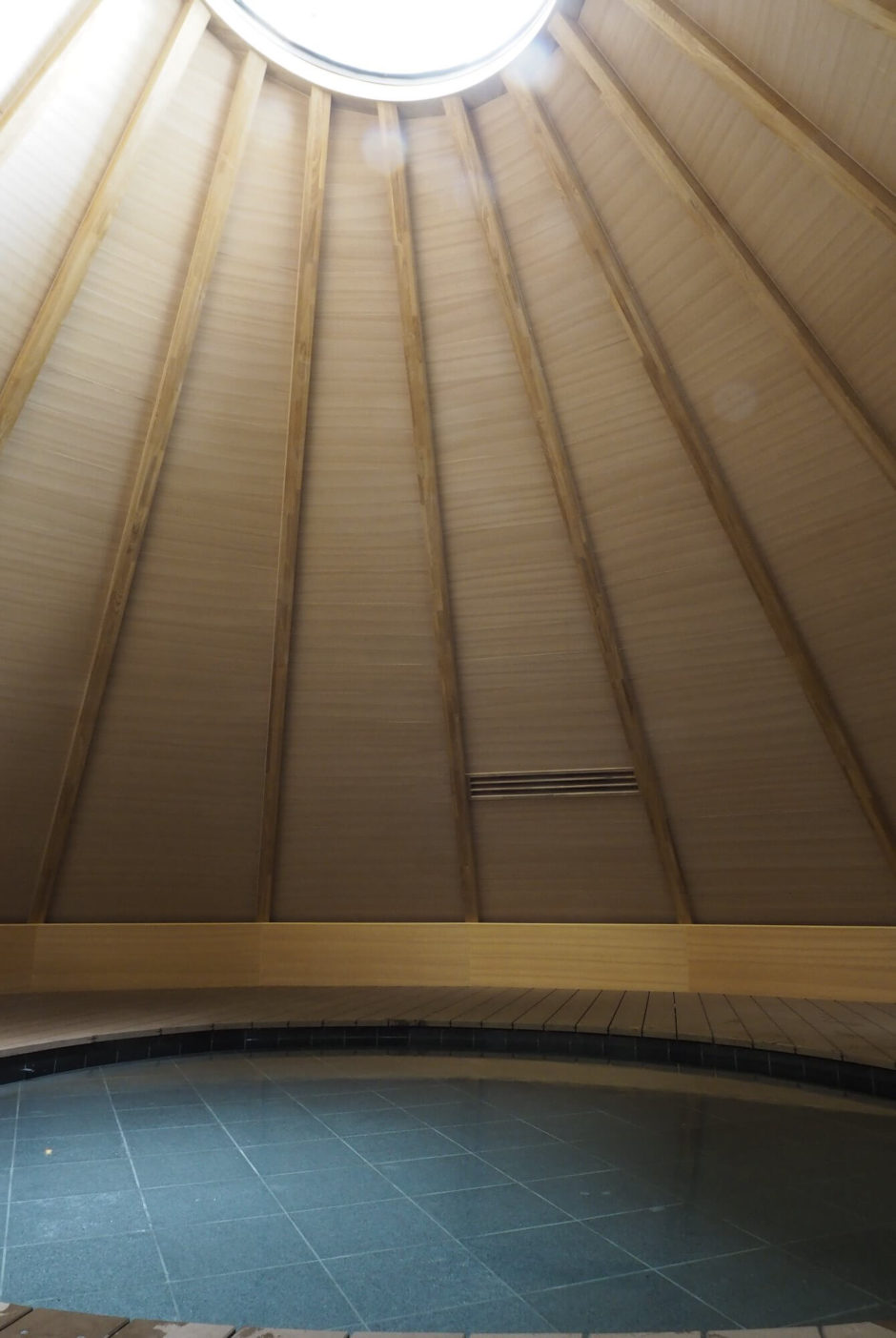
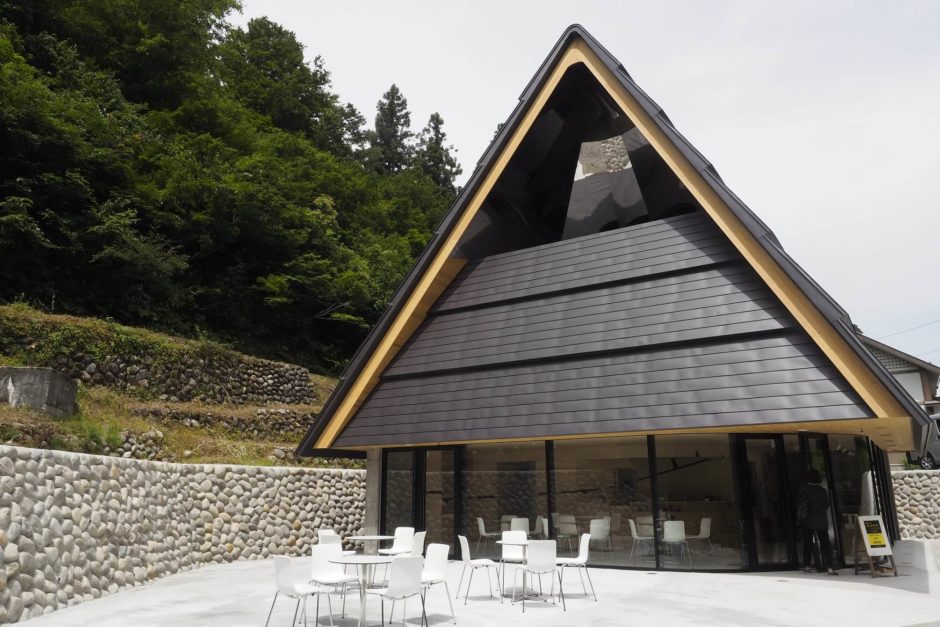
The building at the tunnel entrance is also the work of MAD Architects, with a café on the ground floor and a footbath upstairs. Look up as you soak your feet and there, overhead, is a view of Kiyotsu Gorge. This curious space is called ‘Periscope’.
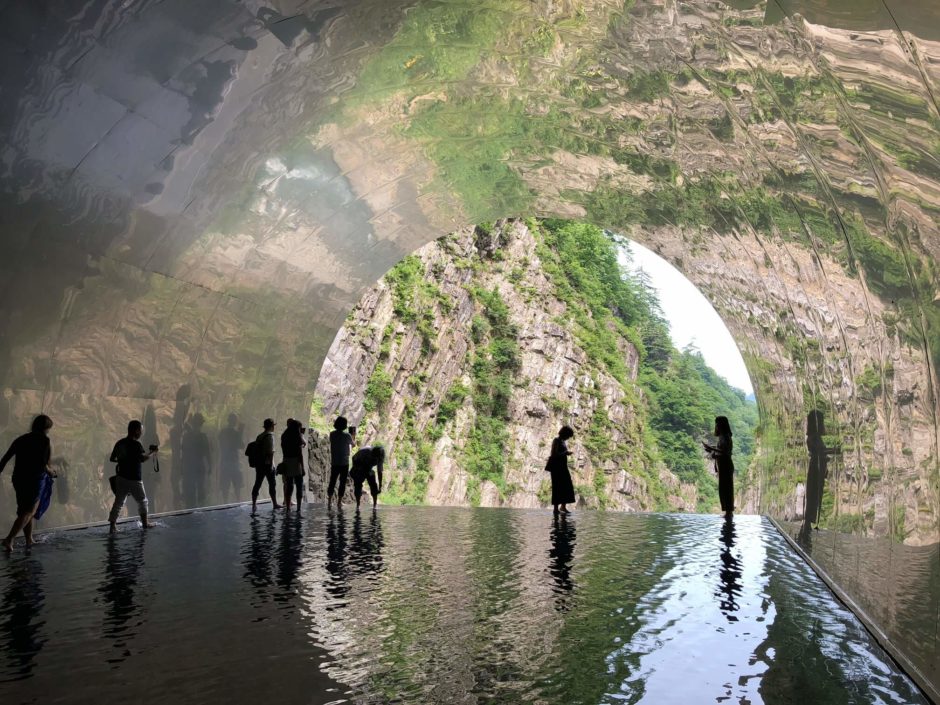
During Obon, the summer holiday when families honour their ancestors, some visitors apparently waited half an hour for a parking space. Come on a weekday at this time of year, though, and it’s much quieter. There are hot-spring baths near the tunnel that welcome day visitors, so it’s worth allowing a couple of hours here.
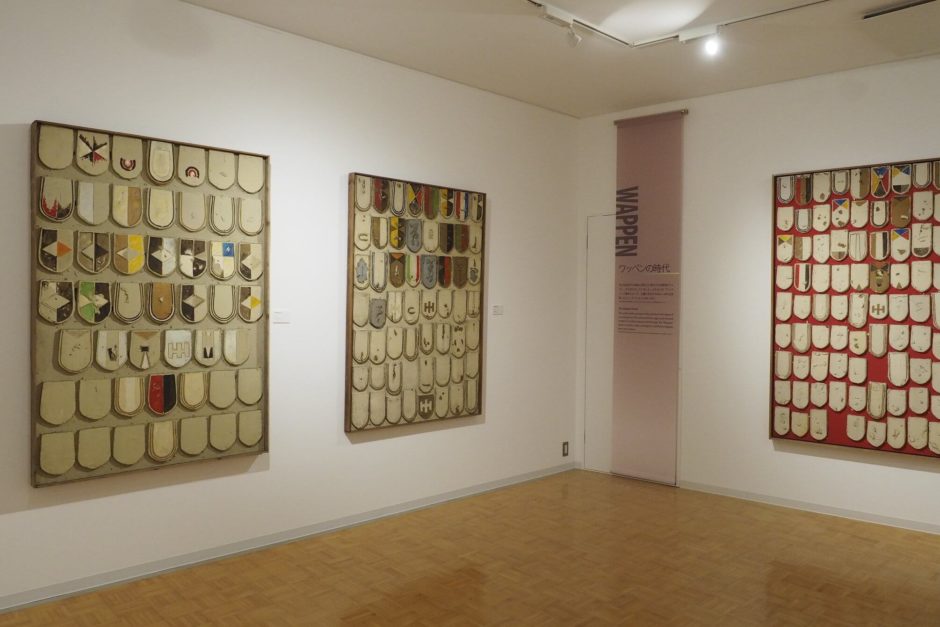
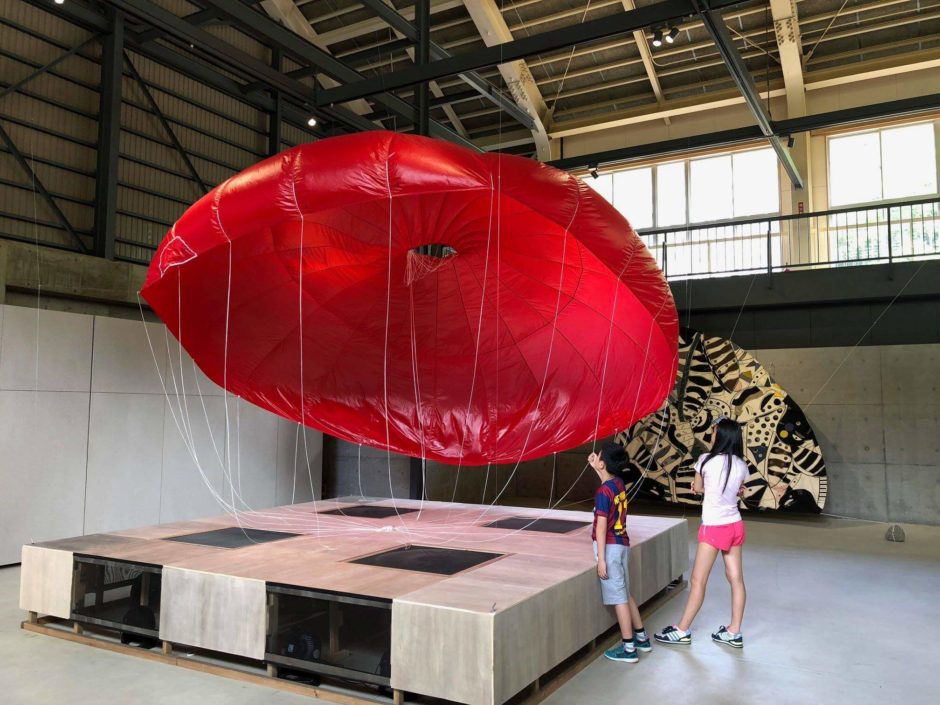
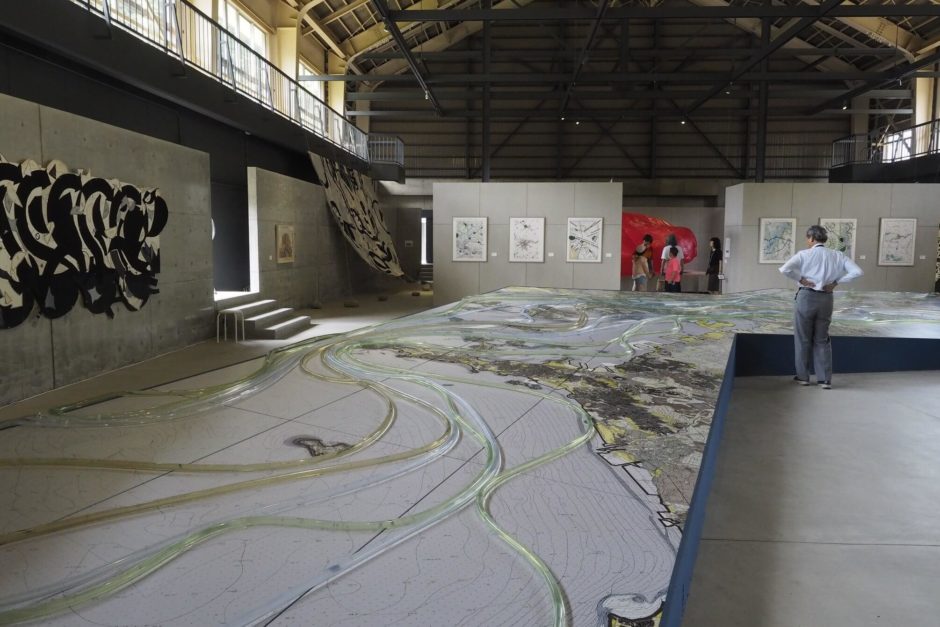
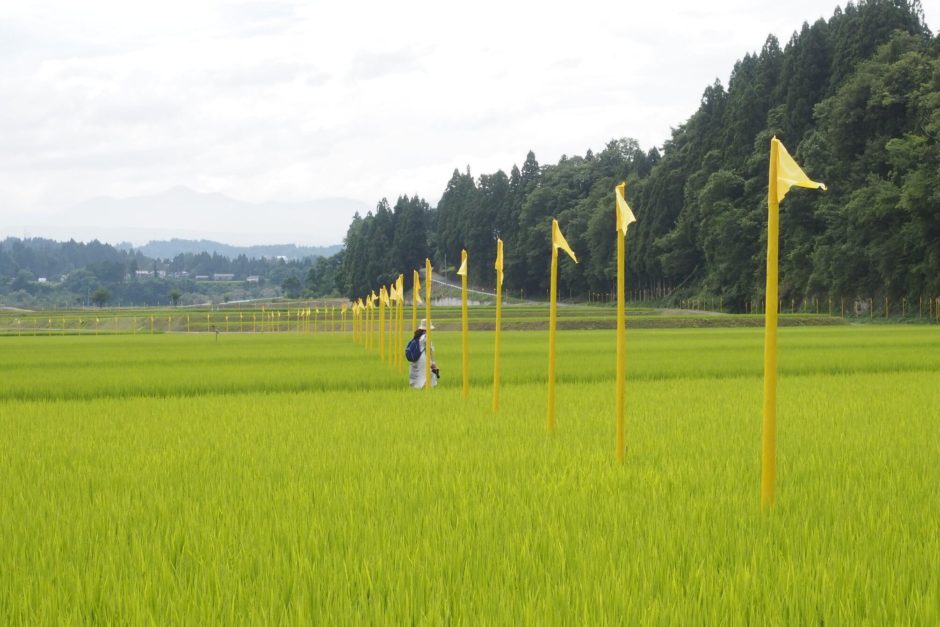
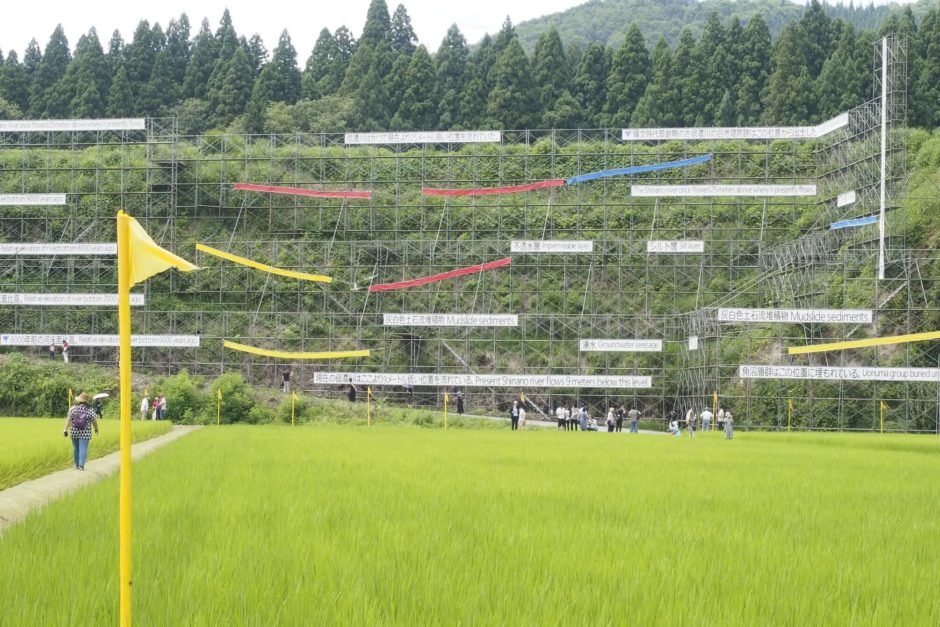
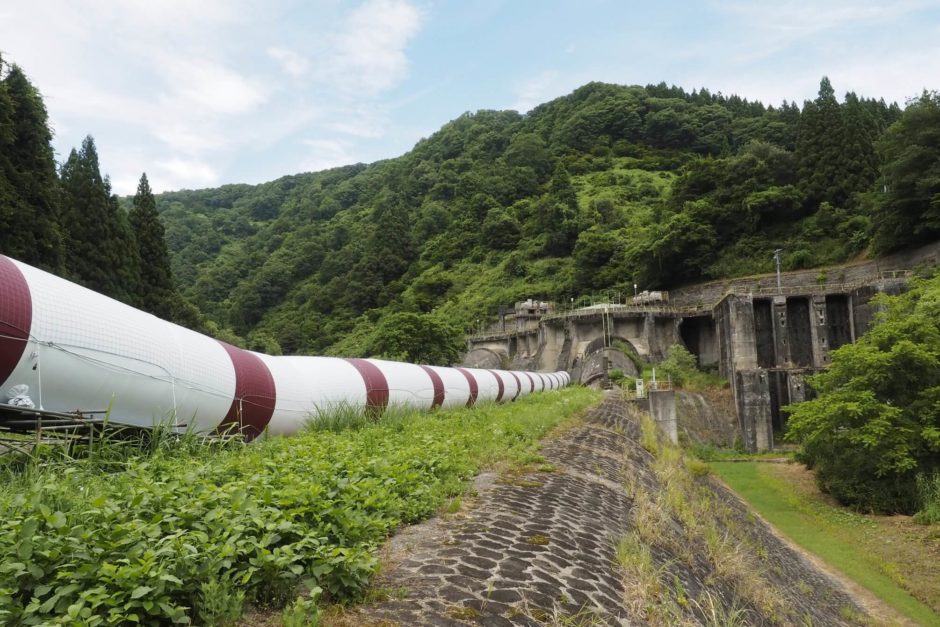
From the tunnel, follow the Kiyotsu River downstream and you’ll soon see the Yukihisa Isobe Memorial Echigo-Tsumari Kiyotsu Storage Museum, SoKo, on your right. Two of Isobe’s works, ‘Where Has the River Gone?’ and ‘The Shinano River Once Flowed 25 Metres above Its Present Level’, are among this year’s highlights. Seen on their own, they can be hard to interpret. Trace Isobe’s career through his work and the timeline at SoKo, though, and you begin to see how simple forms can convey ideas on such a grand scale. Further along the route from the former village of Nakasato towards Matsunoyama, you’ll find ‘Monument of Debris Flow’, a talking point at the last Triennale, and the new ‘Monument of Siphon Irrigation’. Along this route, the art gives you a sense of the scale of the landscape and the sweep of its history. One of the pleasures of Nakasato is how much art there is to see outdoors. Many works are grouped around Mion Nakasato, the hot-spring baths near ‘Where Has the River Gone?’. Take a side road from the centre of the former village and you’ll find Akiko Utsumi’s ‘For Lots of Lost Windows’ and Richard Wilson’s ‘Set North for Japan’, among others. The Echigo-Tsumari Art Triennale runs until 17 September. There’s not long left, so if you haven’t been yet, do come to Uonuma in Niigata. Room availability at Satoyama Jujo
We have rooms available on 29 August and on 6, 7 and 10 September. On 10 September, the world’s largest firework shell, measuring four shaku (about 1.2 metres) across, will be launched at the Katakai Festival. We’re chartering a bus from Satoyama Jujo for a tour to see the fireworks. The Triennale by day and fireworks by night – what a treat! We have just one room left for the 10th. Do join us.
This information was current at the time of publication.