


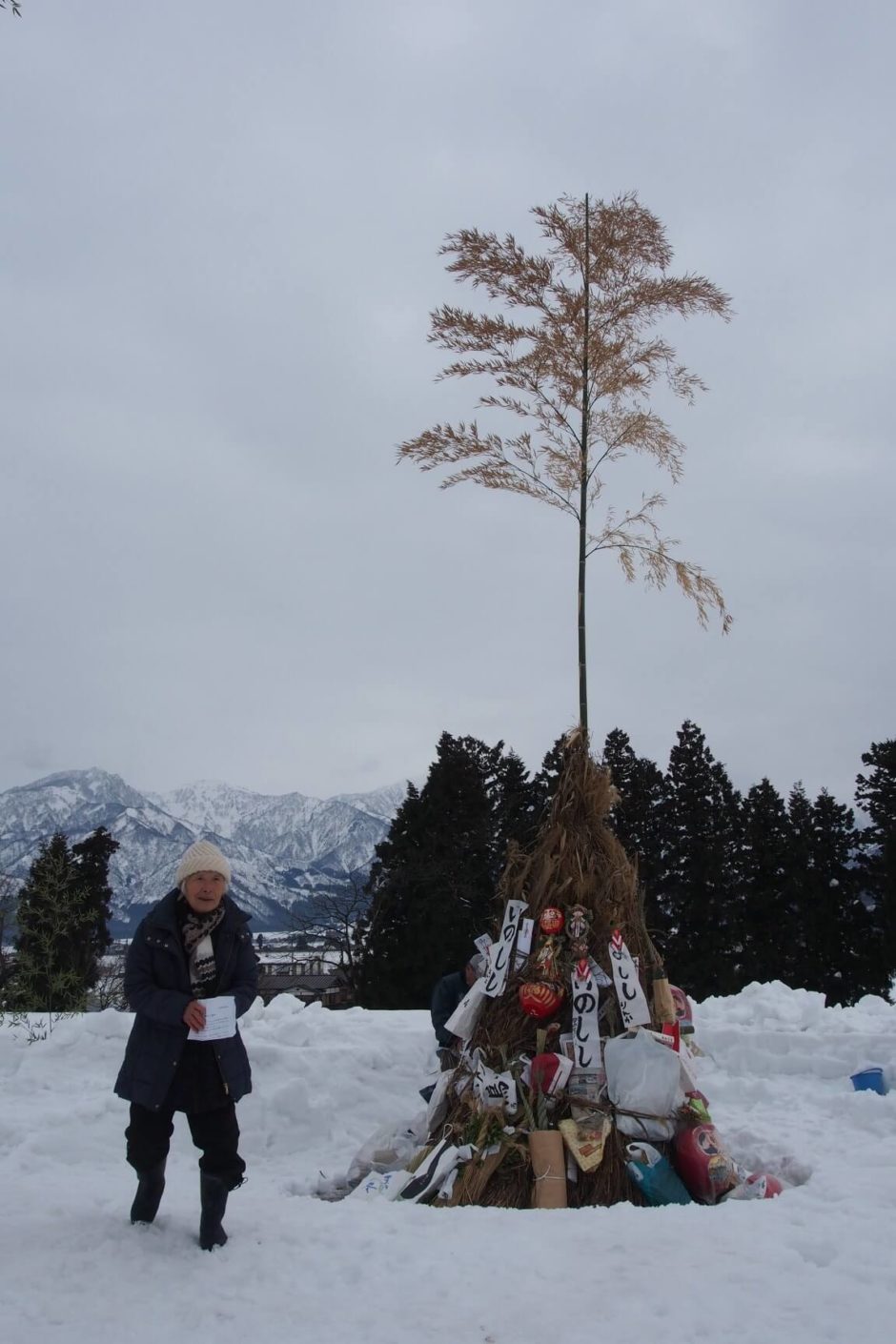
In Niigata, the dondoyaki bonfire ritual held at Little New Year in mid-January is known as Sainokami. People bring their New Year decorations and the first calligraphy they have written that year to burn on the bonfire, praying for safety at home, prosperity in business and a plentiful harvest.
The name is said to come from a deity who bars the way to evil spirits: saegiru kami, ‘the deity who bars the way’, became sae no kami and, in time, Sainokami.
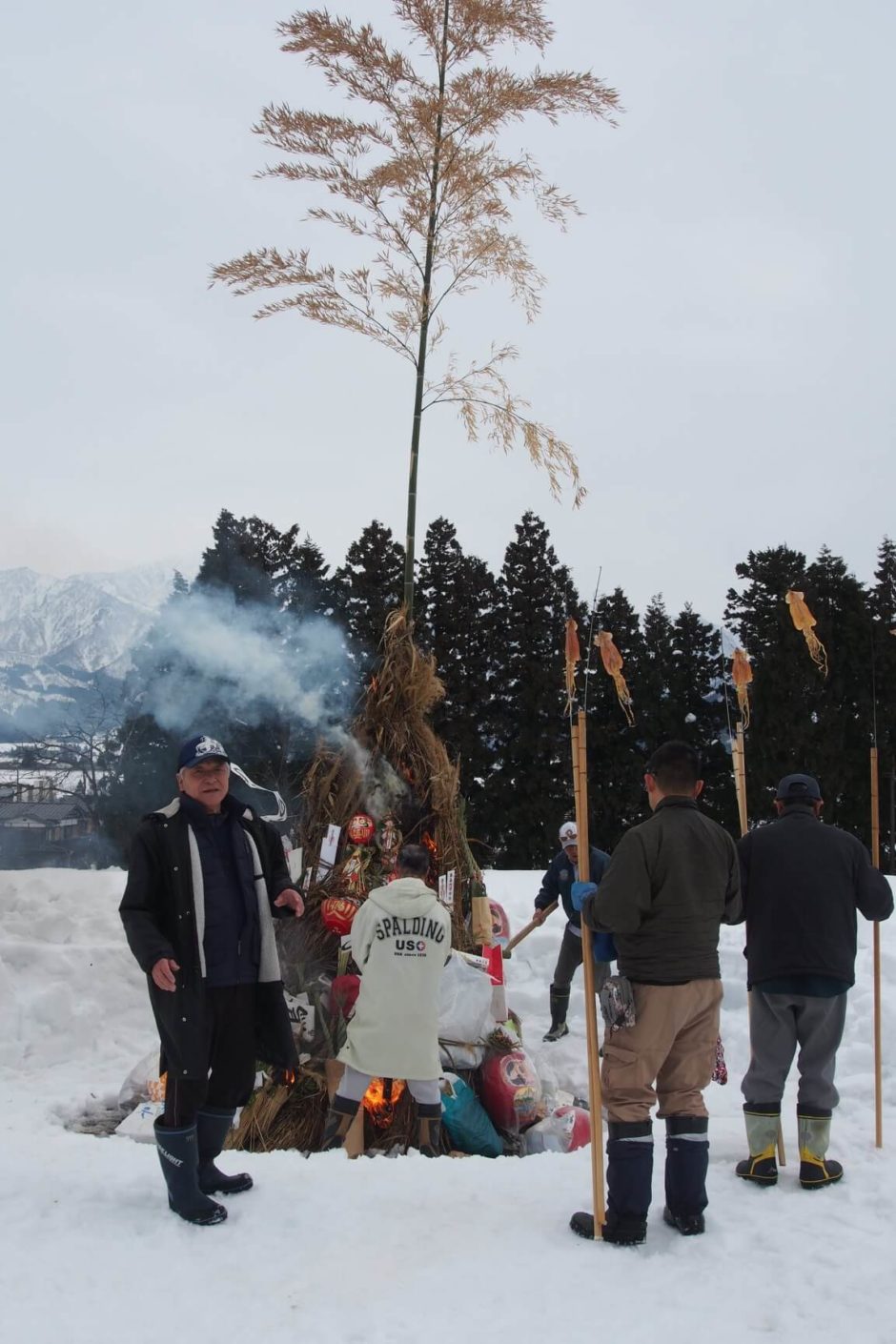
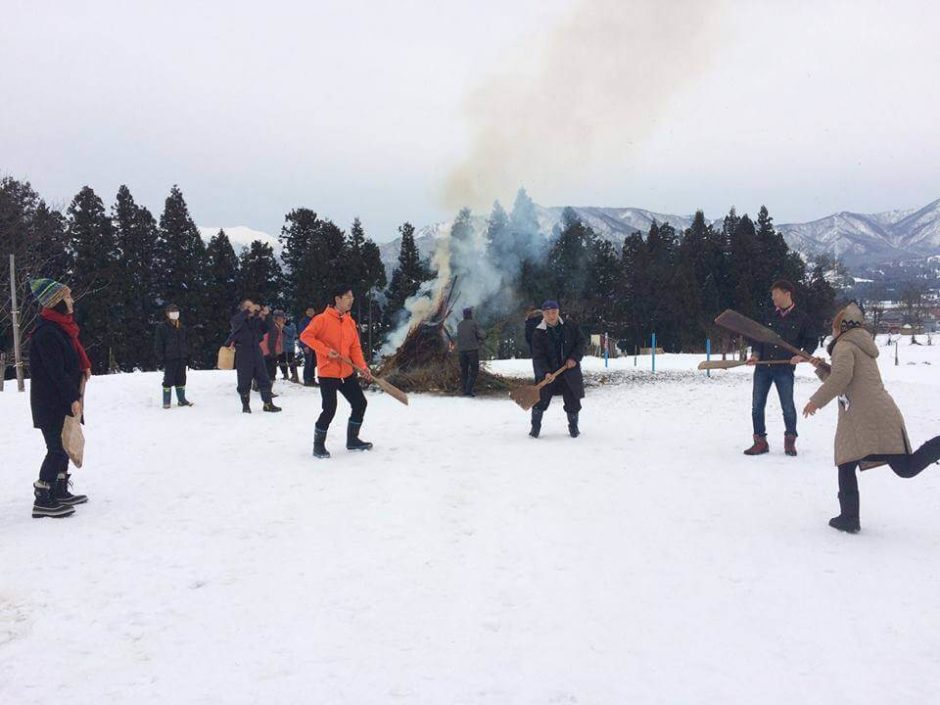
In Osawa, the district where Satoyama Jujo stands, men born under the same animal sign as the year in the Japanese zodiac lit the Sainokami pyre, which stood about five metres high. They prayed for a plentiful harvest and for everyone in the village to enjoy good health and be spared illness and misfortune.
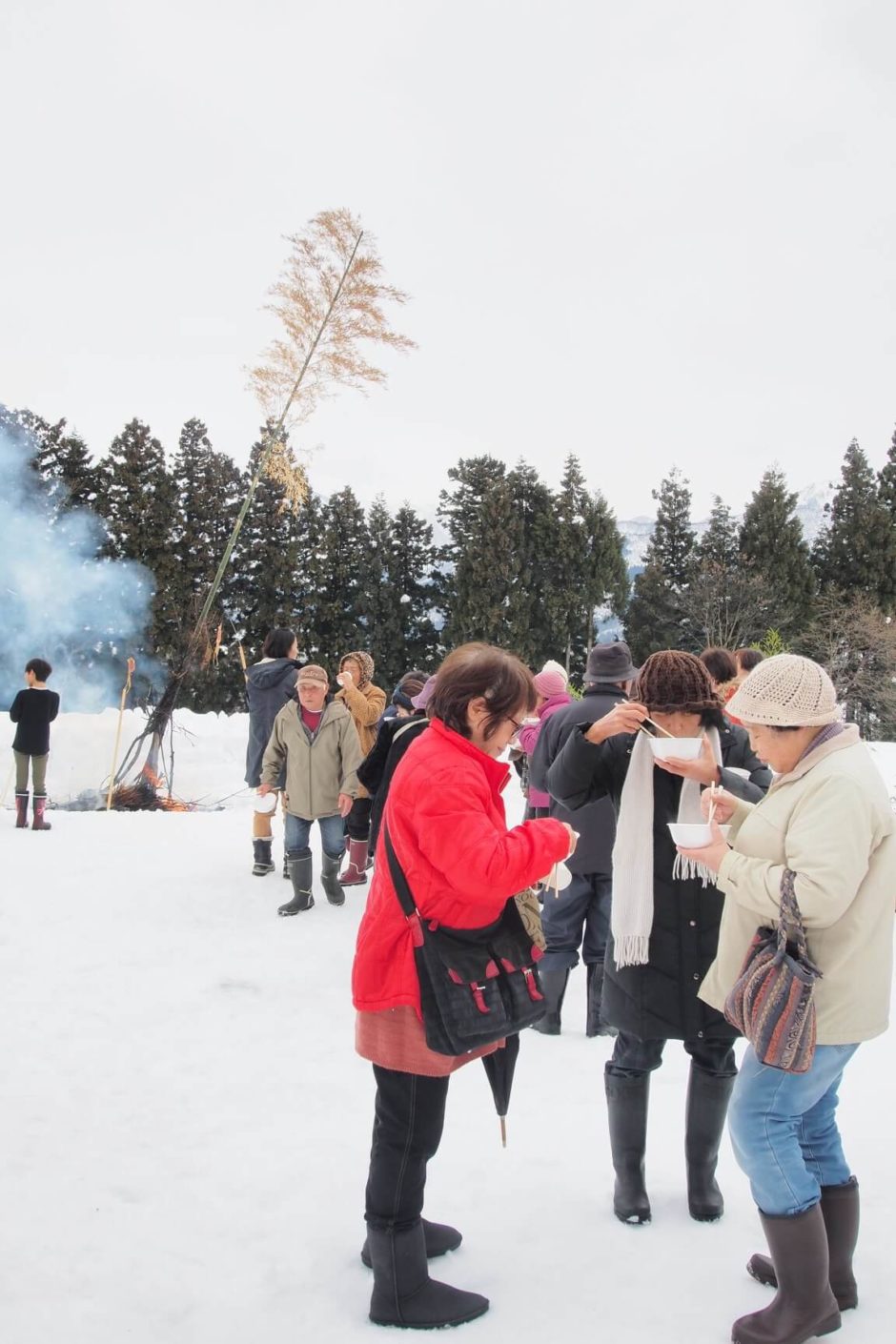
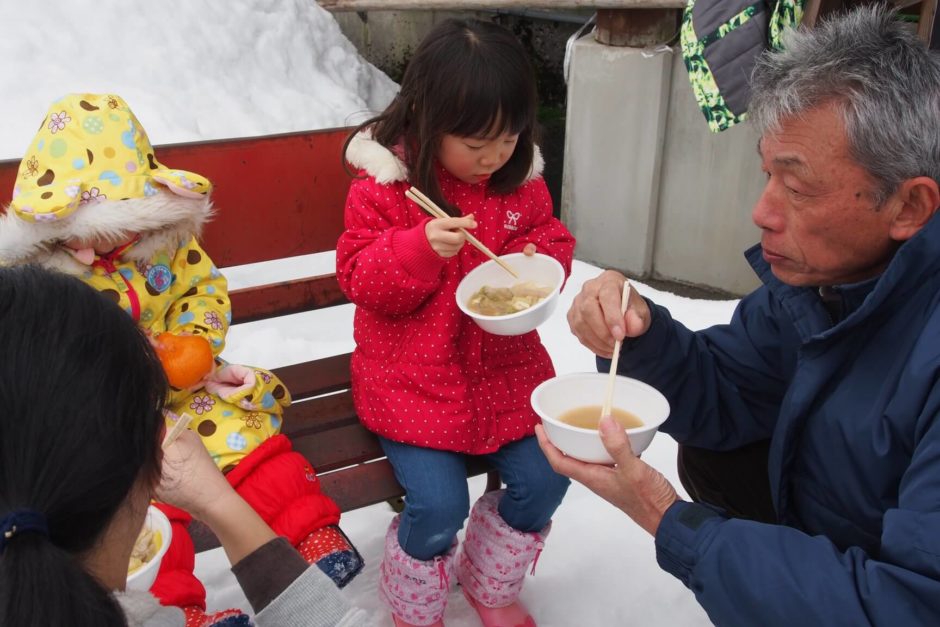
As the bonfire blazed, we toasted dried squid over the flames and were treated to pork and vegetable soup and amazake, a sweet rice drink. For those of us from Satoyama Jujo, it was a moment that warmed both body and spirit. There was also a rather intriguing game to try at Sainokami.
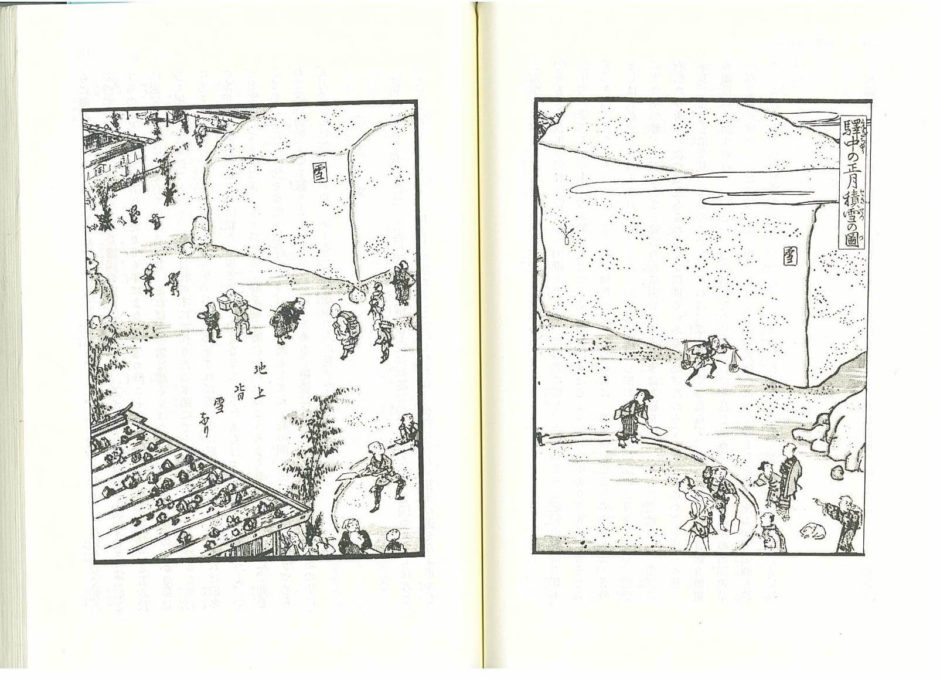
Hokuetsu Seppu, a bestselling account of life in the snow country written in the late Edo period, describes hagotsuki, a game people there used to play at New Year. Players stamped down the snow to make something like a sumo ring. They made a shuttlecock by sticking three copper pheasant feathers into a piece of deutzia wood about one sun (roughly three centimetres) long. To keep it in the air, they used a kosuki, a wooden shovel for digging snow. The shovels were much bigger than the paddles used in Edo, so it seems this was a game for adults rather than children. Anyone who let the shuttlecock drop might find themselves showered with snow as a forfeit rather than daubed with ink. The game died out for a time, but the people of Osawa brought it back so that people could play it at the Sainokami festival. We had a go too. It wasn’t easy with such big shovels, but we got quite caught up in the game and set a record for the number of hits in a row. Apparently we did better than last year. Somehow that makes us feel it’s going to be a good year. Our warm thanks to everyone in the village, the local kabuki theatre preservation society and the children’s association for all their hard work setting up the festival.
*The information in this article was current at the time of publication.