


In this series, we’ll introduce you to some of our favourite places to eat near Satoyama Jujo.
‘Where should we go for lunch tomorrow?’ That’s the question guests at Satoyama Jujo ask us most often.
We have quite a few answers ready. First up is Shinbashi, in the hot-spring district of Echigo-Yuzawa.
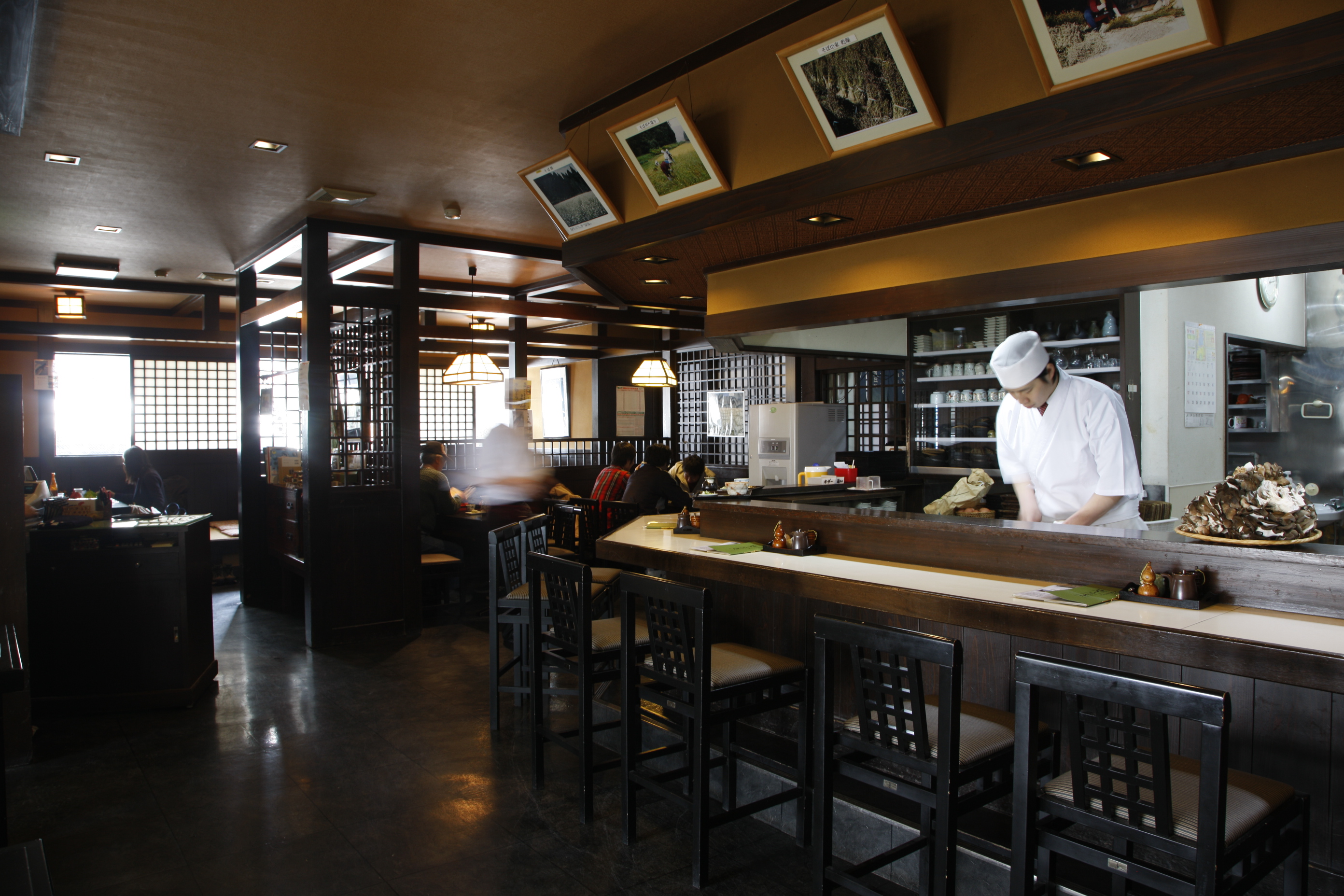
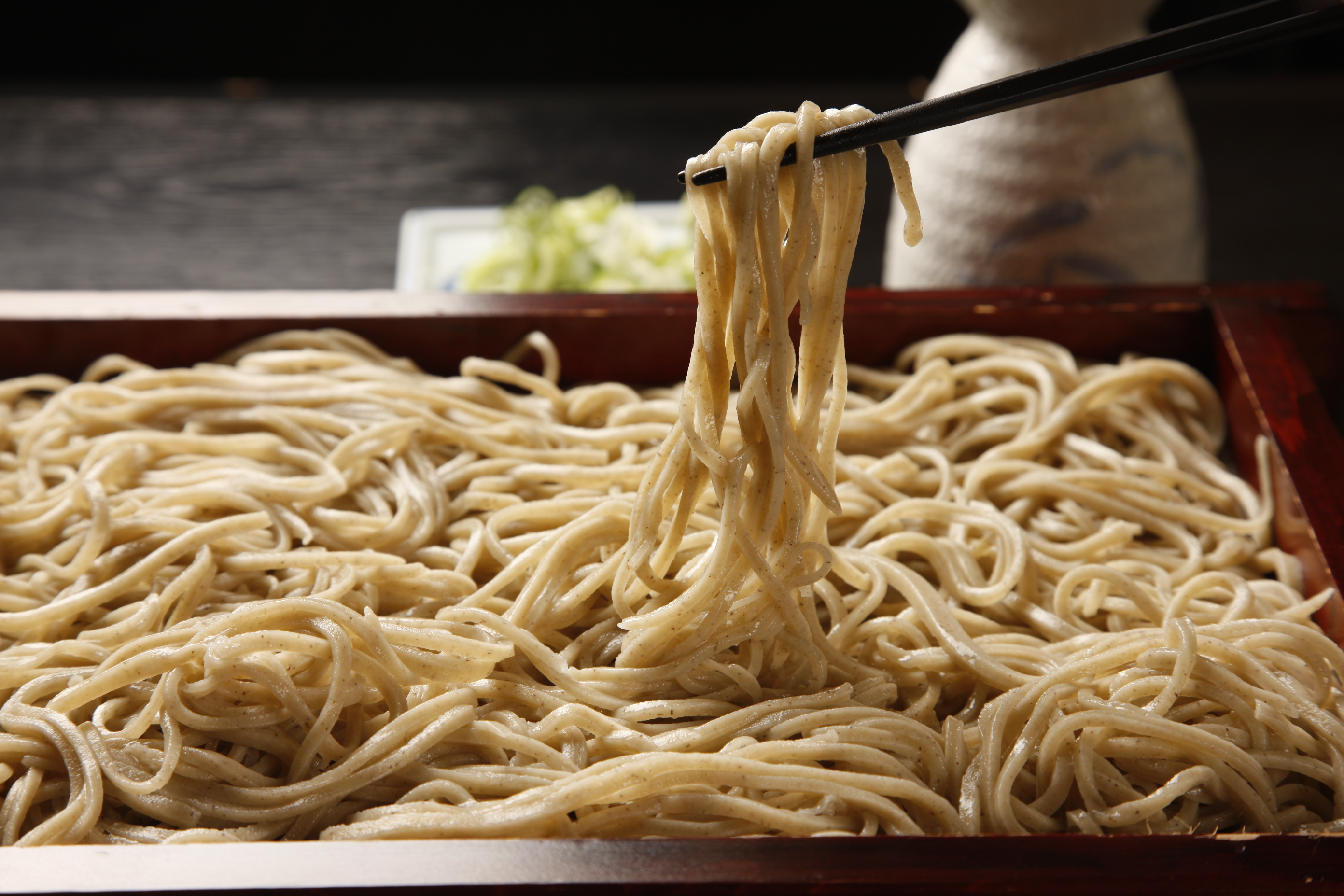
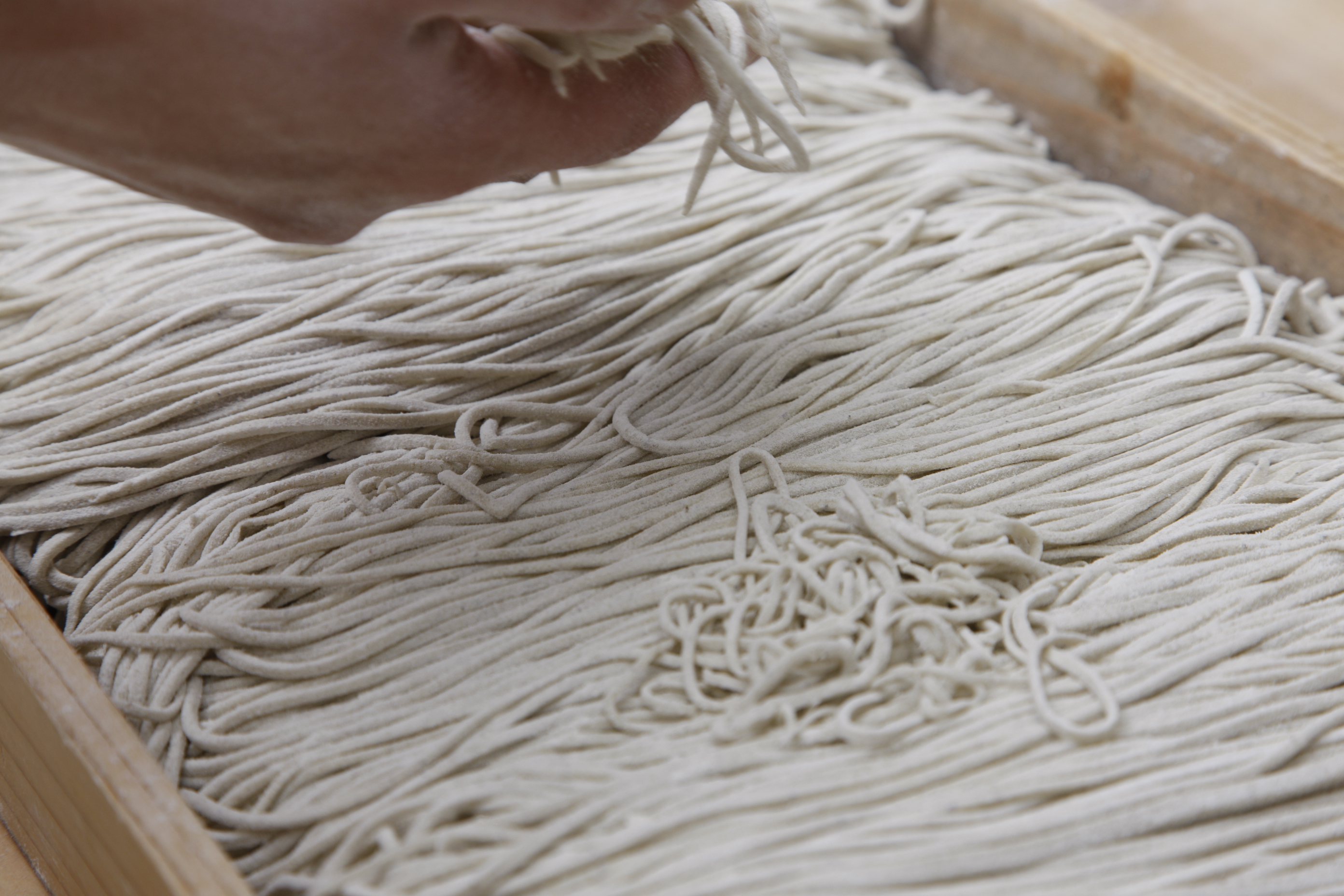
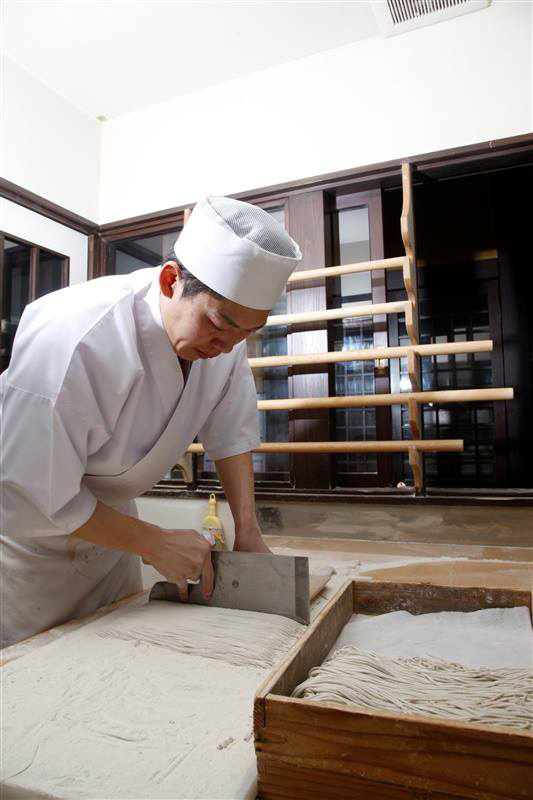
Uonuma, in Niigata Prefecture, is known for hegi soba, but very few restaurants make these buckwheat noodles by hand. Shinbashi does. Over the past few years, the cooks have refined not only their noodle-making technique but also their seasonings and dashi stock. Shinbashi now serves by far the best soba in Yuzawa.
Shinbashi also belongs to the ‘Flavours to Preserve Forever’ A-Class Gourmet project, whose membership is limited to places in the region that serve truly delicious food. Shinbashi takes just as much care in sourcing local ingredients. All its buckwheat comes from Niigata Prefecture, and in recent years the restaurant has been growing an increasing share of its own crop.
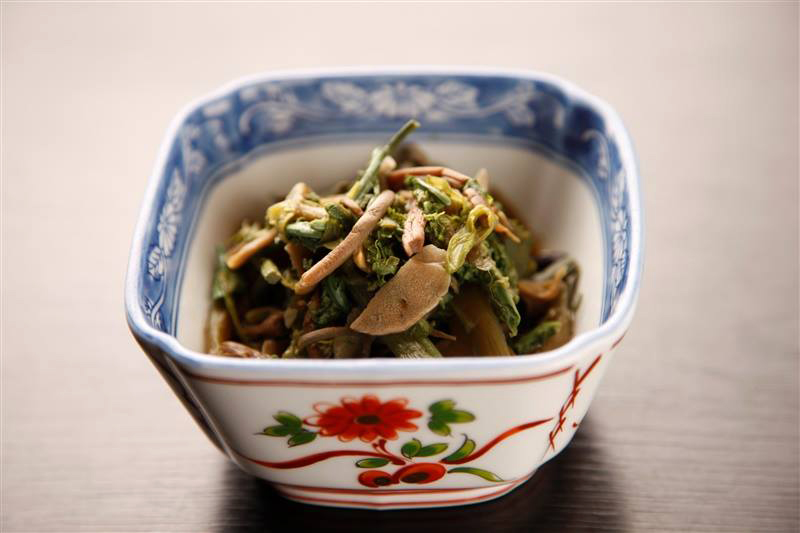
‘Handmade in the snow country’ is the idea behind Shinbashi’s wide choice of side dishes. Take the simmered dried herring. Drying the fish meant it could be carried far inland, and dried herring has long been a favourite in Uonuma. At Shinbashi, the cooks soak it for three days, then simmer it until even the bones are tender. The photograph above shows simmered wild mountain vegetables. In spring, everyone at the restaurant goes out early in the morning to gather them. They preserve a whole year’s supply in salt.
If you’re after soba in Yuzawa, remember the name: Shinbashi.
Shinbashi, Echigo-Yuzawa, Niigata: http://www.soba-shinbashi.net/
Snow Country A-Class Gourmet: https://snow-country.jp/?a=model_plan&n=64
Satoyama Jujo: satoyama-jujo.com
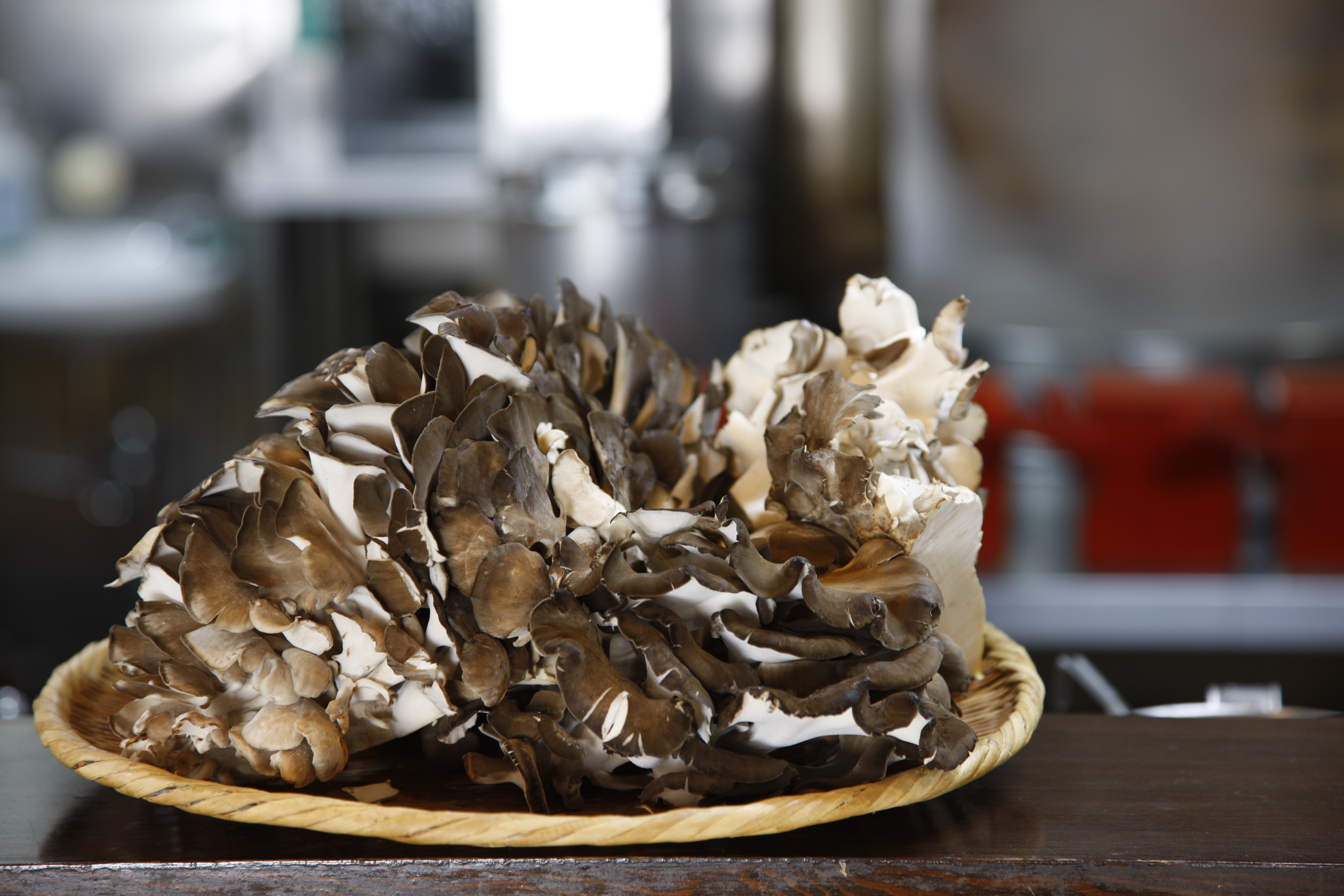
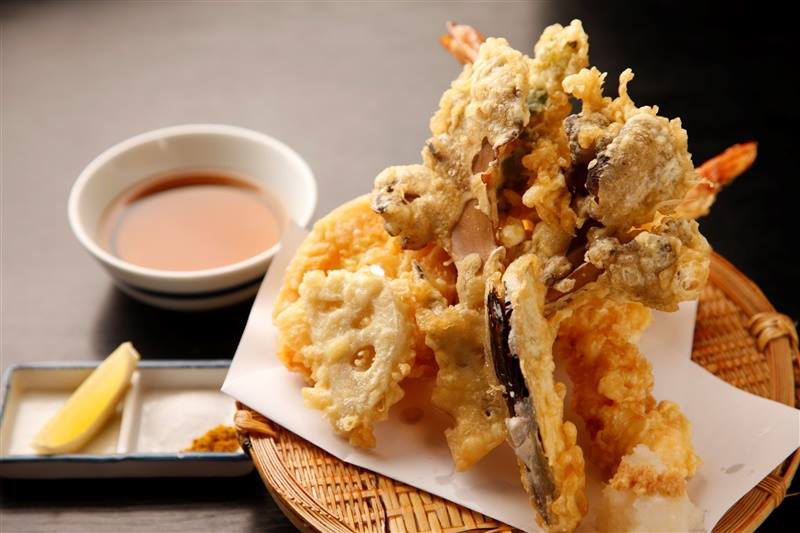
Giant maitake mushroom tempura – a house speciality! ↓
A little background on hegi soba, a Niigata speciality
The hegi in hegi soba originally referred to the rectangular tray on which the noodles are served. What sets Uonuma soba apart, though, is a seaweed called funori, used to bind the dough. More and more often, people use ‘hegi soba’ to mean noodles made with funori. Funori found its way into soba because this was a weaving region: the seaweed that weavers used to keep the weft threads taut also served to bind the noodles. Soba made with funori keeps its bite after cooking, which makes it ideal for weddings, funerals and other ceremonial occasions. Many people here like their soba to have a firm, almost rubbery spring to it.
So why is so little funori soba made by hand? A machine can give the noodles more of that spring. Almost all of Uonuma’s many soba restaurants make their noodles by machine. That’s how local people like them: they give the noodles a good dunk in a light dipping sauce and enjoy the way they slip down. To try machine-made hegi soba the way the locals like it, head to Nakanoya’s Shiozawa branch, a five-minute drive from Satoyama Jujo (there’s another branch in Echigo-Yuzawa). Or try Yoshiya in Tokamachi, 15 minutes away by car, or Kojimaya Sohonten, a 30-minute drive away. Drop in at lunchtime and you’ll always find these places bustling with locals. It’s a taste of everyday cooking in Uonuma.
Nakanoya: http://www.umaisoba.com/
Yoshiya: https://www.tokamachishikankou.jp/spot/nadaikisoba_yoshiya/
Kojimaya Sohonten: https://kojimaya.co.jp/
Satoyama Jujo: satoyama-jujo.com
For handmade hegi soba, our pick is Shinbashi! ↓
The information in this article was current at the time of publication.