


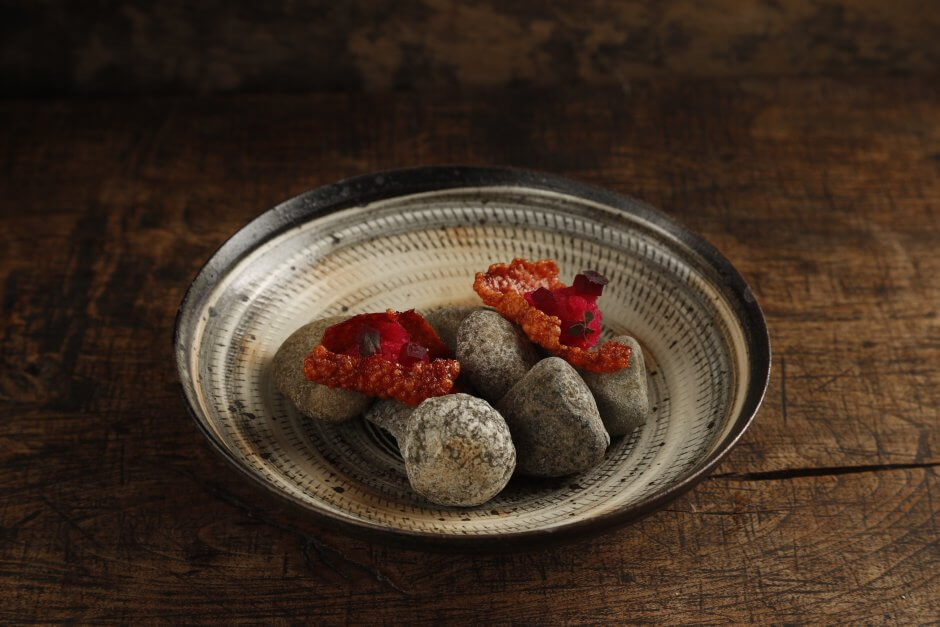
Why does a chef cook? What makes something taste good? These are the questions at the heart of our restaurant, primitif. Its name is French for ‘primitive’ or ‘fundamental’. In our cooking, we aim to bring civilisation and the elemental together. We use only ingredients that have a place in the food traditions of Uonuma and Okutadami, cooking them by the simplest of means and, at times, with the most advanced techniques.
We may be deep in the mountains, but we don’t serve ‘the sort of food you’d expect up here’.
At Oze Jujo we cook mainly with wild mountain greens, vegetables, dried cod, dried herring, pork and game. The late writer Takeshi Kaiko founded the Society for the Conservation of Okutadami’s Fish here and championed catch-and-release fishing. Out of respect for him, we don’t serve char, cherry salmon or pond smelt from Lake Okutadami. Out of respect for the lives taken, we also serve game in small quantities. Guests do sometimes tell us they’d like bear hotpot or other dishes they could only eat deep in the mountains. But bear dishes are now served all over Japan, and this appetite for bear meat has gone too far. More and more, people are hunting not to feed themselves but to put a popular dish on the menu. Yoichi Sato, the second-generation proprietor of Murasugi Hut, where Kaiko stayed, recalls: ‘Our protein up here came from dried cod and dried herring. In winter we hunted rabbits and bears, but we never took more than we needed to live on. That’s why we didn’t serve game to guests. Kaiko came in summer, so I don’t think he’d have eaten any. Dad used to buy pork and beef down in the village and serve it about once a week.’
Koide, at the foot of the mountains, is a thriving pig-farming town, also known for its many places specialising in fresh pork offal. That’s why pork is the main meat we serve at Oze Jujo.
Then there’s the question of seasoning. We want you to taste the delicate bitterness, acidity and umami – the savoury depth – of wild greens and vegetables, so we use no artificial flavour enhancers or food additives at all. We draw out umami through fermentation and season dishes with our own fermented condiments. But we use little salt and, as a rule, no sugar, so you may find the food underseasoned. If you do, take a sip of spring water from Mount Arasawa, then try another mouthful. You may be surprised at the subtleties you can taste.
To drink, we offer a selection of sake from Niigata, including Midorikawa, a celebrated local sake. The Midorikawa brewery has ties to Keizo Saji, the former chairman of Suntory, and Kaiko himself once worked for Suntory. There seem to have been several such connections linking Uonuma City in Niigata, Ginzan-daira, Suntory, Midorikawa and Kaiko. It’s because of those ties that at 10 Stories Hotel OZE (Oze Jujo) we serve only Suntory beer, and only Suntory whisky. Kaiko was well known for his love of whisky. In the evening, try one on the rocks and sip it slowly as you watch the campfire.
Bringing civilisation and the elemental together
I was born and grew up in Higashi, a small village in Gunma Prefecture’s Agatsuma District, now part of the town of Higashiagatsuma. Agatsuma Gorge, famous for its autumn colours, was in our village, and I always had a fishing rod in my schoolbag. I used to catch char and yamame, the river-dwelling form of cherry salmon, on my way home from school. I couldn’t bring myself to kill them, so I’d let them go in our garden pond. When the pond was teeming with fish, my grandmother would salt a few and grill them for me.
Dinner was mostly vegetables from my grandparents’ fields, and the rice came from the paddy behind the house. I remember the whole family turning out for the rice harvest in autumn. By the time I was in high school I hated living so far out in the country and longed for the city. But once I started cooking for a living, those memories of all I’d had as a boy were never far from my mind.
At 25 I took the plunge and went abroad. I didn’t choose a restaurant in Paris, but one with a Michelin star about an hour’s drive into the mountains from Nice in the south of France. Every day brought deliveries: vegetables, truffles, sometimes a whole tuna. I’d never seen anything like the bond between the chef and the producers who supplied the kitchen. I learnt, too, how important it was to look after the land and the sea around us.
Back in Japan I worked in a Tokyo restaurant, then joined Jiyujin’s 10 Stories Hotel, with its emphasis on cooking rooted in each locality. I worked at Matsumoto Jujo before becoming chef at Oze Jujo. What strikes me now is just how much there is in Japan’s mountains. With all that rain, the heat and humidity and four distinct seasons, they are even richer than the mountains of France. How many countries can there be where rivers reach into every corner like capillaries, watering the land they pass through?
What did that mountain plenty feel like as a boy? A salt-grilled char so hot it could burn you. The sweetness of corn fresh from the pot. Biting into a tomato we’d kept cool in water and sending the pulp flying. Feeling through the burnt rice husks with my work gloves on, hunting for roast sweet potatoes as though they were buried treasure…
‘Bring civilisation and the elemental together’ was the brief from our creative director, Iwasa. I’m not much one for arranging food with tweezers or painting pictures with different-coloured sauces. I’d rather put a good helping of something delicious straight onto the plate. At Matsumoto Jujo I learnt what you can do with a wood fire or charcoal, but I don’t want to stick to traditional methods alone. I want to use the newest techniques too.
There’s the ‘elemental’: those tastes I remember from boyhood. Then there’s ‘civilisation’: the techniques I’ve learnt over twenty years, starting at cookery school. I want to bring those together with the culinary traditions I learnt in France to give you a taste of this place, Oze and Okutadami.
I’m not going to give you a speech about sustainability. For me, growing up in the mountains, it was just how we lived. It’s the same here at Oze Jujo. I hope you’ll feel for yourself, with all five senses, how naturally people live sustainably in the mountains.
Takuhiro Aoyagi, chef
Takuhiro Aoyagi
Aoyagi comes from Higashi, a village in Agatsuma District, Gunma Prefecture, now part of Higashiagatsuma. After cookery school he worked in a French restaurant in Tokyo before joining Le Clos Saint-Pierre, a restaurant with one Michelin star in Provence, southern France. Back in Tokyo, he was sous-chef at La Coupe d’Or in Shirokane-Takanawa. Drawn to Jiyujin’s 10 Stories Hotel because each property builds its cooking around the food culture of its region, he joined the company and was posted to Matsumoto Jujo. Its restaurant, 367, explores the rich food traditions sustained by Japan’s longest river, the Shinano, known upstream as the Chikuma. There he came to appreciate anew the abundance of Japan’s mountains and the power of its rivers. He became chef at Oze Jujo in spring 2024.
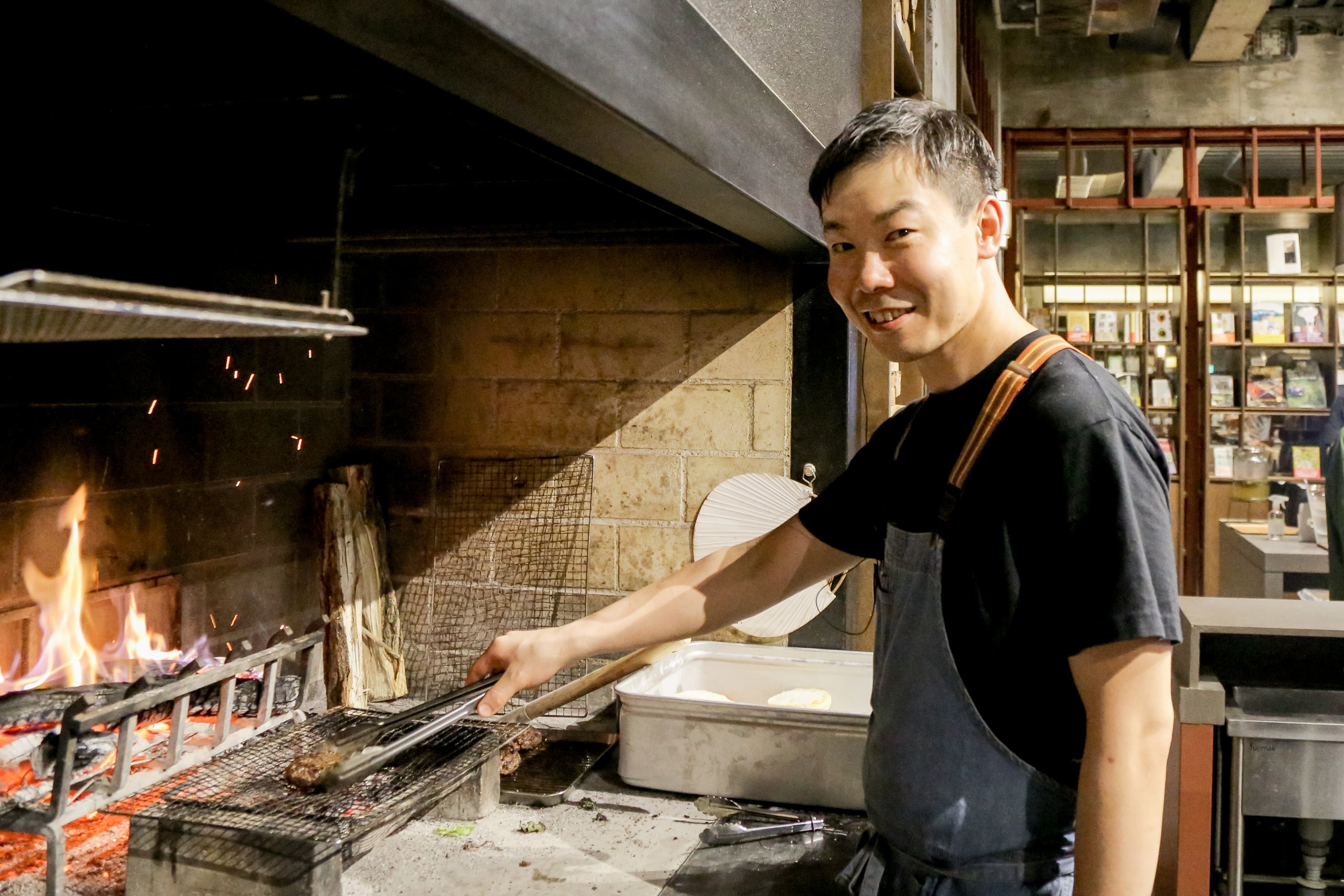
DINNER
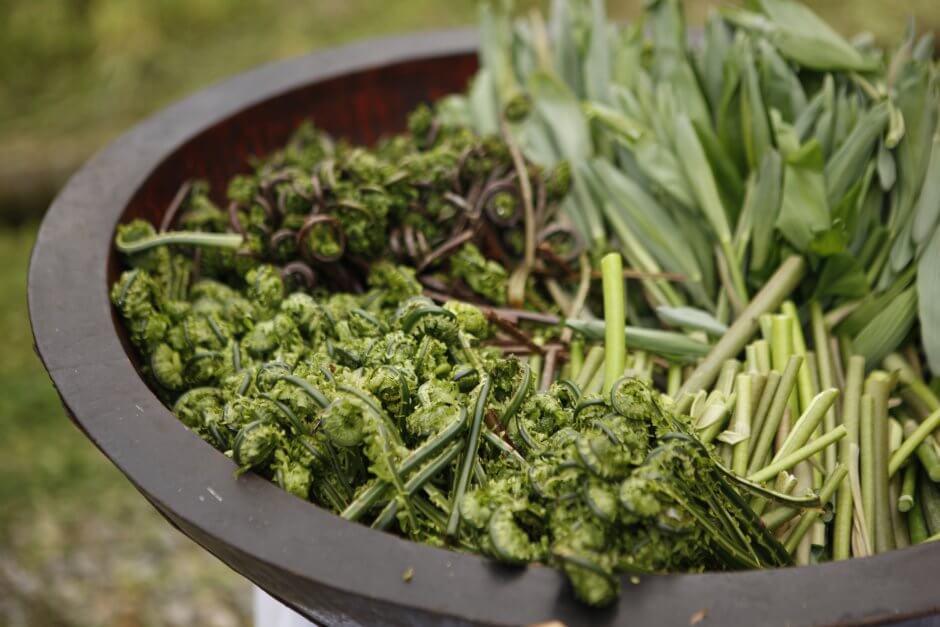
primitif (the standard dinner menu for a one-night stay with dinner and breakfast)
All 10 Stories Hotel properties share a commitment to ‘local gastronomy’: cooking that expresses a region’s landscape and climate, its culture and its history. At Oze Jujo we take that a step further, bringing civilisation and the elemental together. If something tastes good grilled, we simply grill it; if it tastes good steamed, we simply steam it. We use the latest techniques alongside these age-old methods to bring the food of Uonuma and Okutadami, past and present, to the table. To serve each dish at its best, we have two fixed dinner sittings. We cannot offer other start times.
Dinner sittings: 16:30 and 19:00
We recommend the 16:30 sitting: you can take your time over dinner while it’s still light, then spend the evening by the campfire (18:30–20:30).
Your preferred sitting is subject to availability.
We offer a children’s plate for children in the first years of primary school and younger.
Cook-your-own barbecue (Villa Suite guests only)
If you’re staying in a Villa Suite, you can opt to cook your own barbecue. We deliver the ingredients to each villa at 16:00. To protect the local environment and its wildlife, please finish barbecuing in the garden by 20:00 and check that no scraps have been left in the garden or nearby. If animals that roam at night, including bears, get into the habit of coming here for scraps, it becomes extremely dangerous.
In severe weather you will need to cook inside your room on a hotplate or similar appliance.
From the second night of your stay only: the shorter menu
From the second night of a consecutive stay, we offer a shorter menu: several starters, pizza, a main course and dessert. From the third night onwards we continue to vary the dishes. If there’s something you’d particularly like during your stay, please speak to the chef. We’ll do what we can.
BREAKFAST
When Takeshi Kaiko stayed in Ginzan-daira in 1970, electricity had yet to reach the settlement. One day Susumu Sato of Murasugi Hut served him some fried rice with wild mountain greens, a meal made for the staff. The story goes that Kaiko liked it so much he encouraged Sato to make it the hut’s speciality. In time the dish became known as Kaiko meshi, or ‘Kaiko’s rice’. To this day it’s a speciality not just of Ginzan-daira but of Yunotani, the village at the foot of the mountains that is now part of Uonuma City.
We took over the property that became 10 Stories Hotel OZE (Oze Jujo) from Yoichi and Mayumi Sato, the couple who ran Murasugi Hut in its second generation. As Mayumi told us, ‘If you fry Uonuma Koshihikari rice with wild greens and shape it into rice balls, it gets lovely and chewy, almost like okowa, steamed sticky rice. It tastes so good up in the mountains.’
Mayumi gave us the idea for our breakfast tribute to Kaiko meshi: sansai chimaki, wrapped rice parcels with wild mountain greens. Nowadays there are three rules for calling a dish Kaiko meshi: it must contain at least three kinds of wild greens, one of them zenmai (Japanese royal fern); it must be stir-fried; and it must be topped with red pickled ginger. Our chimaki aren’t Kaiko meshi, then, but as you eat your breakfast, we hope you’ll imagine the taste of that fried rice Kaiko ate looking out at the mountains. If you’re setting off early for Oze, to climb a mountain or to see the clouds cascading like a waterfall, we’ll give you your chimaki the evening before. Enjoy them on the boat or up on the mountain.
Breakfast is available at 08:00, 09:00 or 09:30.
Lunch (guests staying two or more consecutive nights only)
¥1,500 per person, excluding tax
We serve freshly cooked Uonuma Koshihikari rice with vegetable side dishes and soup. If you like, pour the soup over your rice to eat it ochazuke-style. You can also choose one of the dishes we make for the staff at Oze Jujo, such as game curry, a bowl of rice topped with Uonuma aubergines, or a Chinese-style rice bowl with wild mountain greens.
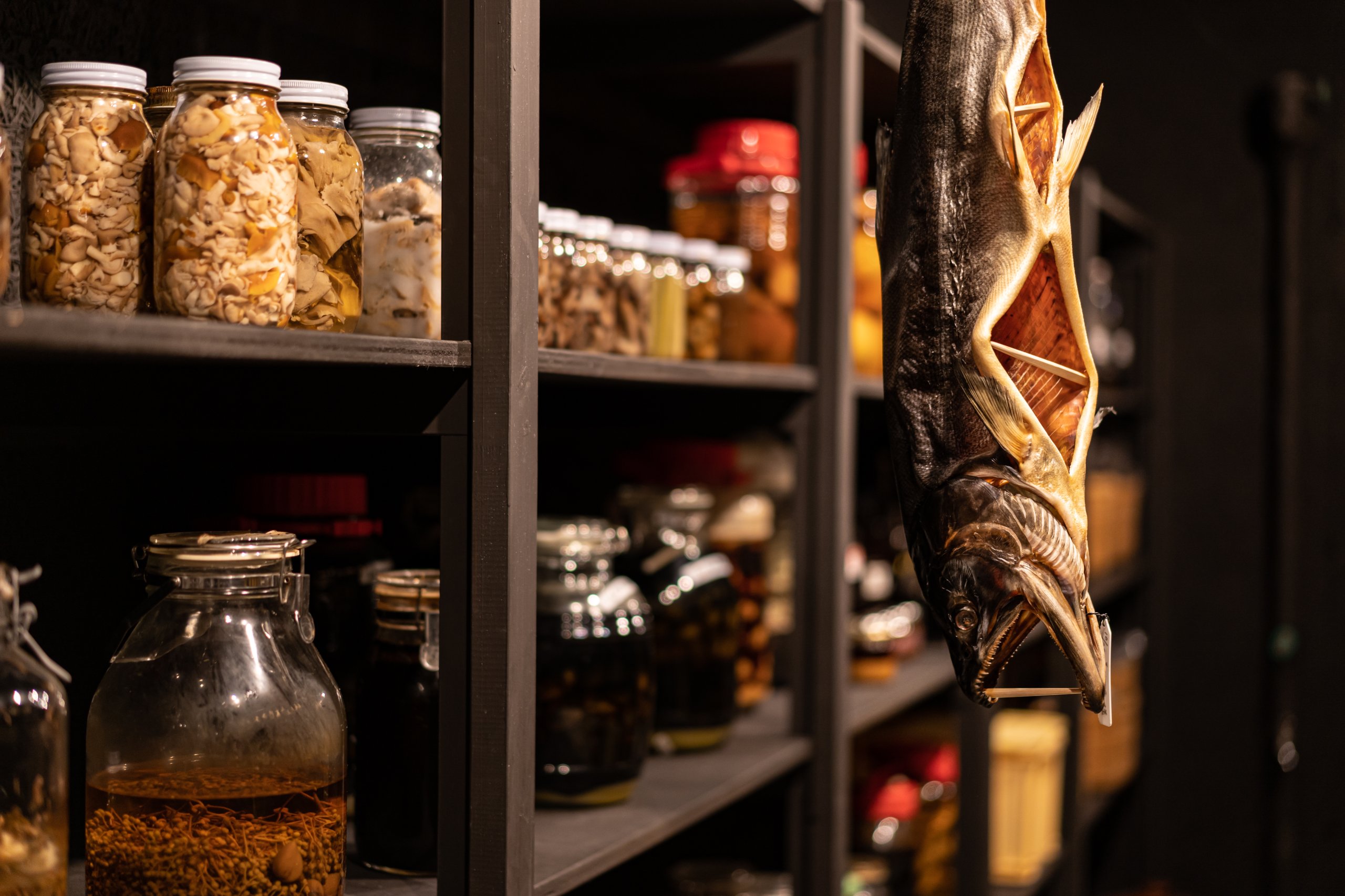
To spare us all disappointment, please read this before booking
If you’re thinking of staying with us, this is the one thing we’d ask you to read. We imagine that for most of you the food matters enormously when you travel. For many, it’s the meals that make or break a stay. Yet taste is personal: there’s no dish everyone finds delicious. From a marketing point of view, of course, there are dishes and ingredients you can count on a great many people to like. Most restaurants and places to stay do indeed serve that sort of food.
At 10 Stories Hotel we take quite a different approach to food.
Each property has an idea behind it and a theme of its own. Of course we want as many people as possible to enjoy our cooking, and we work hard at that. Even so, at each property a few groups of guests each year tell us, ‘It’s not to our taste at all.’
That’s a miserable outcome for the guests, and a disappointment for us too. A review from just one person can demoralise the whole team and even the producers who supply us. Sometimes it can drive someone into depression. The person posting may mean well: ‘I don’t want anyone else to feel the way I did.’ But for the staff and producers who put their lives into this work, it leaves a wound. They’re left asking, ‘Why couldn’t we get across what we were trying to do?’
We want to avoid that mismatch wherever we can. Please read on. If you find yourself thinking, ‘This might not suit my palate, or the kind of food I like’, we’d be grateful if you’d think again about staying with us.
- At every property our theme is ‘local gastronomy’: expressing the landscape, climate, culture and history of a place through its food.
This isn’t the food you’d usually find at a ryokan, a traditional Japanese inn. Our chef at Oze Jujo trained in French cuisine, but it isn’t French food either. Every day we work at finding ways to express the landscape, climate, culture and history of Oze and Okutadami in our cooking.
- As a rule, we don’t use luxury ingredients.
A menu built around luxury or rare ingredients may be easier to sell, but we don’t allow it at any of our properties. Neither price nor rarity tells you how good something tastes. Rather than chasing expensive ingredients, we put our efforts into our relationships with people who produce food with real flavour. We want to bring out the best in what they grow or make.
- You may find the seasoning light.
To make the way we eat more sustainable, we look first to plants rather than animal products for umami, the savoury depth in a dish. With vegetables in particular, we want you to taste the vegetable itself, so we keep salt to a minimum. None of our properties uses artificial flavour enhancers, even those already present in a prepared ingredient. We also use as little refined white sugar as possible; at Satoyama Jujo we use none at all.
- We don’t cook for the camera.
Intricate little amuse-bouches and plates that look like works of art are, we think, the province of chefs with a particular artistic bent. There are imitations in plenty of places, but a copy is still a copy. What would be the point of cooking here in Oze if that was what we did? If anything, the food at Oze Jujo looks rather plain. The menu includes dishes that are ‘just grilled’ or ‘just steamed’.
- What we can promise is that we take this work seriously.
There are probably plenty of ways we fall short. You may think, ‘It’s a fine idea, but the cooking hasn’t caught up.’ What we can promise is that we take the work seriously. We want to do better tomorrow than today, and next year than this. All of us are working towards a better way of eating. We want you to feel something of the natural world deep in the mountains of Okutadami and Oze. And we want to earn your respect.
Toru Iwasa, creative director
The information given here reflects the time of publication.