


Redefine Sustainability
Redefining what ‘sustainable’ means
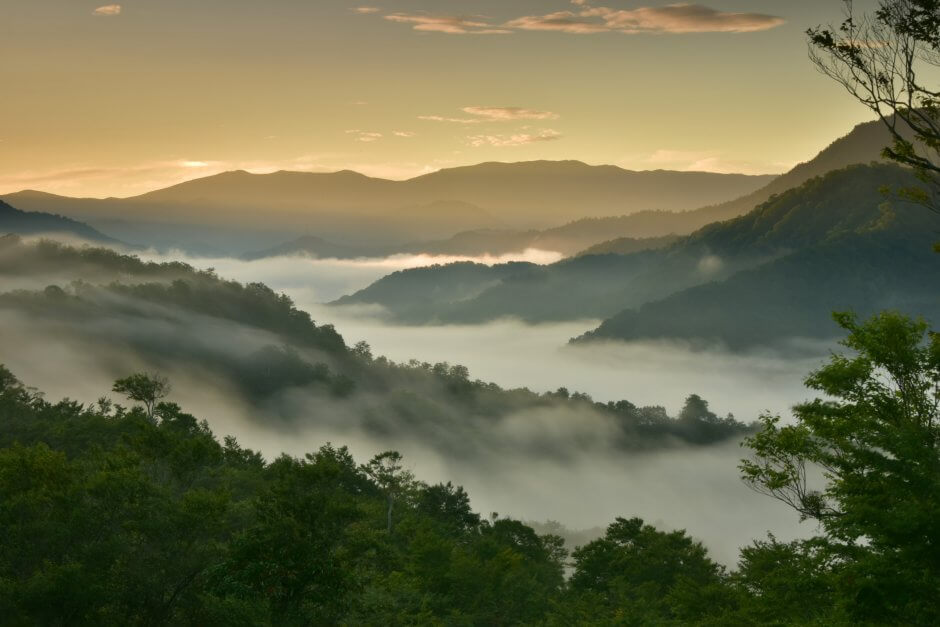
This is one of Japan’s most remote places, and one of its snowiest. It lies even deeper in the mountains than Oze itself – you might call it ‘inner Oze’. Living with the mountains is simply what people do here. As far as the eye can see, the mountains around Oze Jujo are land held in common by the 58 people who once lived here. They are known locally as the mountains of the ‘58 Association’.
Signs throughout the area forbid the gathering of wild mountain vegetables. The reason is that the successors to those 58 people still live with the mountains and make their living from them. After more than ten years of work by the late writer Takeshi Kaiko and local residents, the Kitanomata River was designated as protected waters under the Fisheries Resources Protection Act in 1981 and became a permanent no-fishing zone. Such protection is extremely rare in Japan. Here in Ginzan-daira, in Okutadami, people take it for granted that you do not gather too many wild vegetables. They also shoot bears and deer from time to time to keep the ecosystem in balance.
You might sum this up by saying that people here take an active part in conservation and that the hunting tradition lives on. But what we sense here goes deeper: this is a place where civilisation and the primeval world meet. Perhaps it is an oasis where urban civilisation and the wilderness coexist in balance.
Okutadami, home to 10 Stories Hotel OZE (Oze Jujo), is also the site of the Okutadami Dam, which generates more electricity than any other dam in Japan. It was completed in 1959, a year before Kansai Electric Power’s Kurobe No. 4 Dam, and its output surpasses Kurobe’s. That output gives some idea of the extraordinary scale of the landscape around it. Upstream of the dam lies Oze, a vast natural store of water.
Like Kurobe No. 4, Okutadami was one of the most difficult construction projects of the century. Had the film The Sun of Kurobe been The Sun of Okutadami instead, the Uonuma–Oze Route would surely be one of Japan’s great tourist destinations today, thronged with visitors from overseas.
As it is, Okutadami and the Uonuma–Oze Route make up the quietest part of Oze, an area untouched by tourist development. Alongside the primeval wilderness stands Japan’s leading dam by power output, which helped sustain the country’s rapid post-war economic growth. As on the Tateyama Kurobe Alpine Route, there is a long, long tunnel that no one would have built were it not for the dam. Unlike the Alpine Route, though, this route has no ban on private cars: you can drive through the tunnel yourself.
Here we keep coming back to one question: what does ‘sustainable’ mean? A comparison with Tateyama Kurobe gives us plenty to consider, from rapid economic growth and tourism development to nature conservation and overtourism. There is also the story of the people who have lived here and the history of development in these mountains. To understand how the two are intertwined is to see, in concrete terms, what the Sustainable Development Goals are about.
There is no right answer. That is what makes human society interesting, and why these questions are worth wrestling with as we look to tomorrow. Nature, meanwhile, goes on as it always has: water wells up, the trees stand where they stood, rain falls, and today, once again, the thunder is deafening.
At Jiyujin, we think of our hotels as publications you experience by staying in them. We opened our first, 10 Stories Hotel UONUMA (Satoyama Jujo), in 2014. Its guiding idea was ‘Redefine Luxury’: to rethink what luxury means. For 10 Stories Hotel OZE (Oze Jujo), which is to open ten years later, the idea is ‘Redefine Sustainability’: to rethink what sustainability means.
Walk through Oze and get close to nature, watch the setting sun burn red from the spa and sauna, taste food that evokes something primeval… ‘Wellness Tourism’, ‘Wellness Resort’ or ‘Wellness & Retreat’ might be convenient labels for what you can experience here. But for those of us who created Oze Jujo, the idea is ‘Redefine Sustainability’.
One night is not enough to understand this landscape, nor is it enough for us to convey what makes Ginzan-daira so extraordinary. We hope you will stay at least two nights – three or four if you can – and that, while you are here, you will get a sense of what ‘sustainable’ means and what we, as human beings, need to do now.
Creative Director: Toru Iwasa
*The information given here reflects the time of publication.