


If there’s one magazine the culinary world trusts above all others, it’s Ryori Tsushin. Its publisher, Ryori Tsushinsha, is part of the Amana Group. At the group’s Tennozu offices there’s a gathering space called meet-in cafe, and that’s where an event called ‘Niigata Full Course’ took place.
As the name suggests, the idea was to give guests a taste of everything Niigata has to offer. And for an occasion as important as this, it was up to us at Satoyama Jujo to do the cooking.
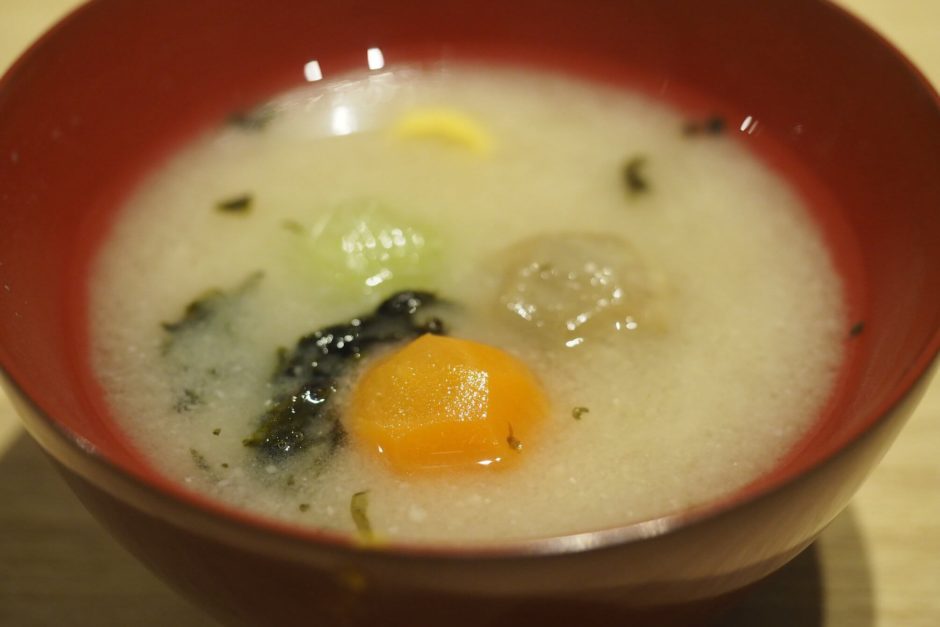
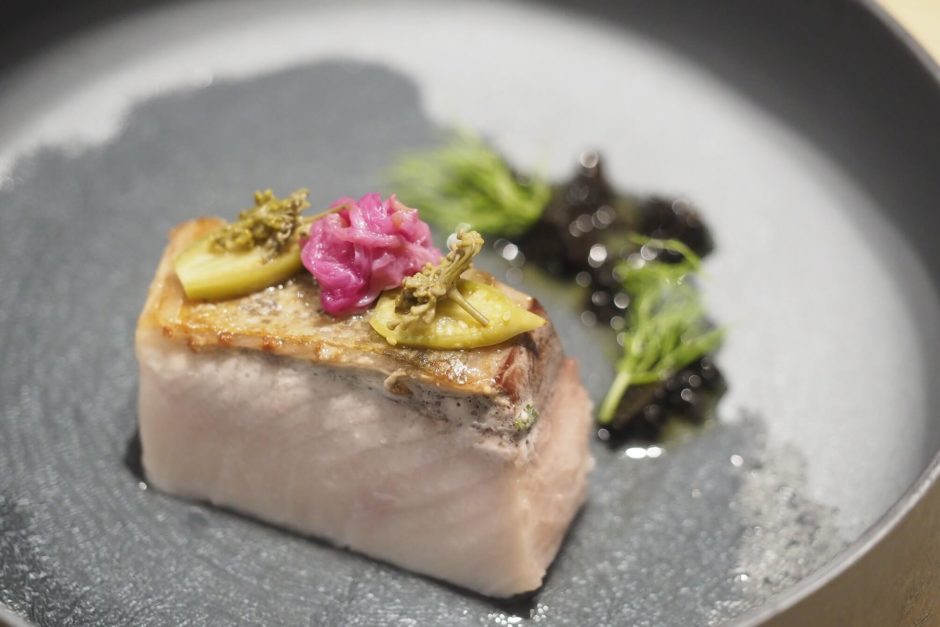
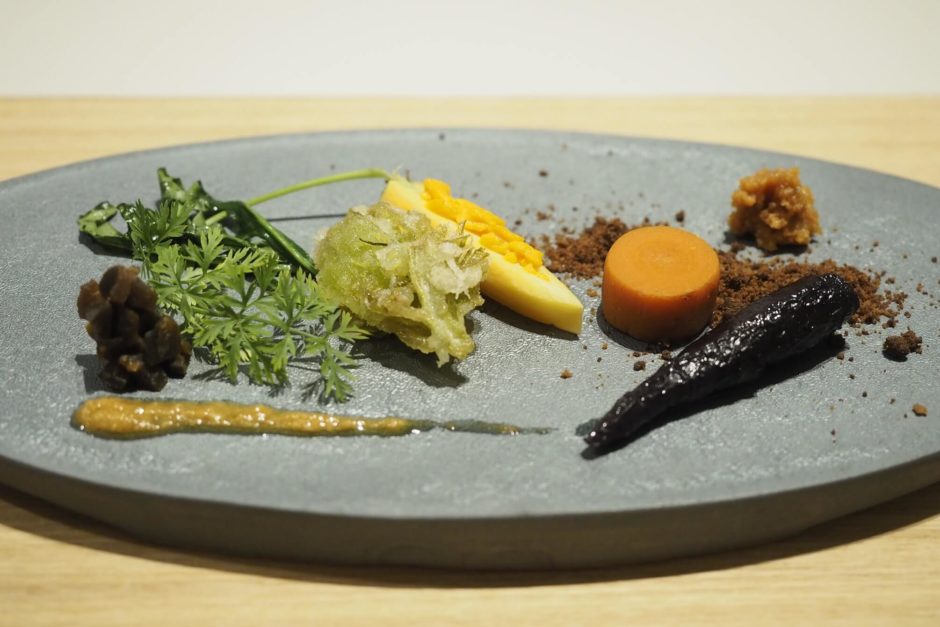
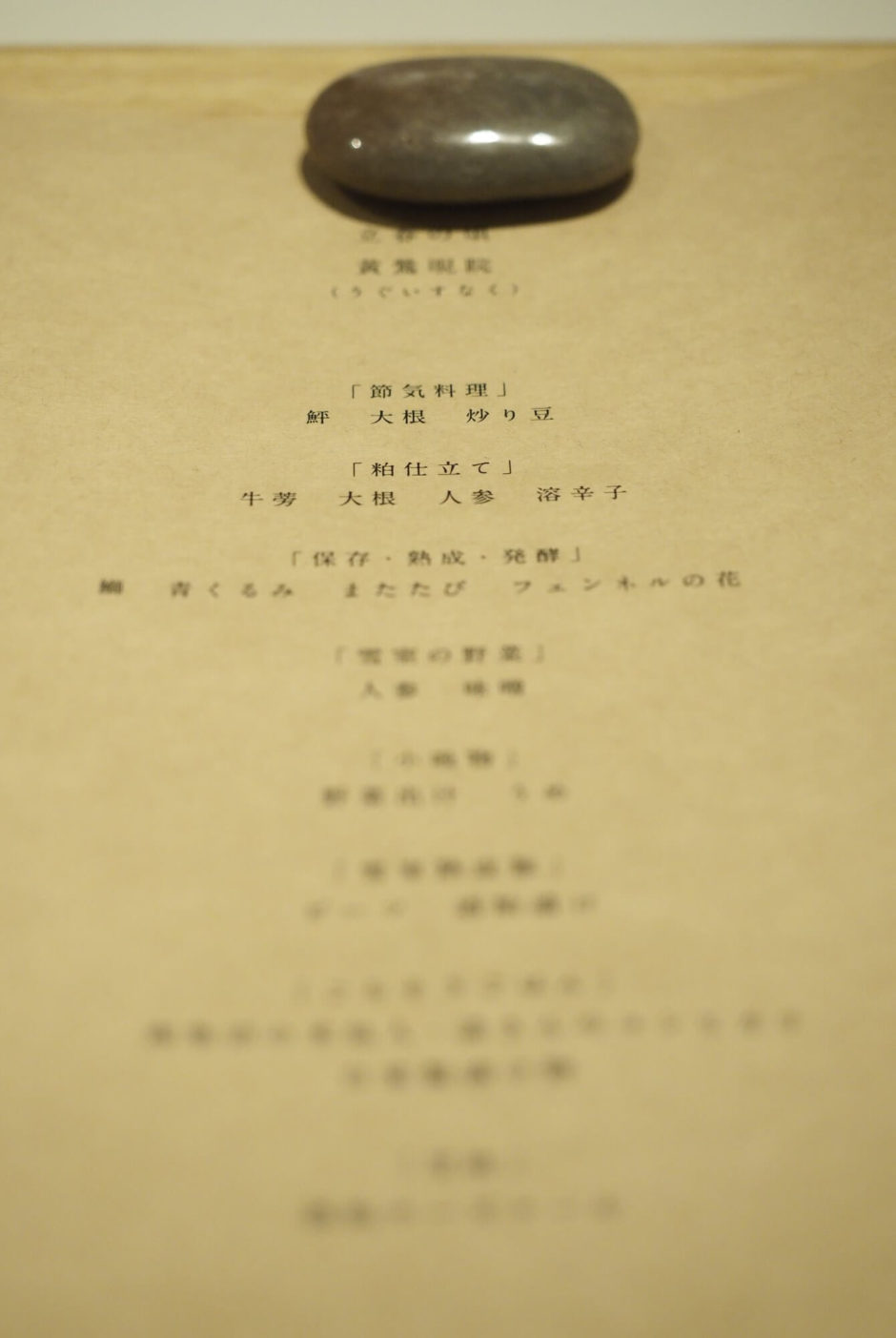
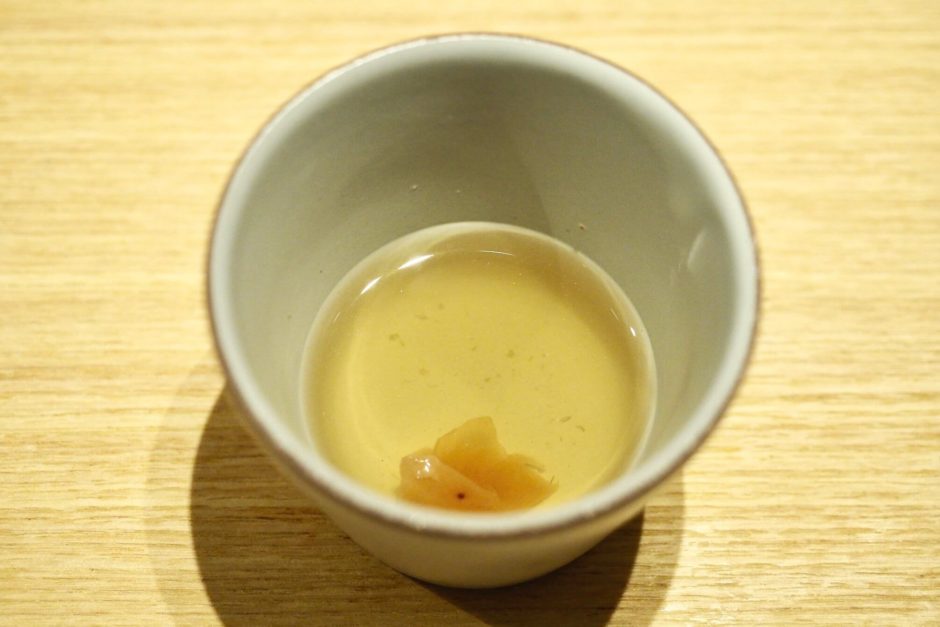
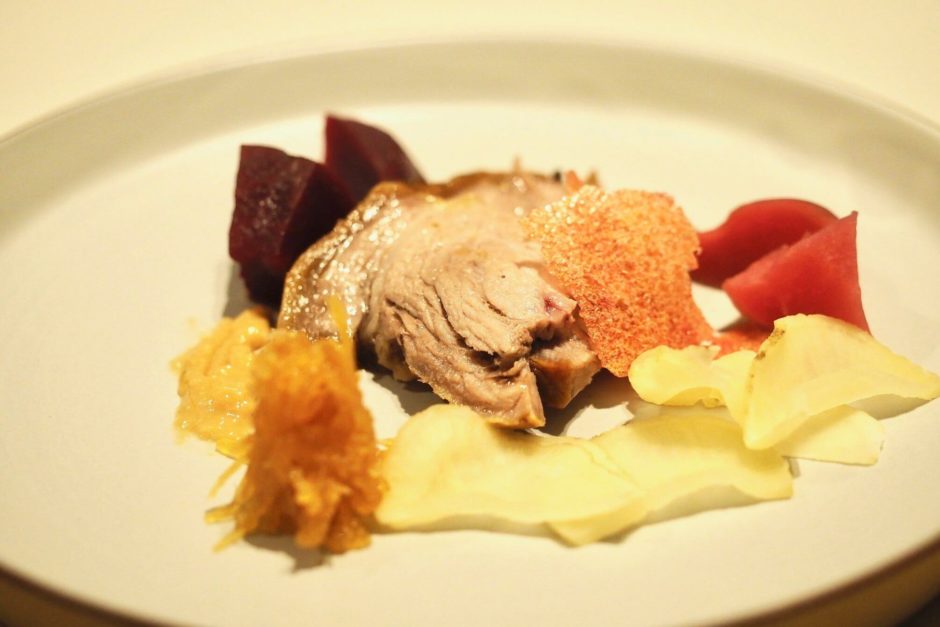
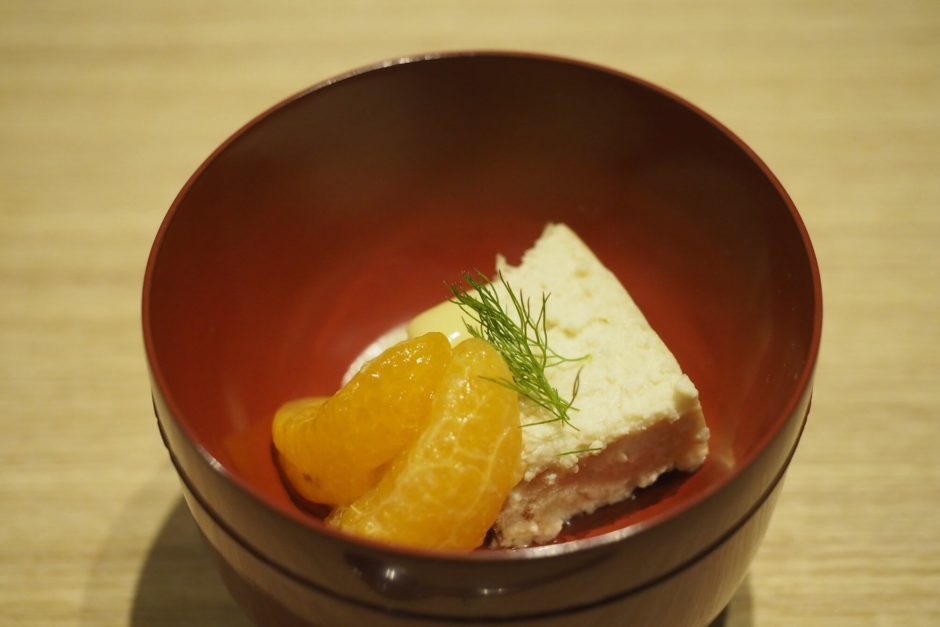
Five of our team prepared and served the food at meet-in cafe in Tokyo’s Tennozu district. Cooking away from our own kitchen is hard enough. Harder still was giving guests a feel for Niigata’s landscape, climate and culture in the heart of Tokyo. When you visit Satoyama Jujo, what you experience there gives the food its story. But this was Tokyo. How to tell that story was something the team said they ‘really struggled with’.
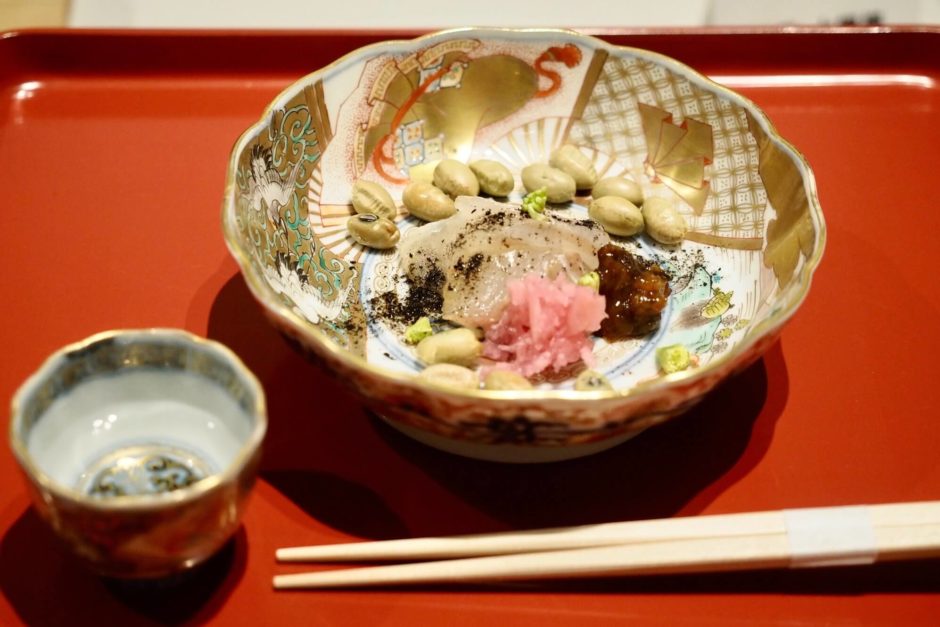
So we decided to open with a gozen: a selection of dishes served together on an individual tray for each guest. In the heyday of the Kitamaebune coastal trading ships, Niigata was the largest port on the Sea of Japan and flourished as a meeting place for cultures. The matching sets of lacquerware and the porcelain shipped from Imari both tell that story. From the port, small boats carried goods up the Shinano, Japan’s longest river. That was how influences from Kyoto and all over Japan reached Uonuma, where a distinctive local culture took shape. We kept the dishes even simpler than we do at Satoyama Jujo, with no elaborate garnishes or showy presentation. We used as little as possible in the way of seasonings such as soy sauce, salt and miso. Instead, we seasoned the dishes by layering the flavours of fermented foods. Salt goes into fermented foods too, of course, and salt is still salt. But the umami – that deep savoury flavour – you get by layering fermented foods is quite different from what you get by simply adding salt. The saltiness has lost its sharp edge, too, so the flavour is very gentle. That was the theme running quietly through the meal: the ingredients’ own flavours, with a saltiness that brings a different kind of umami. We can’t name our guests here, but every one of them was a leading figure in Japan’s culinary world. Thank you so much for giving us this wonderful opportunity. We’ll keep working at our craft, and we’d be grateful for your continued support.
*The information in this article was current at the time of publication.