


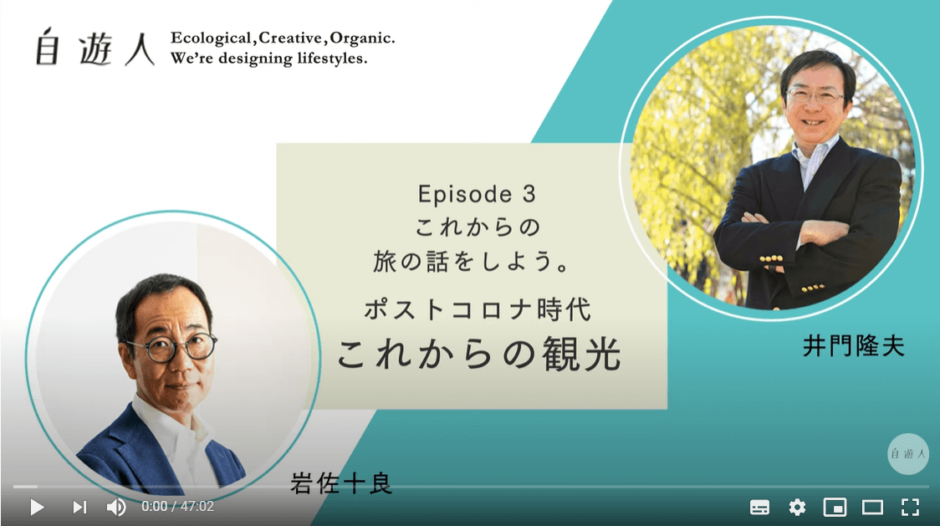
It goes without saying that the travel industry faces an unprecedented crisis. How do we get through a crisis when there’s no precedent to draw on? I discussed that question with Takao Ido, a professor in the Department of Tourism Policy at Takasaki City University of Economics.
Tourism supports such a wide range of businesses in Japan’s regions that it is no exaggeration to call it a mainstay of their economies. And as Japan’s population continues to fall, there is no doubt that tourism will be a mainstay of the national economy in the years ahead.
Yet tourism itself has to change. We thought hard about what it would take for tourism to become a true economic mainstay. What should we be doing now?
Most people seem to oppose the Go To campaign, but it’s like an automated external defibrillator. Unless we can revive the industry now, most accommodation and tourism businesses won’t survive. I hope you’ll watch, not just if you work in tourism but also if you oppose the Go To campaign. And please subscribe to the channel!
Jiyujin Channel Vol. 03: ‘Let’s Talk About the Future of Travel’
Takao Ido (Ido Tourism Research Institute) in conversation with Toru Iwasa (Satoyama Jujo)
https://www.youtube.com/watch?v=z8ykxSXnLmY&t=1577s
In this episode (about 45 minutes):
The world after COVID-19: the disappearance of overseas visitors
The hotels that ‘just sprang up’ in the drive to encourage short-term rentals in private homes: how they came about and what happens to them now
Zero yen for service?! What sets Japan’s hotel and ryokan (traditional Japanese inn) industry apart
Tourism and management: the challenge of reforming working practices in the accommodation industry
What Japan needs now: the resolve to make a living from tourism
How can we stop local communities being worn down? New ways to use ryokan
Offering fewer services and not trying to cater to everyone: why guests now favour places to stay with a style of their own
Bringing online communities together in person: the future of tourism
*The information in this article was current at the time of publication.