


Enjoying Satoyama Jujo’s vision of the ideal inn
Here and there throughout the building you can see new ideas being tried out. It is refreshing to find them in a Japanese inn. This is a place to explore what the ideal inn of the future might look like, and to give shape to dreams of what it could be.
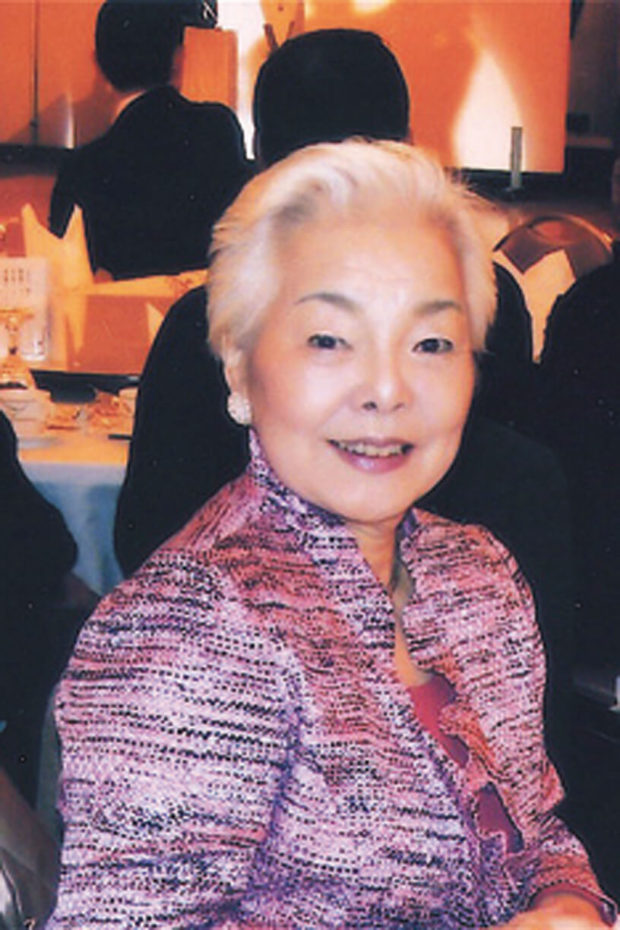
Setsuko Takemura, travel writer
Originally from Tokyo, Setsuko Takemura is a director of the Natural Parks Foundation. She serves on numerous committees, including the Hot Springs Subcommittee of Gunma Prefecture’s Natural Environment Conservation Council and Ishikawa Prefecture’s Landscape Council. In 2005 she received the environment minister’s commendation in the 24th round of awards for distinguished service in the field of hot springs. She has written some fifty books on hot springs and travel.
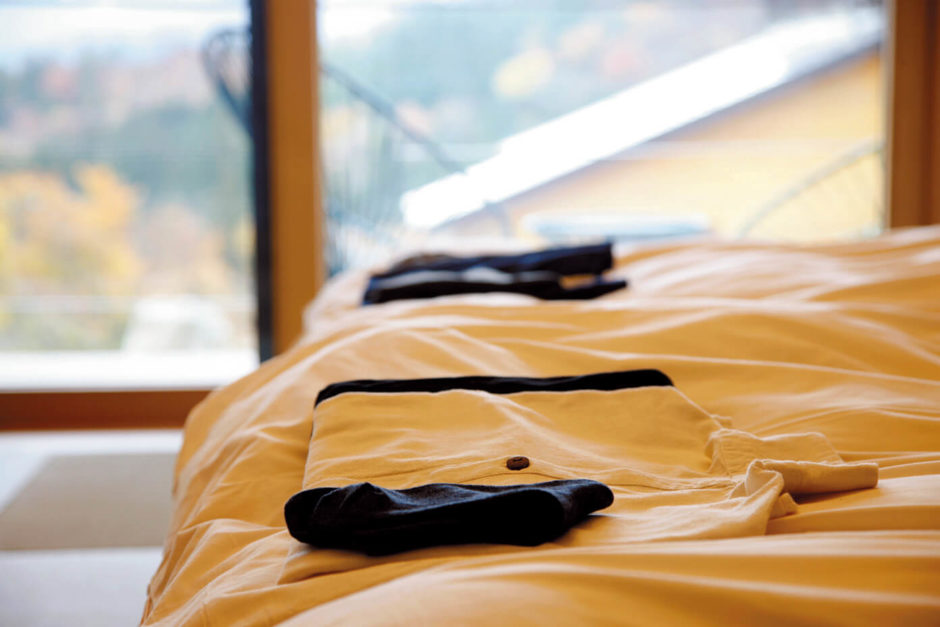
Across Japan, many traditional houses have found a new use as inns. Most of these buildings date from the Edo or Meiji period and have been moved and restored. Their bold timber frames and lofty, open interiors invite us to appreciate anew the beauty that comes of building a house for everyday use. Satoyama Jujo, too, occupies a grand old house from Echigo that has been moved to its present site. What sets the inn apart is that it offers more than the pleasure of the building itself: there are ideas here for how to spend your stay and how you might live afterwards. In the mezzanine lounge, for instance, furniture by celebrated contemporary designers stands among posts and beams darkened with age. Over a cup of coffee you can appreciate how well old and new sit together. The loungewear and linen in the guest rooms are all made of organic cotton. Once you have tried them and judged their comfort for yourself, you can buy them in the shop.
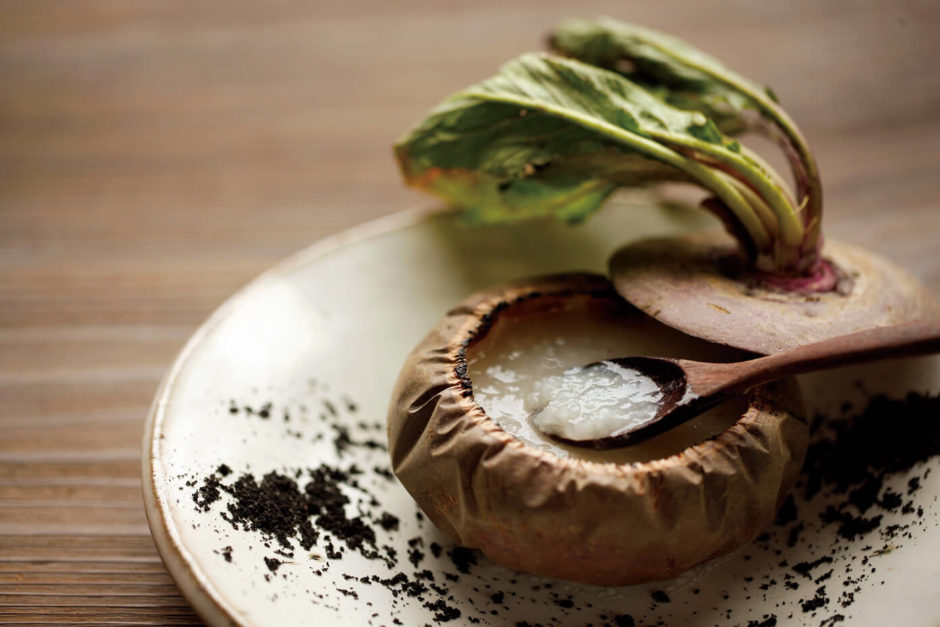
Health is one of the principles on which the inn is run. The kitchen takes great pains to leave its ingredients much as it finds them: organically grown produce in season, and the wild vegetables, fruits, nuts and mushrooms gathered on the hillside behind the inn, where they grow untended. Out comes a large plate with a whole grilled turnip sitting on it, or a shoot of wild udo, a mountain vegetable, more than 20 centimetres long, grilled and served whole. The sheer boldness of the presentation, quite unfettered by the conventions of Japanese cooking, makes me gasp. For older guests used to city life, such food brings a longing for the mountains and rivers of home, along with the reassuring sense that eating what nature provides is good for you. Younger people brought up on junk food should find that Japanese cooking still has surprises in store for them, and discover a new way of eating. One of the particular pleasures of this inn is a menu that puts the flavour of the ingredients themselves, and the safety of the food, first.
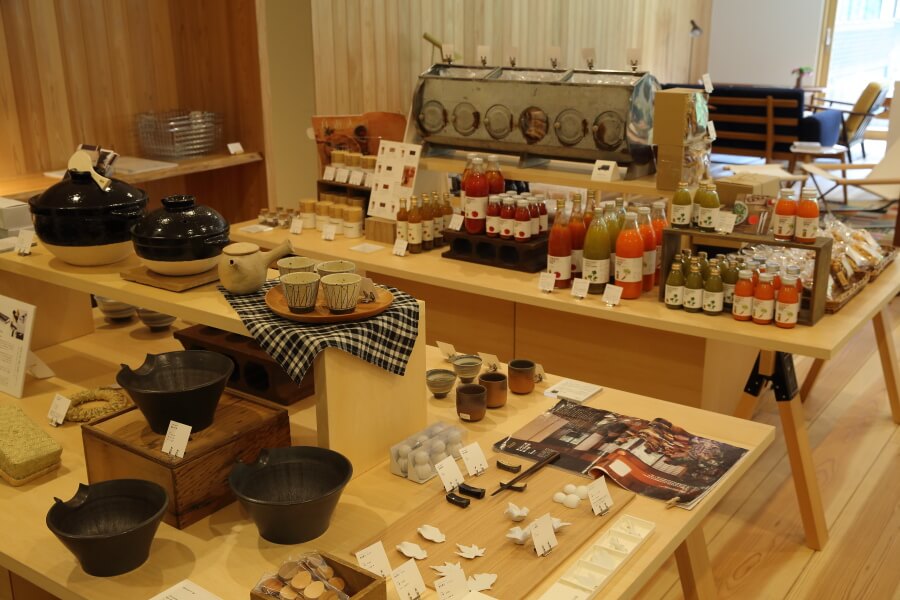
The other lounge, hito-bito, can also be booked for private use. During bar hours, alcoholic drinks are complimentary; you can sip one as you read or watch a film projected onto the large white wall. THEMA, a shop devoted to organic products and ideas for everyday living, occupies one large room. With furniture by individual makers, tableware and the inn’s own organic foods on display, it feels like a gallery. Before you even begin to think about buying anything, you can lose track of time finding out about the things on show.
Experiments like these turn up here and there throughout the building. I find them refreshing in a ryokan, a traditional Japanese inn. Perhaps it is the care that has gone into making possible the very things that, as a guest, you find yourself thinking, ‘If only I could do that here …’ The owner, Toru Iwasa, has spent years visiting inns all over Japan in the course of his work in travel. My own guess is that he is using Satoyama Jujo, his own inn, as a place to try out ideas about hot springs and healthy living, and in doing so to share his vision of the ideal inn of the future, his dream of what it might be. For now, I think I shall enjoy watching his dream take shape as a guest.
*The information given here is as it stood at the time of publication.