


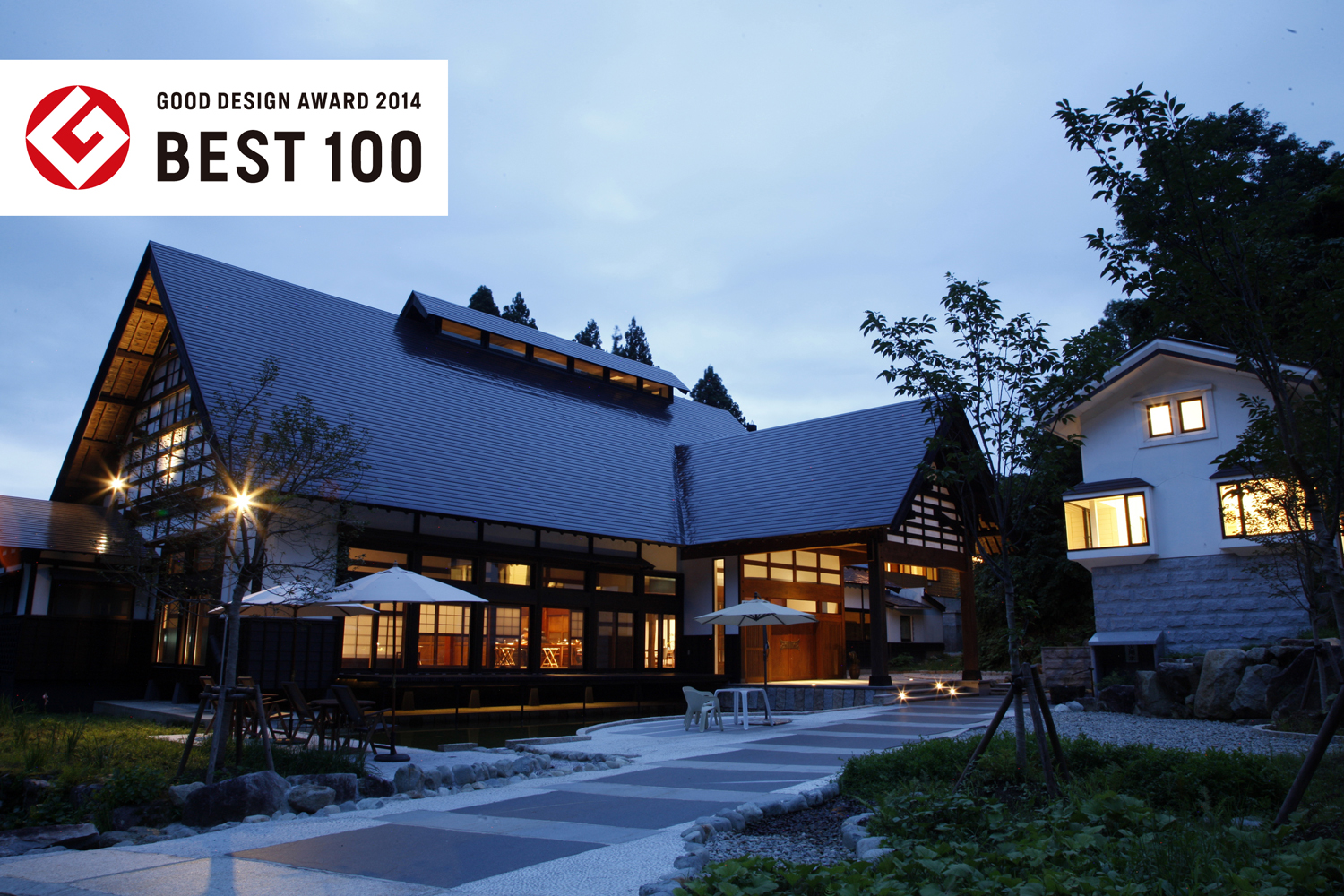
Good Design Exhibition 2014 opened at Tokyo Midtown on 31 October and is now under way!
In a field crowded with major manufacturers of everything from cars to household appliances, Satoyama Jujo not only won a Good Design Award but made the Best 100. People often ask me, ‘Why was Satoyama Jujo chosen for the Best 100?’ So I’d like to explain the thinking behind Satoyama Jujo, a little at a time. (Toru Iwasa, Creative Director)
The idea: Social Line Design
Designing connections and opening up new paths. Satoyama Jujo is a publication you can experience in person, a way for us at Jiyujin to put forward and share ideas about how we live.
The idea behind Satoyama Jujo is quite different from that of a conventional ryokan, or Japanese inn. It’s not the sort of inn where you come to shut yourself away, nor do we set out to compete on service. And we’ve no intention whatsoever of making a selling point of ‘o-mo-te-na-shi’, the Japanese art of hospitality.
So what sets us apart? It’s there in the name: Jujo, our ten stories.
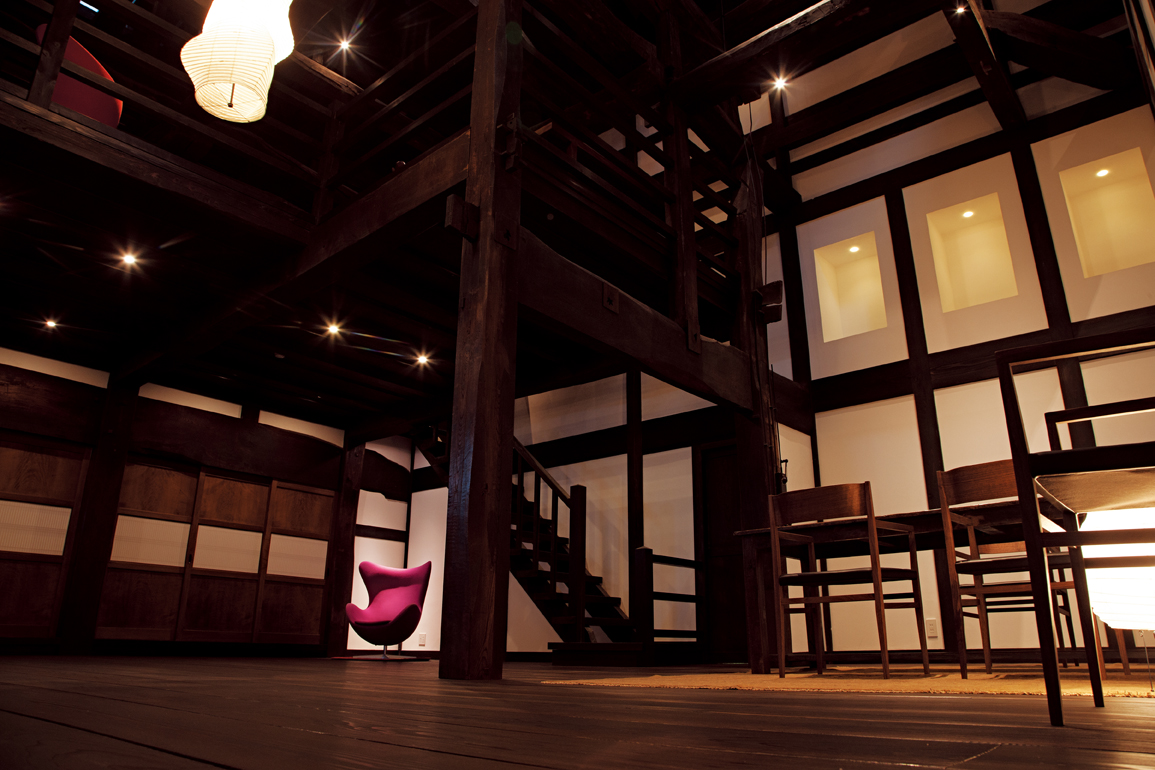
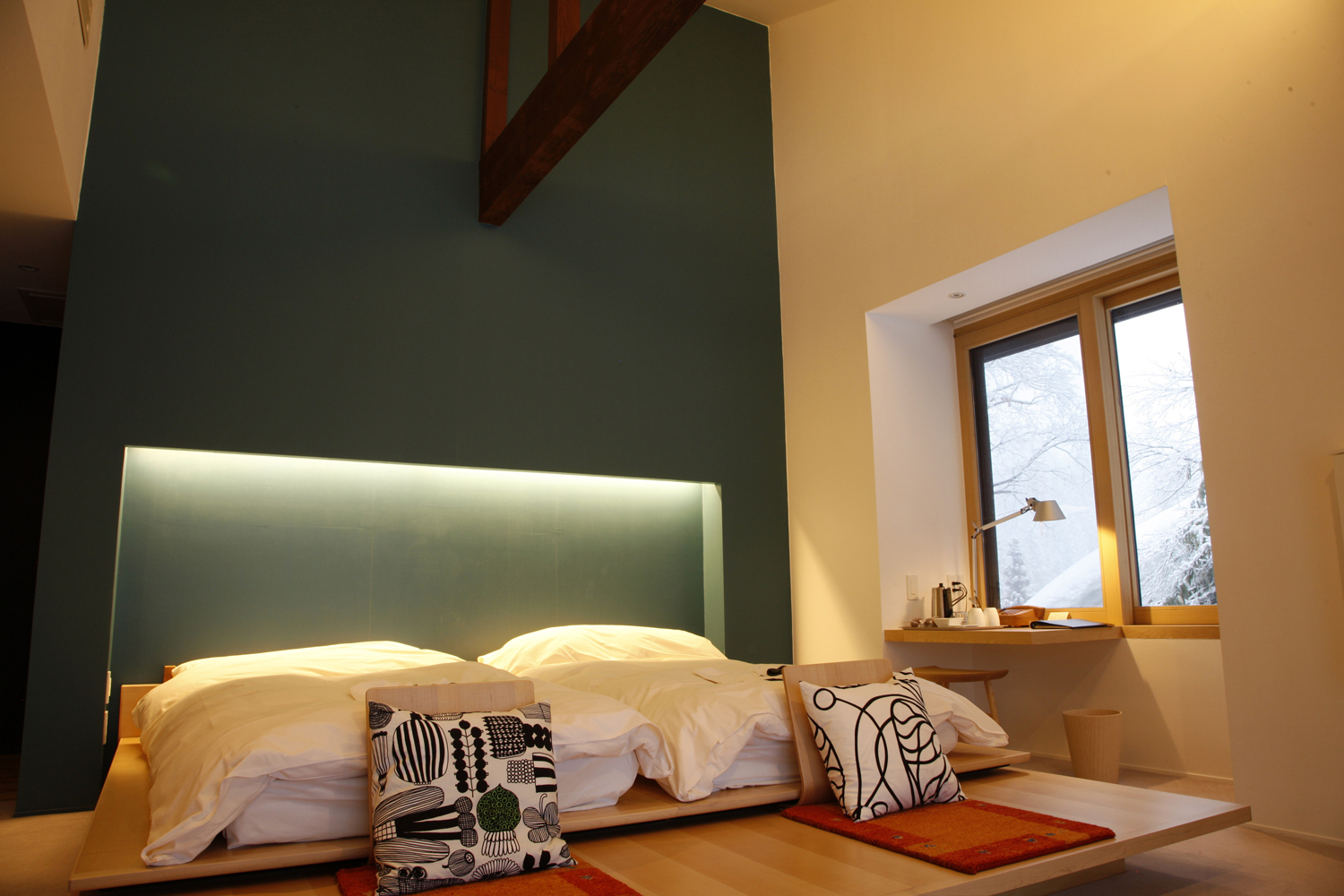
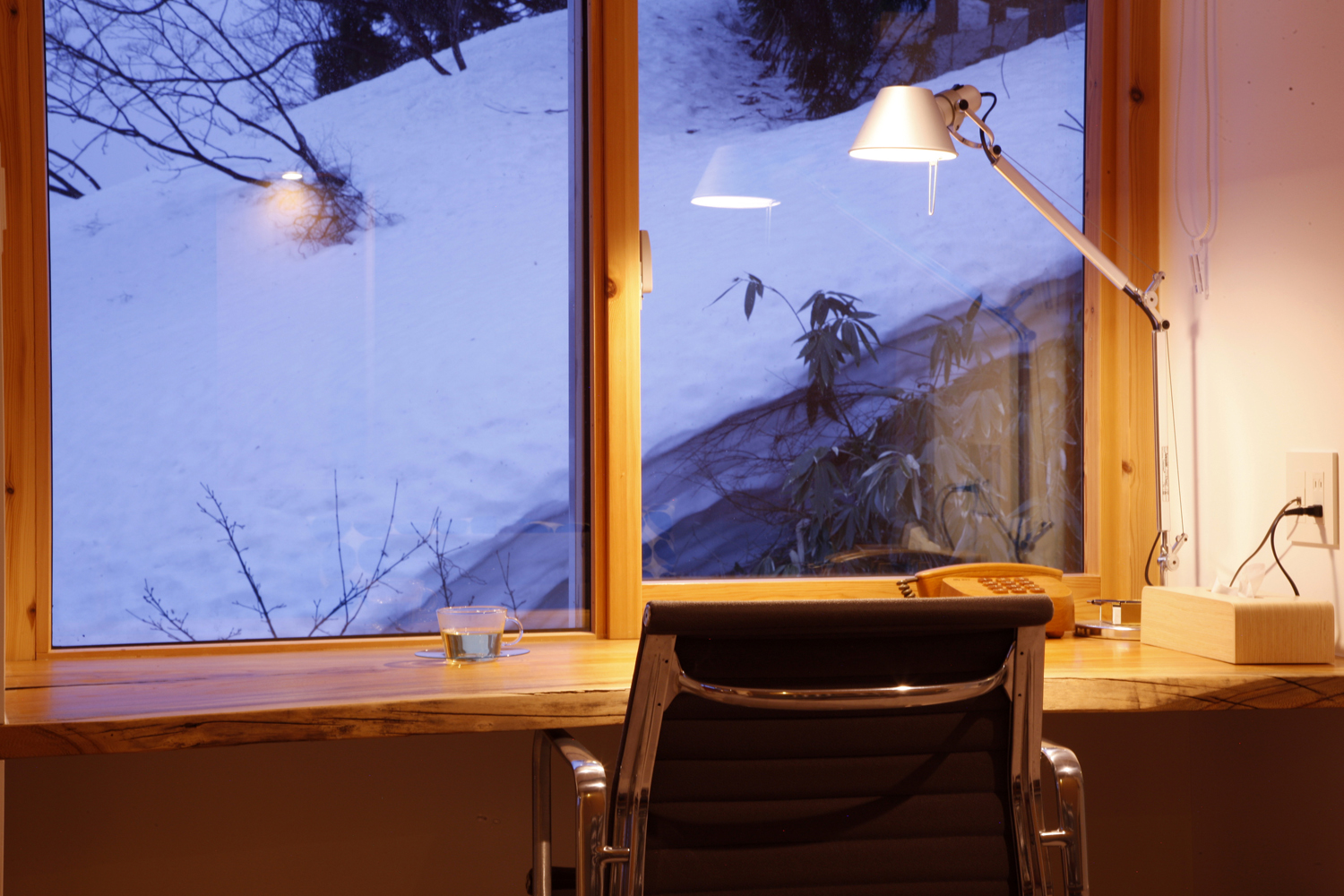
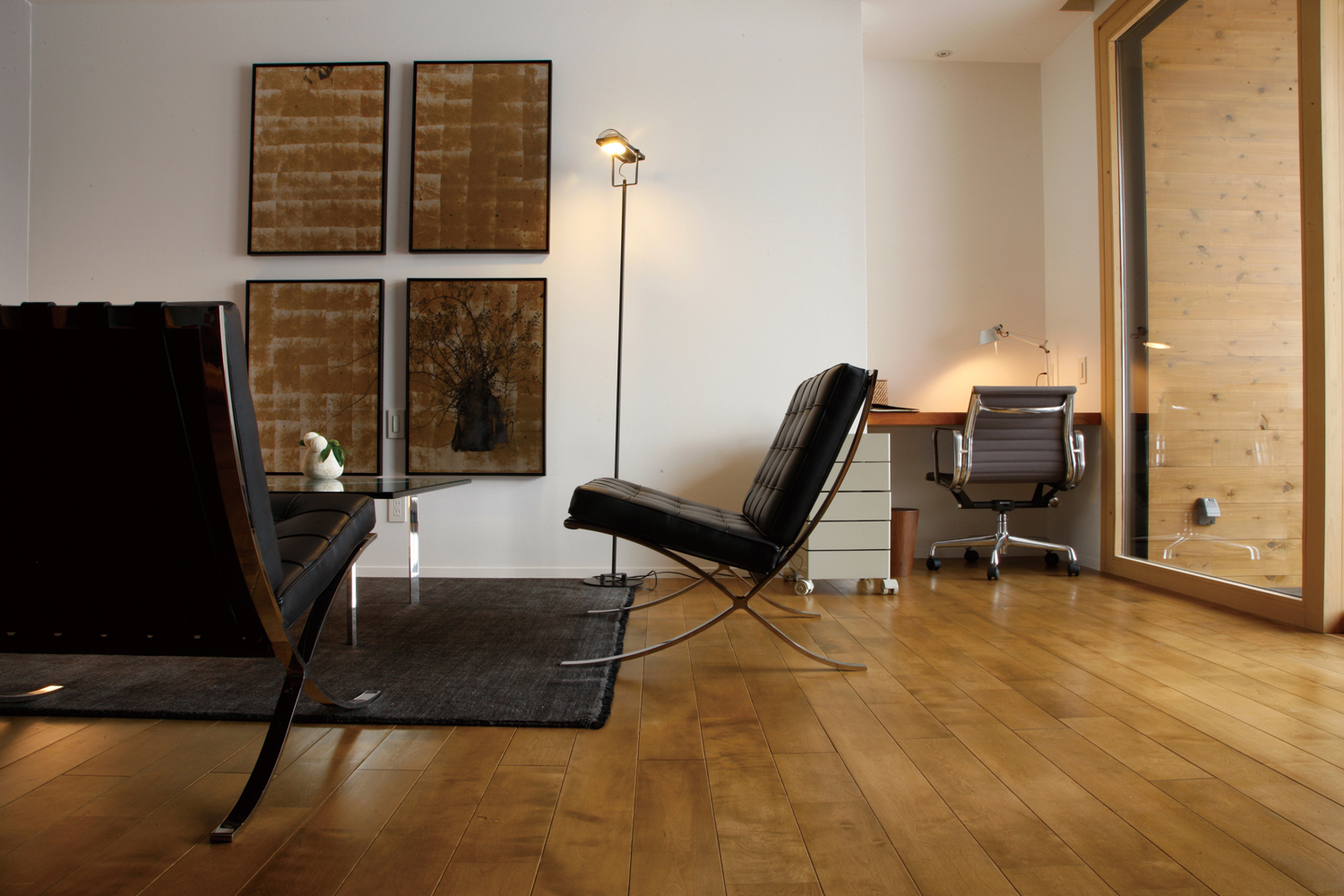
With ‘food’, we aim to bring Japan’s culinary traditions and heritage vegetables back to life today. We link ‘farming’ with food to explore how farming can pay its own way. With ‘housing’, we look at what makes a place comfortable to live in, rather than simply preserving what’s old. Our concern for the ‘environment’ can be seen in the mix of energy sources we use and in our climate-control system, the first of its kind to be installed in a traditional farmhouse. For ‘art’, we collaborate with an art university and open up spaces around Satoyama Jujo to artists. Clothing, play, healing, health and gathering bring the total to ten themes.
Put more simply, we want to engage all five senses through first-hand experience, but we also want to create new ways to travel and new destinations, beyond the familiar trip to the hot springs. From talking to guests and reading their responses to our surveys, I get a real sense that something here strikes a chord with most of them.
Of course, we spare our guests the long-winded explanations (unless they ask). What matters most is what they feel for themselves. We Japanese tend to ask for an explanation when we look at art, but it’s our response to the work that counts, not whether we find the explanation convincing.
For much the same reason, we deliberately keep explanations to a minimum at Satoyama Jujo. Some would say good service means explaining everything from start to finish. I think that rather spoils the fun.
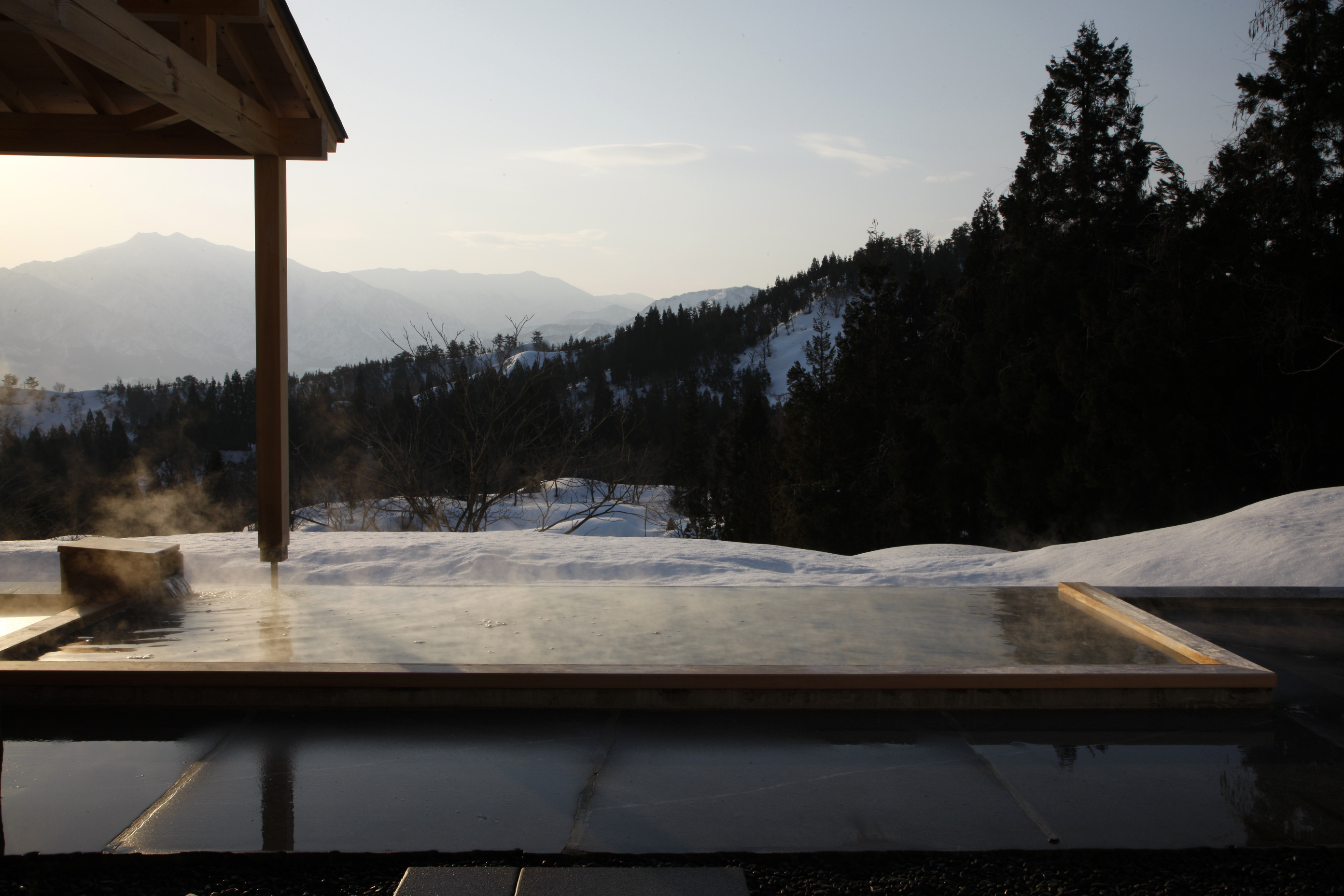
Different things strike different people. You might feel the grandeur of nature as you soak in the open-air bath and watch the mountains change from moment to moment. You might notice just how good rice tastes, or hit it off with someone you happen to meet in the lounge (and if you see two people getting on famously, do leave them to it!).
If you enjoy the finer points of construction, you might be intrigued by the way the old farmhouse was built without nails. Or you might find yourself thinking about how the flavour of a dish changes with the choice of dashi (Japanese stock) or seasoning.
The first step in ‘Social Line Design’ is to create a place where people notice things for themselves. Then, when people come together and get to know one another, new paths open up of their own accord. It’s a way of thinking about what design really is. And it’s rather like the work we know best: editing.
In selecting Satoyama Jujo for the Good Design Award Best 100, the judges wrote: ‘We valued not only the way the accommodation and services are provided, but also the high standard of the design as a whole.’ We’re delighted that they recognised both how Satoyama Jujo works and the physical form it takes.
Satoyama Jujo: ten stories that begin in the satoyama, the countryside where villages, fields and woodland meet. Do come along to Good Design Exhibition 2014, and come and visit us at Satoyama Jujo itself.
Satoyama Jujo: www.satoyama-jujo.com
Good Design Exhibition 2014
Friday 31 October to Tuesday 4 November 2014, 11:00–20:00
The exhibition takes place at venues throughout Tokyo Midtown. You’ll find the Satoyama Jujo display in the Good Design Best 100 Special Exhibition at Venue 1, on the first basement level!
http://www.g-mark.org/gde/2014/
* This information was current at the time of publication.