


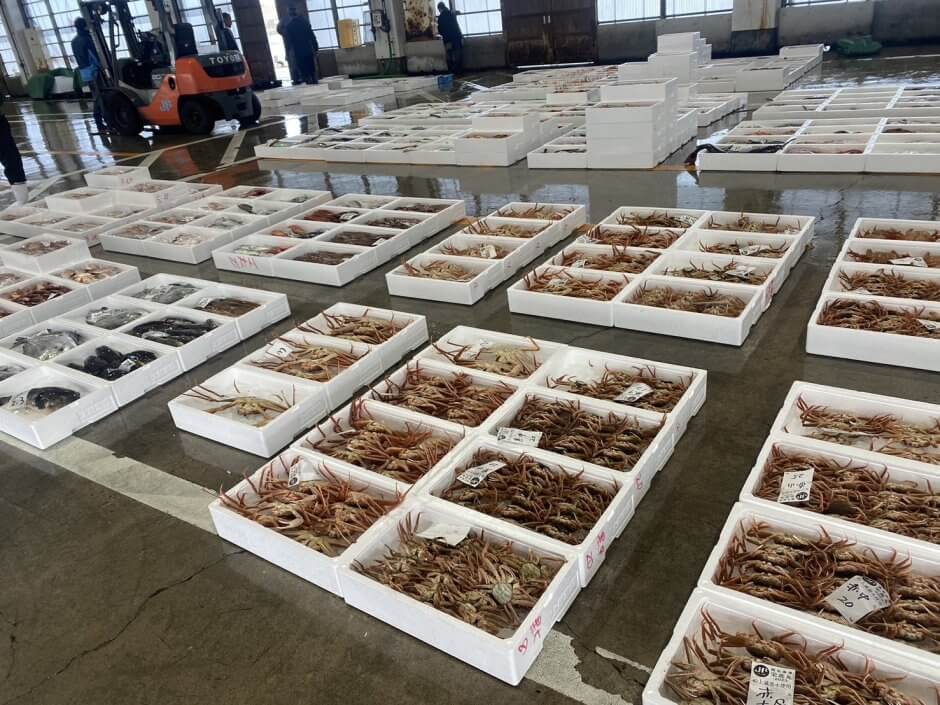
More restaurants are emphasising Niigata fish, Niigata vegetables and other local ingredients. Local gastronomy has spread throughout Japan, not just Niigata. Using regional produce is becoming standard, and more chefs are expressing culture, history and landscape through their food. This is wonderful. Yet in ten years, restaurants may no longer be able to use Niigata fish. They may no longer have Niigata’s traditional vegetables, either.
The reason is that there may be nobody left to catch or grow them.
Overfishing has become a major issue. So have the loss of marine vegetation and changes in fish species. Even traditional vegetables are increasingly being replaced by F1 hybrids, or first-generation hybrid varieties. But a still more immediate problem is the absence of people to catch fish and grow food.
When I wrote about finance and regional revitalisation the day before yesterday, the response was considerable. The lack of people to fish and farm also comes back to money. Low prices encourage people to catch more. Indiscriminate catches depress prices. Rough handling lowers prices. Deflation lowers prices in the first place. Fishing does not pay enough; boat loans cannot be repaid. The problems are numerous. I believe Naoki Maeda of Sasue Maeda Fish Shop is confronting these difficult questions directly.
There is much talk of cutting out distributors, but distributors have ideas and capabilities of their own. Maeda says he calculates restaurants’ food costs and selling prices when supplying fish. At the same time, he considers how to offer households affordable, delicious fish while ensuring fishermen receive fair payment. His ideas are astonishing precisely because they draw on the varied sales channels available to a distributor.
On March 11, Naoki Maeda will visit Nou Fishing Port in Niigata. Perhaps the location in Itoigawa is simply too inconvenient, but the Niigata Prefectural Tourist Association, which is organising the event, tells us that seats are still available in the 80-person venue.
Maeda’s ideas apply equally to farming, and to liquor shops, supermarkets and every kind of retailer or distributor. In the panel discussion in the second half, I want to ask openly about money. How can we ensure that it reaches the people who catch and grow our food? As direct online trading expands, what can distributors and retailers do? What can a physical shop offer that other channels cannot?
Demand for local fish and vegetables is growing, yet the people who catch and grow them may disappear. We have moved beyond the stage where restaurants can simply choose to use local ingredients. The question now is how to sustain and develop local production. Catching only small quantities or growing only to order are possible approaches, but for a region and its industries, a certain volume, and the money it generates, also matter.
I believe reform requires distributors, producers and restaurants to work together. What do you think?
Nou Fishing Port is not easy to reach, but we hope people from throughout Niigata and the neighbouring prefectures of Toyama and Nagano will come. We look forward to seeing you!
*Information was current at the time of publication.