


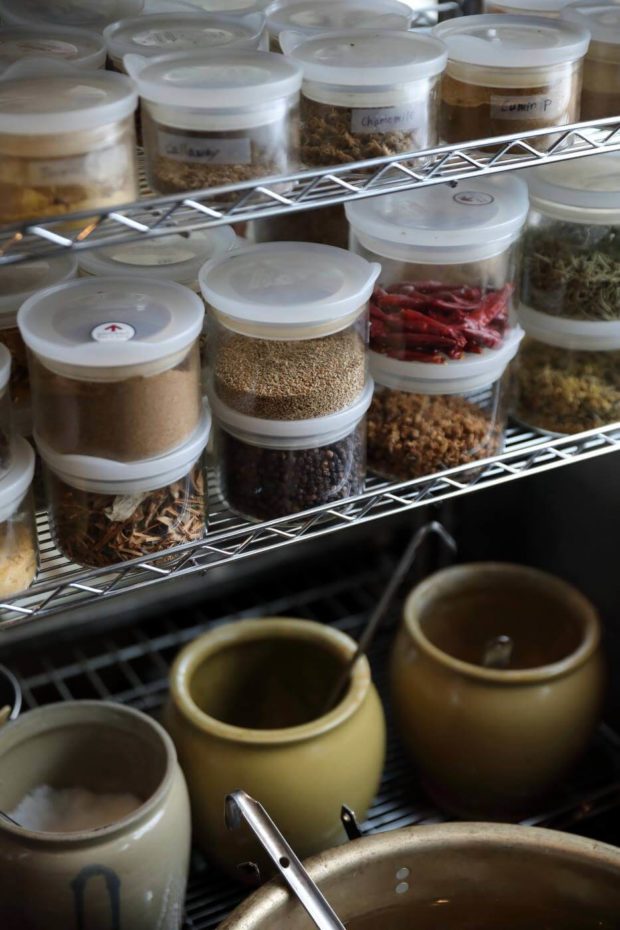
What makes guests say the food at Satoyama Jujo is different from what they eat at other restaurants and ryokan, or traditional Japanese inns? One clue is tucked away in this secret room.
The shelves are lined with spices and seasonings we blend ourselves. We dry wild mountain greens and grind them to a powder, and pickle other mountain produce. We make our own umeboshi (salt-pickled plums), of course, and our own takuan, too: daikon radishes pickled in wooden tubs. We make our pickles here, every last one. The lower shelves hold fermented seasonings. We even make our own sagohachi, a versatile mixture of salt, rice and rice koji (rice cultured for fermentation) that gives sagohachi pickles their name.
We do buy our soy sauce and mirin (a sweet rice wine used in cooking), but only those made the traditional way, without any additives. The vegetables are the stars, of course, but good seasonings play a fine supporting role. When someone has taken such care to grow a vegetable, it seems a shame not to take just as much care over what we season it with.
‘When I eat at Satoyama Jujo, I feel as though my body is being cleansed.’
We hear this from so many of our guests, and it makes us very happy. To us, the best meal is one that tastes delicious and is kind to the body. Yet getting ‘delicious’ and ‘good for you’ to go hand in hand is surprisingly difficult. In our kitchen, we’re always trying things out to see what works. Often it’s sugar, the savoury taste we call umami, heat or sharpness that makes us think, ‘That’s delicious!’ The more intense those flavours are in combination, the more powerfully they stimulate the right side of the brain. In pursuit of that ‘That’s delicious!’ response, modern cooking tends to use too much seasoning, oil and fat. The result can be food that’s not terribly good for us.
So-called ‘healthy cooking’, on the other hand, puts the emphasis on the ingredients’ own flavours and their natural umami. It’s harder for food like that to make you exclaim, ‘That’s delicious!’
At Satoyama Jujo, it’s the middle ground that interests us. How do we make food that tastes delicious yet is easier on the body?
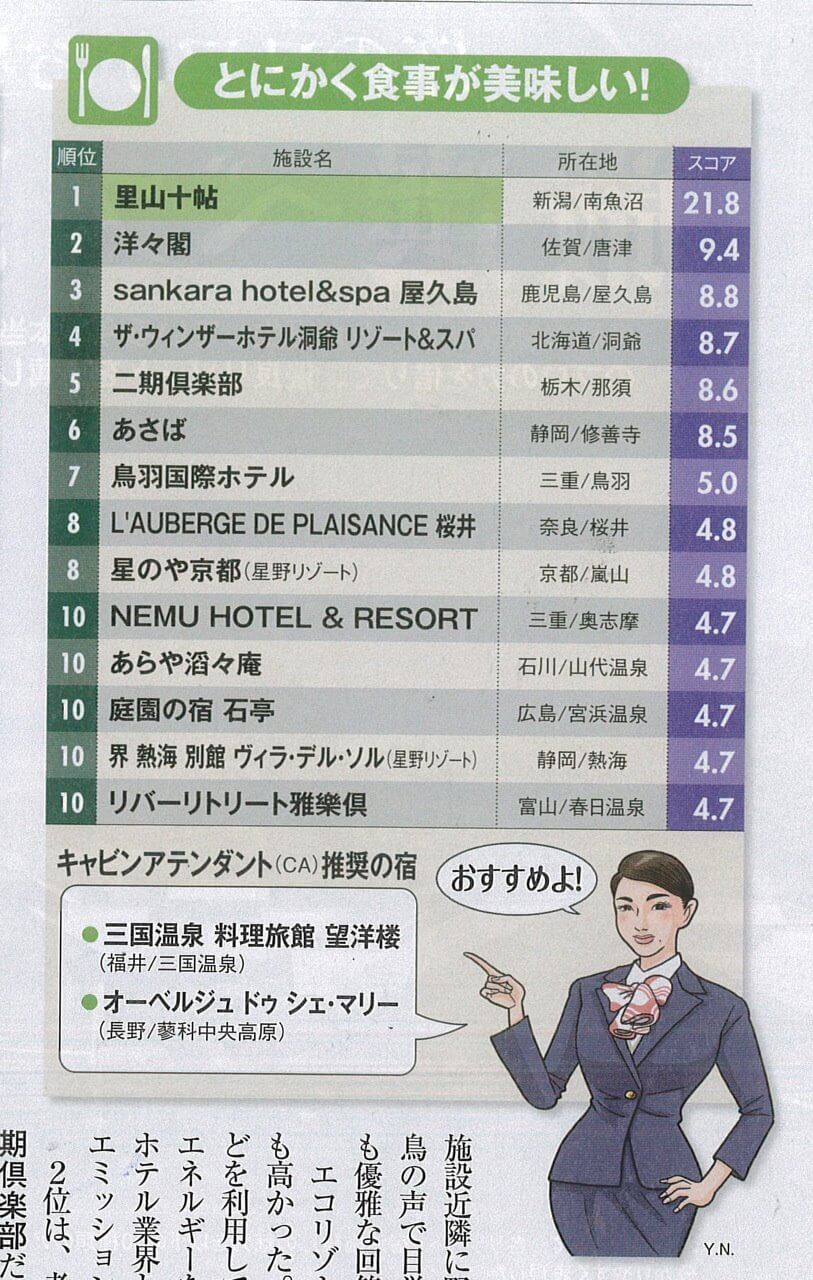
We’re still a long way from an answer, but the question is always on our minds as we cook. One guest may think a dish is delicious; another may think it’s nothing special. Tastes differ. Still, we suspect this way of thinking is why guests say our food is different from what they eat at other restaurants and inns. We think it’s also why Weekly Diamond ranked us first in its dining category.
Today, as ever, we’re trying things out in the kitchen at Satoyama Jujo.
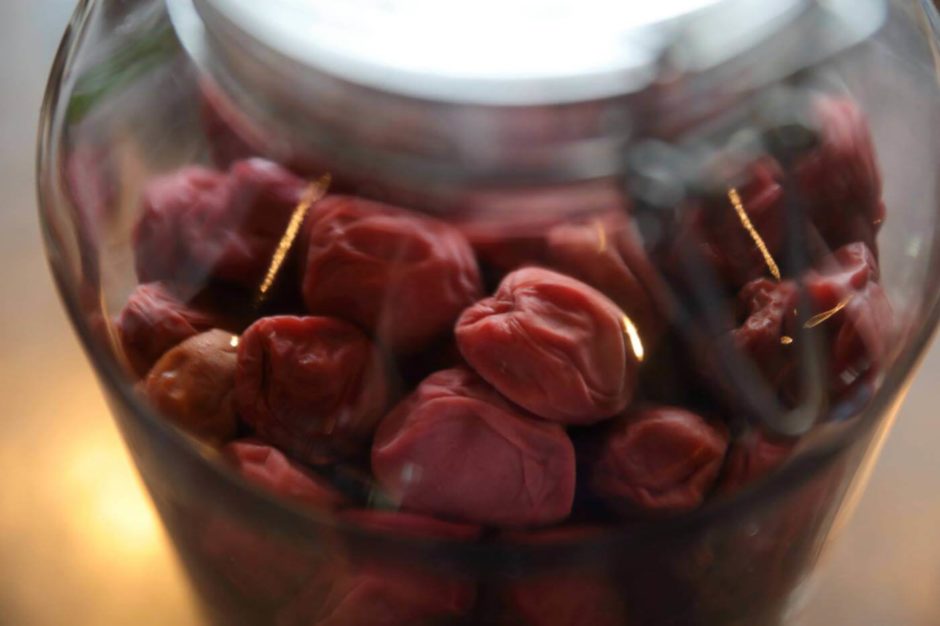
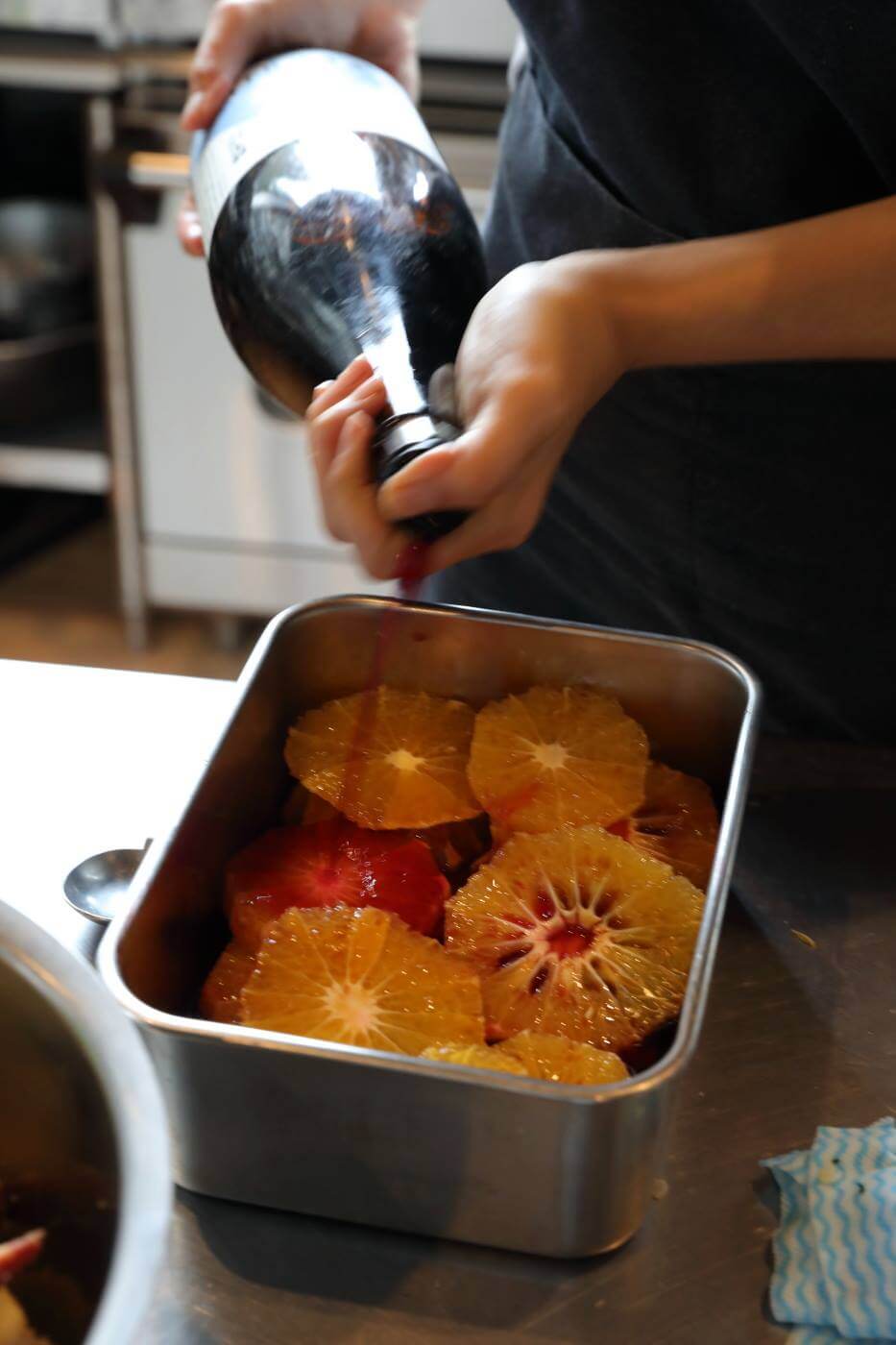

(We do sometimes serve pickles from a local producer, 山家漬, including spaghetti squash pickled in the lees left from brewing Hakkaisan junmai ginjo sake.)
We have rooms available tomorrow, 16 February, and on 22 and 23 February. We’d love to welcome you.
https://asp.hotel-story.ne.jp/ver…/ASPY0000Calendaronly.asp…
*The information given here was current at the time of publication.