


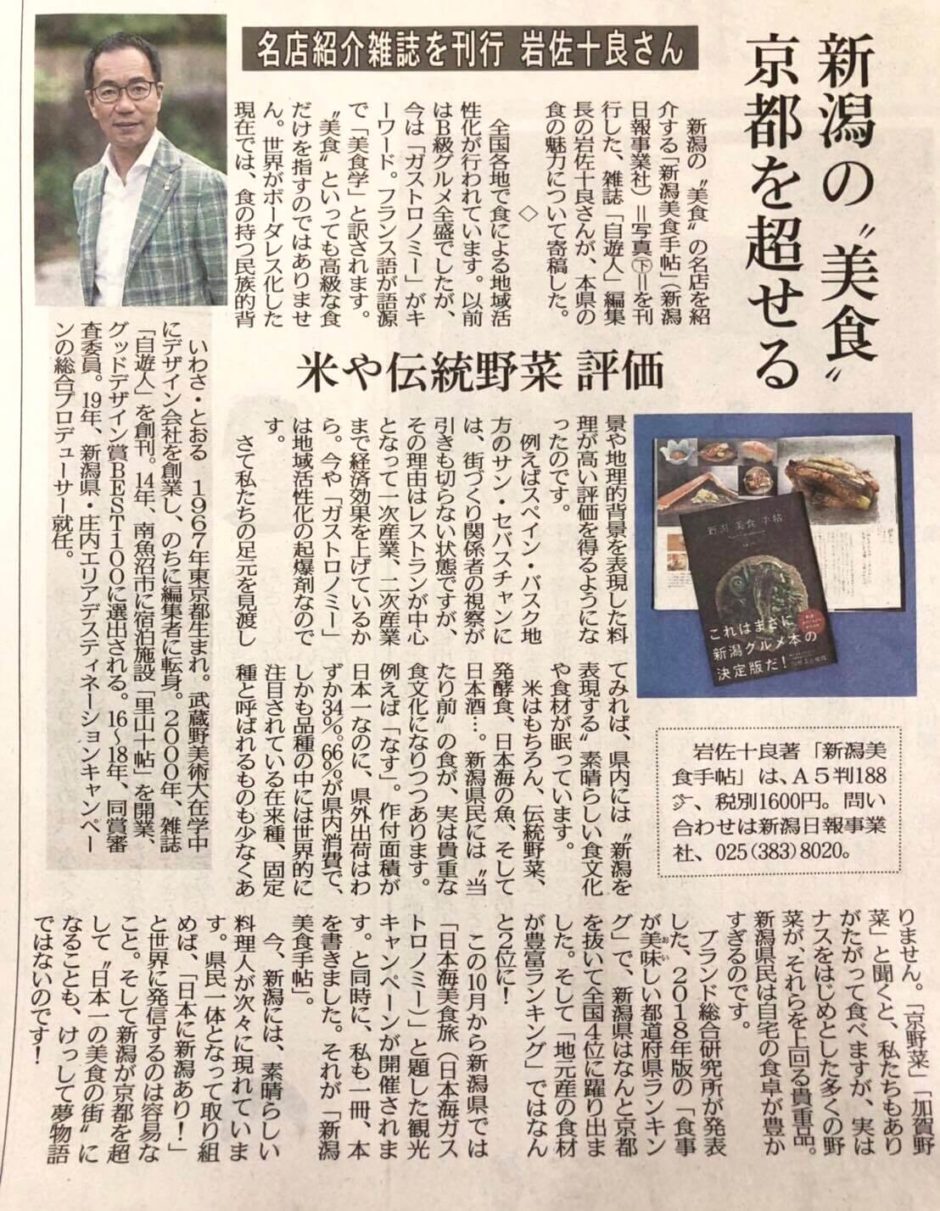
The Niigata Nippo has run a piece about the Niigata Gastronomy Notebook under the headline ‘Niigata’s cuisine can surpass Kyoto’s’. A bold headline, but in the Brand Research Institute’s 2018 ranking of Japan’s best prefectures for food, Niigata had already overtaken Kyoto to come fourth nationwide (up from ninth the year before!). For the abundance of its local ingredients, Niigata came second in Japan.
Kyoto’s restaurants still have the edge, but there’s no denying how far Niigata’s have come in the past few years. People here take their work seriously, and you can see it in how quickly our restaurants are improving.
The introduction to the Niigata Gastronomy Notebook is a little long, but I’ve reproduced it below. I hope you’ll read it. If you’re outside Niigata Prefecture, you can order a copy from Amazon: https://www.amazon.co.jp/dp/4861327229
Introduction
Communities across Japan are turning to food to bring new life to their regions. Once it was all about ‘B-grade gourmet’ food – inexpensive, much-loved local specialities. Today the watchword is ‘gastronomy’, a word that comes to us from French and is translated as ‘the study of good eating’. Until the end of the twentieth century, fine food meant the likes of foie gras and caviar, with their immediate appeal to the senses. As the twenty-first century began, attention turned to the latest cooking techniques. Now, as borders count for less, our idea of fine food has shifted again. The dishes that win acclaim today use contemporary techniques to tell us something about the people and places they come from.
That helps explain the interest here in Japan in Burgundy in France, Tuscany in Italy and the Basque Country in Spain. San Sebastián and Bilbao in particular see a steady stream of visitors keen to learn from the two cities and put those lessons to work in their own towns.
Tourists come from all over the world for the food, and local producers and manufacturers are thriving as a result. Across Japan, plans are afoot to emulate San Sebastián by opening fine-dining restaurants or inviting chefs over from the city. But that misses the point.
What made San Sebastián a city of fine food was, at heart, a movement to assert Basque identity through cooking. It was because people around the world embraced this inventive, distinctly Basque cuisine that San Sebastián became known as ‘the city with the world’s greatest concentration of starred restaurants’.
Now look a little closer to home. Here in Niigata Prefecture, we have wonderful food traditions and ingredients, still largely overlooked, that speak just as clearly of who we are.
There’s rice, of course, but also heritage vegetables, fermented foods and preserves, fish from the Sea of Japan, sake … What we take for granted in Niigata is becoming rare and precious in Japan.
In spring in Uonuma, where I live, you’ll see zenmai – the young, curled shoots of a fern – laid out to dry at house after house. In autumn it’s a common sight to see daikon radishes drying. At home I’ll have a cup of sake with aubergine picked in the back garden. Breakfast is Uonuma-grown Koshihikari rice and miso soup: I stir homemade miso paste into a stock made from dried sardines. At a banquet, one sake flask after another ends up empty on its side.
Here in Niigata, these Japanese food traditions are still simply part of everyday life.
We owe that to two things: the Kitamaebune trading ships and the snow.
Until the middle of the Meiji era (1868–1912), Japan depended on the Kitamaebune to carry goods along its coasts. A sophisticated culture flourished in Niigata, the ships’ largest port of call. Nor was prosperity confined to the city: it extended across most of the prefecture, including the basins of the Shinano, Japan’s longest river, and the Agano.
But when goods began to travel by rail and road and the main trade routes shifted to the Pacific coast, high mountains and deep snow cut Niigata off. Hard times followed. Yet that very isolation preserved older Japanese ways of life here, as if sealed in a time capsule.
Now Niigata’s chefs have recognised that time capsule for what it is and are beginning to bring its treasures to light.
Take the aubergine. Niigata devotes more land to growing aubergines than any other prefecture in Japan, yet just 34% of the crop is shipped beyond its borders. We eat the other 66% ourselves.
Or take flounder. The way the fish were dispatched after landing used to compromise their quality. Chefs talked to the fishermen about how to do it differently, and now the fish are of the highest quality.
You may have noticed that over the past five or six years more restaurants have been making a point of using Niigata ingredients. In French restaurants the received wisdom used to be, ‘Without foie gras and caviar on the menu, the customers won’t come.’ Now more and more places leave them off. Some sushi chefs have begun to say, ‘We don’t need tuna landed outside the prefecture or sea bream from Akashi.’ For a growing number of chefs, the measure of their craft is how well they bring out the best in Niigata’s own ingredients.
What I call ‘local gastronomy’ is a movement to express a region’s land and climate, its culture and its history through cooking. Here, that means the people of Niigata valuing Niigata’s own food. That in turn protects our farming, forestry and fishing, gives our food processors more work and keeps money circulating in the prefecture. Fewer food miles mean lower carbon dioxide emissions, too.
Until now, sadly, restaurants that cook Niigata ingredients really well have struggled to flourish. Why? Because those of us who live here tend to think, ‘Why go out for something we eat all the time?’ And sitting down at home in the evening to good sake and local vegetables is as fine a luxury as any.
But you do eat out now and then. When you do, I hope this book will help you choose where to go. I’m sure even the aubergine you eat at home every day will taste different. You’ll discover a side of Niigata you haven’t seen before.
The restaurants in this book take Niigata’s food seriously. They’re determined to show people what it has to offer, without compromise and without excuses.
More and more chefs like these are coming to the fore in Niigata. The culinary world is moving in the same direction. If Niigata’s chefs, producers and diners work together, we can readily show the world that Niigata is a name to remember in Japanese food. Nor is it an idle dream to think that Niigata might one day stand alongside Kyoto as one of Japan’s two finest cities for food.
It takes just three things. As diners, support these restaurants. Tell other people in Niigata about them. Then go ahead and boast about them to people further afield. That alone might take us beyond even San Sebastián. As the author, nothing would make me happier than for this book to be one small step in that direction.
Toru Iwasa
Published in the Niigata Nippo on 18 September.
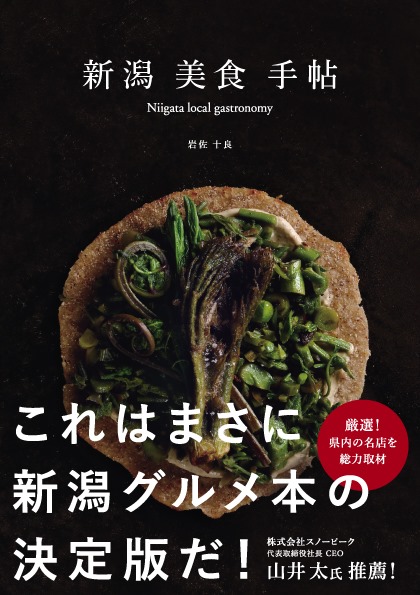
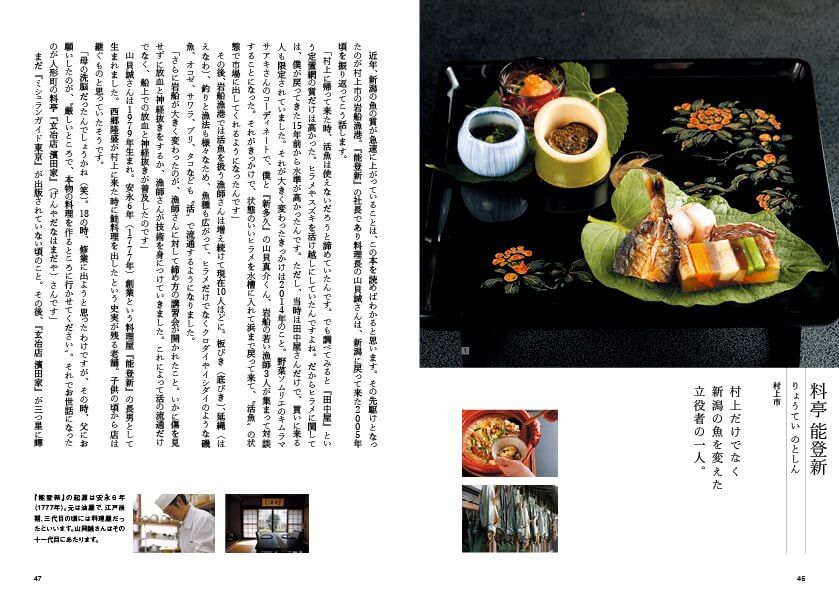
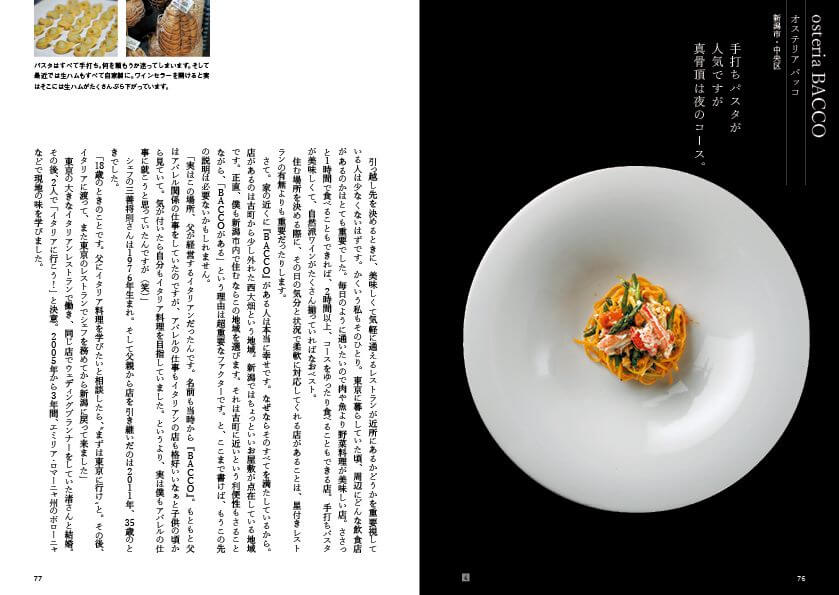
*The information in this article was current at the time of publication.