


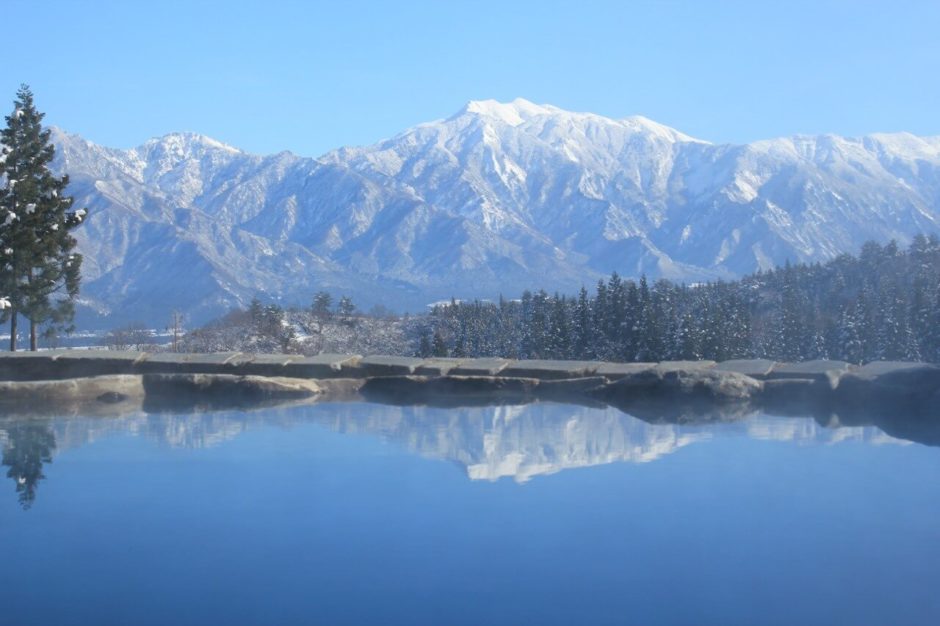
This was Satoyama Jujo yesterday. What a view from the open-air bath! Snow is forecast from New Year’s Eve through the first three days of January. It’s set to turn colder still on 5 January, and we could see heavy snow. We’re hoping that by the 6th, once the New Year holiday is over, the snow will be more than a metre deep! The best season at Satoyama Jujo is about to begin.
‘I’d love to visit Satoyama Jujo. When’s the best time to come?’ We used to say, ‘Spring, when we serve wild mountain vegetables in dish after dish.’ These days we recommend the depths of winter: ‘Do come in winter, when there’s nothing here.’
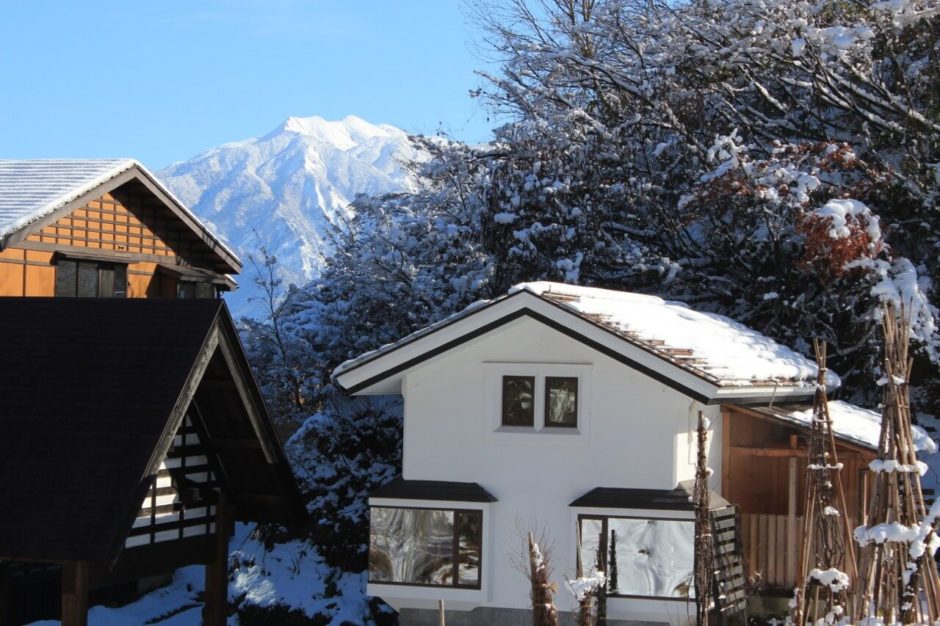
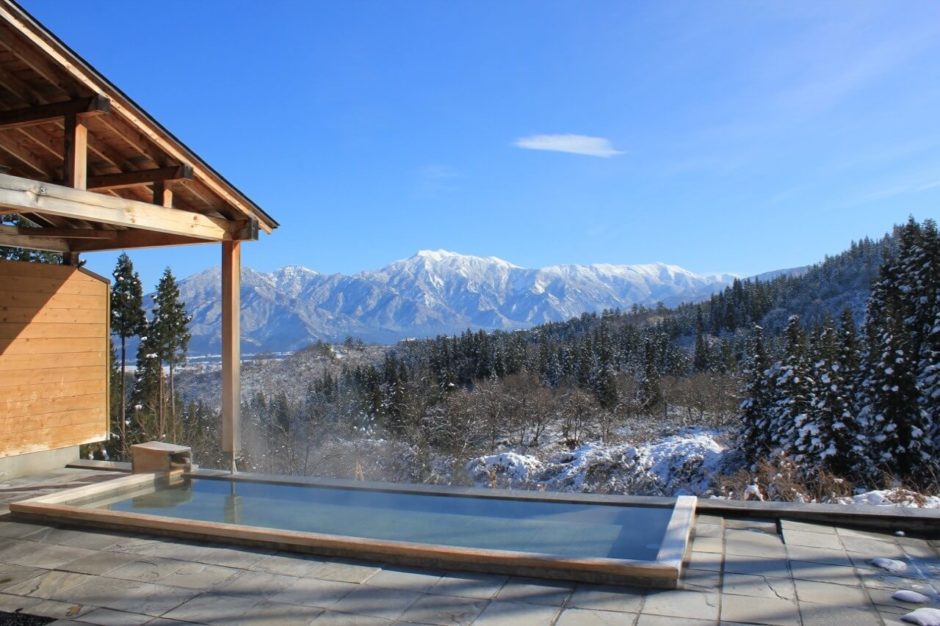
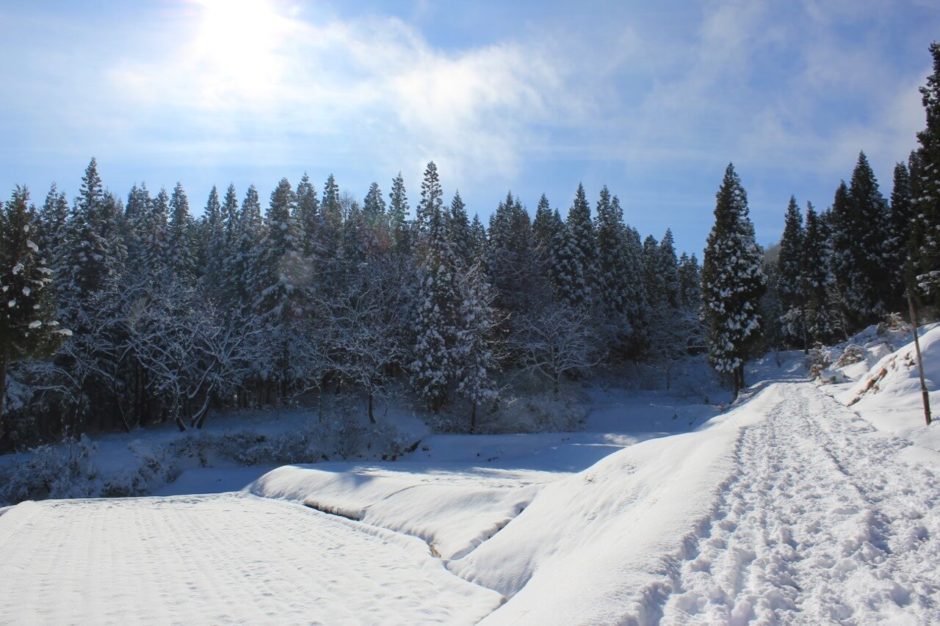
Blanketed in snow, Satoyama Jujo is silence itself. The snow absorbs every sound. Go out for a walk and all you hear is the wind.
When everything there is to eat lies buried under several metres of snow, dinner at Satoyama Jujo is given over entirely to fermented and preserved foods. It really is all one colour: a shade of brown. Plain? It certainly looks it. But there’s no better season to savour the quiet richness of snow-country cooking. Midwinter is second only to the spring wild vegetable season for the number of guests who come back. Even in midwinter, nine out of ten of our guests neither ski nor snowboard. Almost everyone comes ‘to see the snow’ or ‘to walk on it’. You can try walking in kanjiki, traditional Japanese snowshoes, or join a snowshoe trek. From late January onwards, there are already many dates with only a few rooms left, even on weekdays. Do come and see Minamiuonuma in Niigata under a blanket of snow. Incidentally, even the heaviest snow doesn’t upset the Joetsu Shinkansen timetable. When services do run late, it’s because of delays on the Tohoku and Hokuriku Shinkansen lines. As a rule, the Joetsu Shinkansen keeps running even in exceptionally heavy snow, so there’s no need to worry about the journey here.
*The information given here was current at the time of posting.