


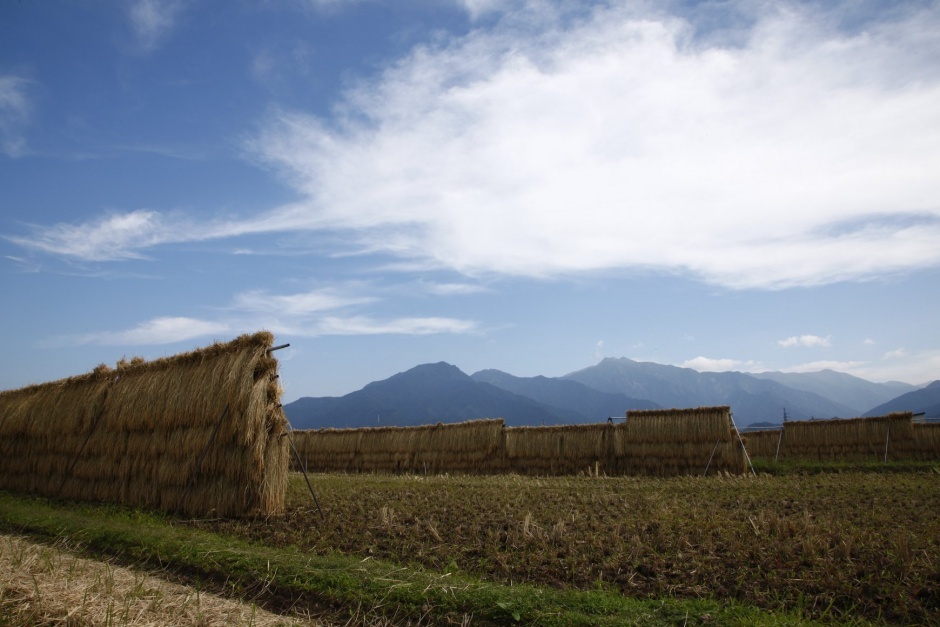
‘We were amazed at how good the rice tasted!’ We hear this from many of our guests at Satoyama Jujo. Take a mouthful and the sweetness slowly spreads across your tongue.
The secret of that sweetness is, above all, the water. The climate, the distinctive lie of the land and the soil all help to give the rice its flavour. But paddy rice grows in water – the Japanese word for it is even written with the characters for ‘water’ and ‘rice’ – so it’s hardly surprising that the water makes a difference to the taste.
Osawa, where Satoyama Jujo is, and the surrounding area are said to produce the very best of Uonuma’s Koshihikari rice.
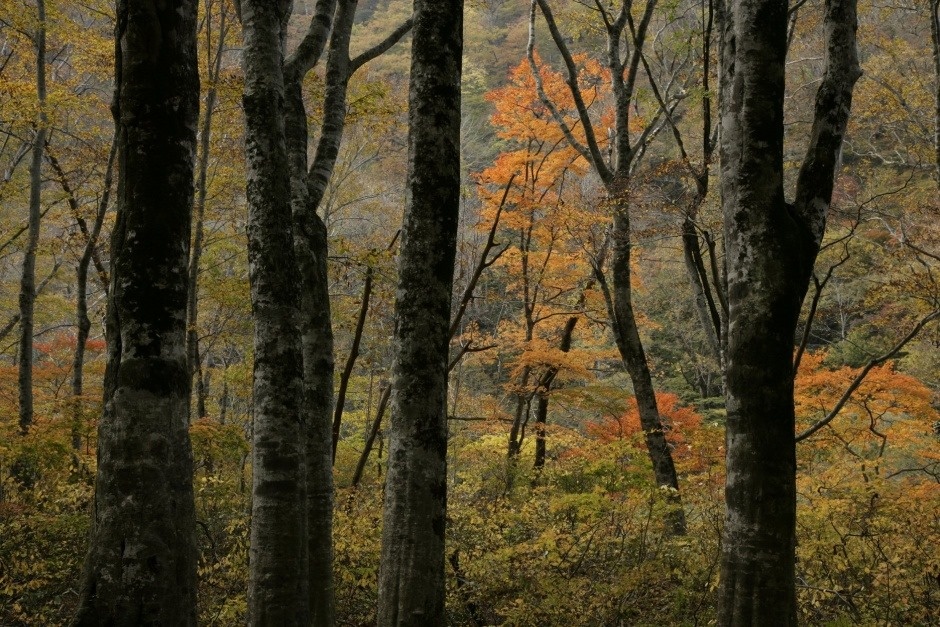
The reason lies upstream, in the beech woods. They cover a vast area around Mount Atema, which rises to 1,028 metres. Three streams rise in the area around the mountain: Kimisawa, Osawa and Kabanosawa.
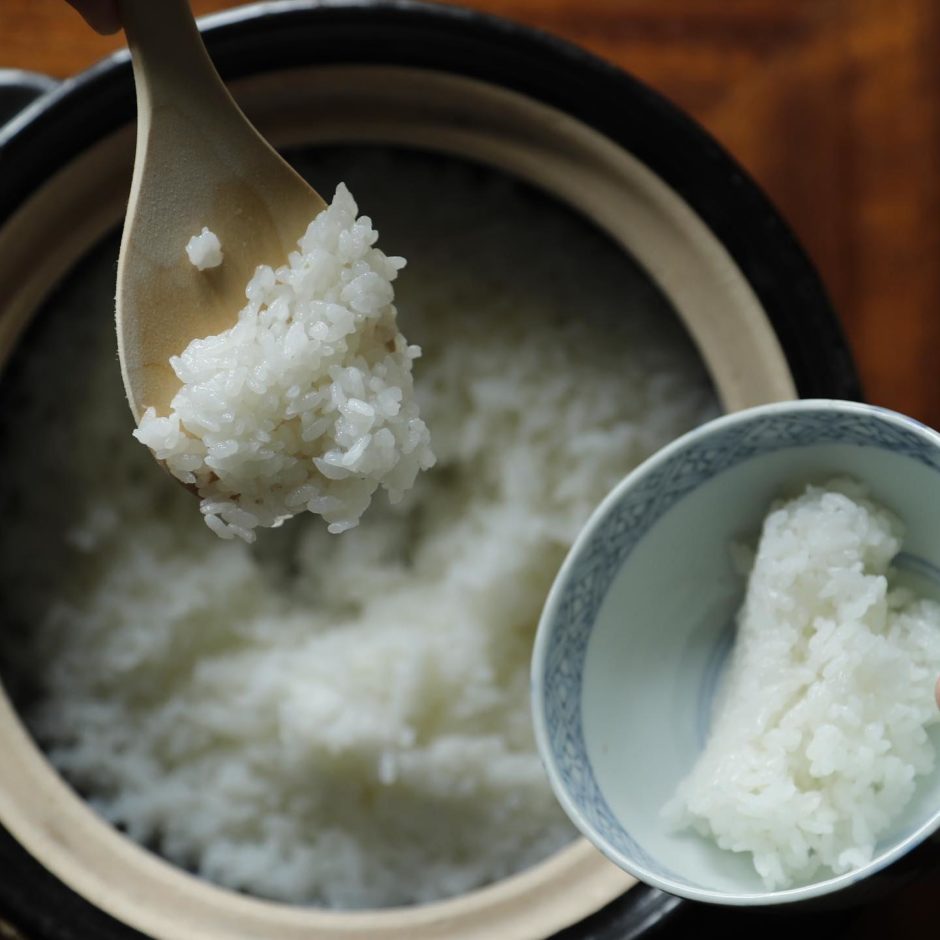
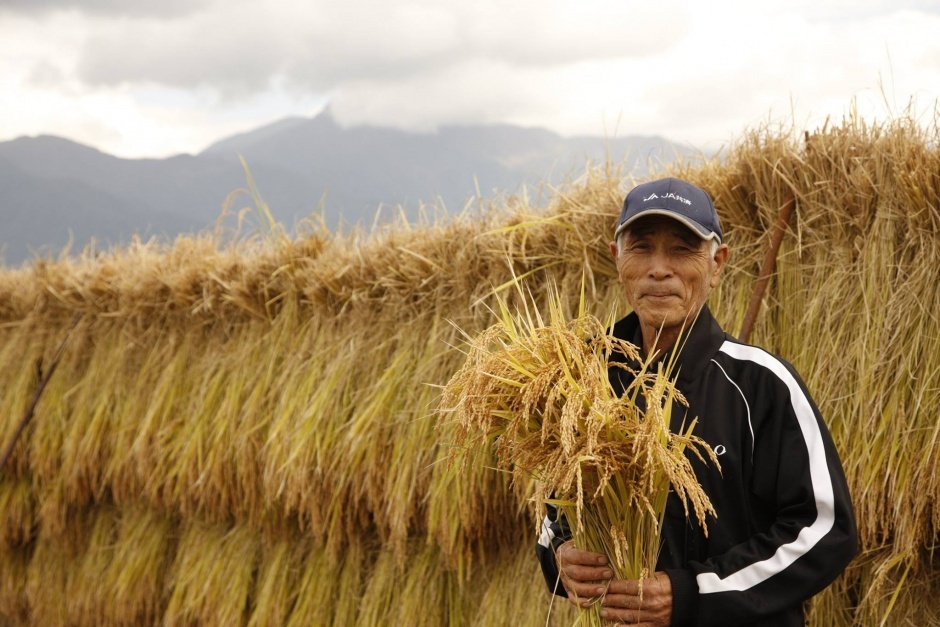
The Koshihikari we serve is grown by Kiyoshi Suzuki, Kabanosawa’s ‘rice sage’. ‘I’ve fallen in love with this rice!’ said Hiroyuki Kanda of Nihonryori Kanda, whose restaurant holds three stars in the Michelin Guide Tokyo. We cook Suzuki’s rice in an earthenware pot with spring water from Osawa.
As it happens, Kimisawa, Osawa and Kabanosawa together cover roughly the same area as the village of Romanée. And the rice we serve at Satoyama Jujo comes only from particular paddies. You might call it the Romanée-Conti of rice.
Now that October is here, we’re serving rice from the new harvest. Do come to Minamiuonuma this season for a taste of Japan’s finest rice.
Room availability at Satoyama Jujo
Thanks to a cancellation yesterday, we now have room for guests
on 27 and 28 October! The original booking was for both nights, so for now you can book a two-night stay. It’s a lovely time to see the autumn colours, too. Don’t miss the chance to join us.
Availability as at 21 October 2021.
The information in this article was current at the time of publication.